In a February Professional Development workshop, Danielle King and Kecia M. Thomas discussed imposter syndrome, academic burnout, and best practices for sustaining and supporting yourself during hard times.
Podcast: In contemporary society, there is a significant rise in the number of women assuming leadership positions compared to past generations. Nevertheless, this raises the question: Do these growing numbers equate to equal access to opportunities? Under the Cortex explores.
Diversity trainings as currently practiced are unlikely to change police behavior, suggests an analysis of a day-long training session designed to increase U.S. police officers’ knowledge of bias and use of evidence-based strategies to mitigate bias.

Powerful people who engaged in abusive behavior directed at employees paid the price later with lowered well-being.

New evidence suggests that thinking about money may help buffer against the emotional toll of ostracism and social exclusion at work.

Employers are likely to abide by laws barring discrimination against gay workers not because they are necessarily afraid of being punished for violating the law, but because these laws send a clear message about acceptable moral behavior in the community, a study suggests.
Özge Gürcanlı Fischer-Baum explores how greater awareness of neurodiversity has influenced great (but not enough) change in research, advocacy, and cultural expectations.

A new study links workplace bullying to negative health outcomes for employees, including increases in long-term sick leave and prescriptions for antidepressants.

While low performers are typically the targets of bullying from co-workers, research suggests that people tagged as aces are also victimized in more discrete ways.

Lily Jampol, head of people science at ReadySet, helps organizations build more inclusive environments.
This Professional Development webinar reviews tips and tricks for creating strong CVs and writing strong teaching statements for academic job markets.

Victims of workplace bullying often become stressed and anxious, making them easy targets for additional abuse.

Automation may be associated with anti-immigrant sentiment by increasing perceptions of both realistic threat arising from competition for economic resources and symbolic threat "arising from changes to group values, identity, and status.”

Some studies have begun to hint that personal psychological resources — such as self-esteem — may mediate the relationship between job demands and job resources and burnout.

Fostering gender-blind ideologies may offer one short-term aid as institutions continue to grapple with gender-parity issues.

Anxious about getting your materials ready for the academic job market? Join Drs. Alex Ajayi and Leslie Berntsen for a discussion about how to prepare research and diversity statements.

Where are all the neurodivergent scholars and research participants? Eight scholars make the case for greater adoption of open scholarship practices, “slow science,” intersectional collaboration, and more.
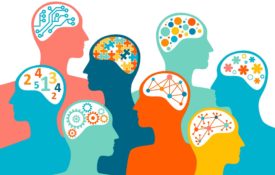
Research suggests that taking steps to create more equal social environments may be more effective at reducing prejudice than targeting implicit bias directly.

A psychological study suggests a potential way to minimize the impact that gender bias can have on women’s career advancement.

Incorporating psychological research on implicit bias in hiring, the United Kingdom’s Behavioural Insights Team is investigating collaborative ways to help companies select the most qualified candidates for job openings.

Professional recruiters drew up more questions about culture and group compatibility when they prepared to interview applicants with Arabic-sounding names

Supervisors often resort to bullying to compensate for their own feelings of incompetence. But studies show that bosses lower their aggression when they feel appreciated.

Working mothers are often offered lower salaries and fewer leadership opportunities compared to working fathers, but this penalty can be reduced by framing women as “breadwinners.”

Examining companies with local and ex-pat employees, researchers find that recognizing diversity can actually encourage people to help each other instead of sparking conflict.

Recipients of generous first offers may become too trusting for their own good.

A “safe" retirement investment put this cognitive psychologist’s lifetime of learning to the test.

Angry negotiators can make irrational decisions that lead to lower offers, but researchers from Saarland University demonstrate that a simple self-regulation plan can help cooler heads prevail.

Making a joke about an implausibly high salary at the beginning of a negotiation actually led to higher average salary offers.

Negotiators are thought to bolster their power when they come to the table with viable alternatives, no matter how weak. But research from an international team of psychological scientists suggests that powerlessness can sometimes be an advantage.

A series of experiments reveal whether people who trust their feelings (and those who do not) handle themselves in the art of negotiation.

The work of this APS Fellow is showing how fairness and inclusion can actually bolster organizational performance.

Drawing from his newest book, Stephen Reed explores the cognitive and social skills required for innovation, the transition from theory to practice, and more.

Shifting economic winds portend a Darwinian environment for start-ups. Psychological science is revealing what will help the fittest ventures survive.

An interdisciplinary program of speakers shared research on the COVID-19 pandemic from a variety of perspectives, including big-data analyses, research methodologies, individual differences, and group inequities related to jobs, well-being, and social status.

How artificial intelligence is functionally deployed in the workplace impacts whether workers feel threatened by it or embrace it.

An organizational emphasis on intellectual superiority can contribute to a “masculinity-contest culture” that may discourage women from jumping in.

Where and how work gets done—and who does it—may never be the same. Researchers explore the future of work in the wake of COVID-19.

The conversation around teleworking is shifting from ‘Is remote work good or bad?’ to ‘How can we make remote working successful?’
The feelings of work related exhaustion associated with "burnout" could be a form of depression.

Meghan Davenport explores how full-time work can set up budding psychological researchers for success in graduate school.
Informal social support is essential for helping employees maintain work-family balance without facing professional consequences.

The respondents rated how well they thought the boss handled a situation then rated the extent they would avoid him in the office or fail to invite him to after-work gatherings.

Teleworkers received higher job-performance ratings if the job was complex, required minimal interpersonal interaction, or if the worker received little social support at work.

Technology has allowed many workers to enjoy greater flexibility with where and when they work, but it also means that the boundaries between work and leisure can become blurred.

Telecommuting may be good for your diet. In a new comprehensive review on the science of telecommuting, psychological scientists Tammy Allen, Timothy Golden, and Kristen Shockley describe both the benefits and drawbacks of working from

Steven W. J. Kozlowski discusses his research at the Advanced Research on Complex Adaptive Systems project and how computational modeling can help explain what we observe in the real world.
Previews of relevant research by students and early-career scientists.

Meetings are the bane of office life for many professionals but they don't have to be, a team of scientists finds.

This industrial-organizational psychologist works with teams across the fields of healthcare, space exploration, and the military.
A new research report found that testosterone levels are associated with how diverse and homogeneous business teams perform, but in opposite ways.

This study found that experts rate animated movies as more creative when animation teams use a variety of tools, most of which were already established in the field.