
Teachers Should Focus On the Impact, Not the Approach, Education Scholar Says

Educators have spent their careers concentrating on teaching techniques. But their focus on the delivery neglects an assessment of what and how students learn, says renowned education researcher John Hattie.
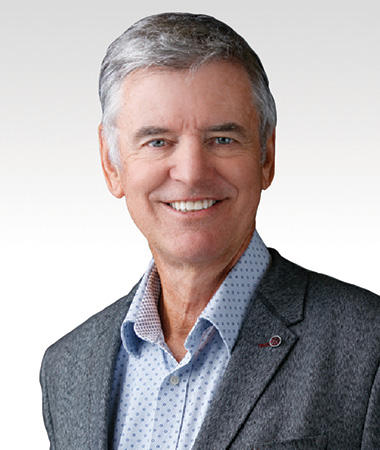
“I don’t care how you teach,” Hattie said in May at the 37th APS Annual Convention in Washington, DC. “I care about the impact of your teaching.”
The University of Melbourne scholar delivered the APS–David Myers Distinguished Lecture on the Science and Craft of Teaching Psychology. The annual convention lecture, named after APS Fellow and science-communication expert David Myers of Hope College, is sponsored by the APS fund for Teaching and Public Understanding of Psychological Science.
Drawing on his study of more than 2,500 meta-analyses covering up to 300 million students worldwide, Hattie challenged educators to fundamentally rethink the evaluation of teaching effectiveness, particularly in higher education. Hattie said the field needs to move its focus beyond teaching methods and concentrate instead on the measurable impact of teaching on student learning.
APS 2025 Convention registrants: Watch the recording of Hattie’s session.
Hattie dismissed the traditional reliance on student satisfaction surveys as measures of teaching quality. Those surveys are no more informative than asking airline passengers to rate pilot competence, he joked. Instead, teachers and education researchers should focus on evidence-based measures of learning outcomes.
Hattie’s research finds that nearly all teaching approaches have some positive effect.
“Overall, 95 to 98% of the things that we do to students improves their learning,” he said. “All you need to improve learning is a pulse.”
Many popular pedagogical trends, such as certain applications of flipped classrooms and problem-based learning, show highly variable results depending on implementation and context, he said. For example, flipped classrooms—in which students learn new material at home and then apply that knowledge in problem-solving activities during class time—produced the strongest gains when students were exposed to content before and during class, effectively doubling their opportunities to learn.
“Flipped learning is the most effective when students are asked to watch a video of the lecture before they come to class, and then have the lecture repeated in the class,” he said.
Hattie introduced his “Five F” model to guide effective instruction:
- Framing: Clearly defining what success looks like before instruction begins.
- Fail: Identifying what students don’t know and making them view errors as learning opportunities rather than failures.
- Flip: Providing multiple exposures to learning material.
- Inform: Distinguishing surface knowledge (facts) and deep knowledge (connections and applications), and tailoring instruction accordingly.
- Feedback: Getting feedback about your effectiveness as a teacher and taking actionable steps that help students improve.
Hattie emphasized the importance of teaching students not just what to learn, but how to learn. Students often lack the ability to evaluate and drive their own learning, he said. Educators must explicitly teach strategies for planning, consolidating, and critiquing learning.
Hattie also discussed the risks and opportunities that artificial intelligence (AI) poses. Although AI can automate assessments and provide new learning tools, students need to develop the ability to ask quality questions, critique information, and evaluate the quality of AI-generated content.
“We do not teach our students to ask questions,” he warned, stressing the need to encourage deeper cognitive engagement.
Hattie encouraged teachers to act as evidence-seeking detectives who consistently monitor their own impact on student learning.
“As a consequence of my teaching today,” Hattie urged educators to ask themselves, “what did I have impact on, and what did I not have impact on?”
When schools and departments adopt collective responsibility for student learning outcomes, they can achieve dramatically higher rates of progress, he said.
“Students are the biggest beneficiaries,” he concluded, “when teachers critique each other’s impact.”
Related APS 2025 Content
-

Keynote Address: Developmental Plasticity and Language Reorganization After Pediatric Stroke
Many have suggested that there is plasticity for language in early life, allowing children to acquire language by using other cortical regions when left hemisphere language areas are damaged. Are these claims true? Newport explores in this Keynote Address.
-

Inclusivity Spotlight: The More You Know: Essential Truths for Social Justice Research, Practice, and Policy
In this Inclusivity Spotlight, Barrett highlights principles to effectively engage in research, practice, and policy that produces equitable outcomes.
-

Plenary Panel Session: Human Language and Thought in the Era of Large Language Models
This symposium brings together leading early career voices whose work engages with the relationship between human language and LLMs.
Feedback on this article? Email [email protected] or login to comment.



APS regularly opens certain online articles for discussion on our website. Effective February 2021, you must be a logged-in APS member to post comments. By posting a comment, you agree to our Community Guidelines and the display of your profile information, including your name and affiliation. Any opinions, findings, conclusions, or recommendations present in article comments are those of the writers and do not necessarily reflect the views of APS or the article’s author. For more information, please see our Community Guidelines.
Please login with your APS account to comment.