
Science, Industry, and AI: Highlights From the 2026 APS Annual Convention in Barcelona
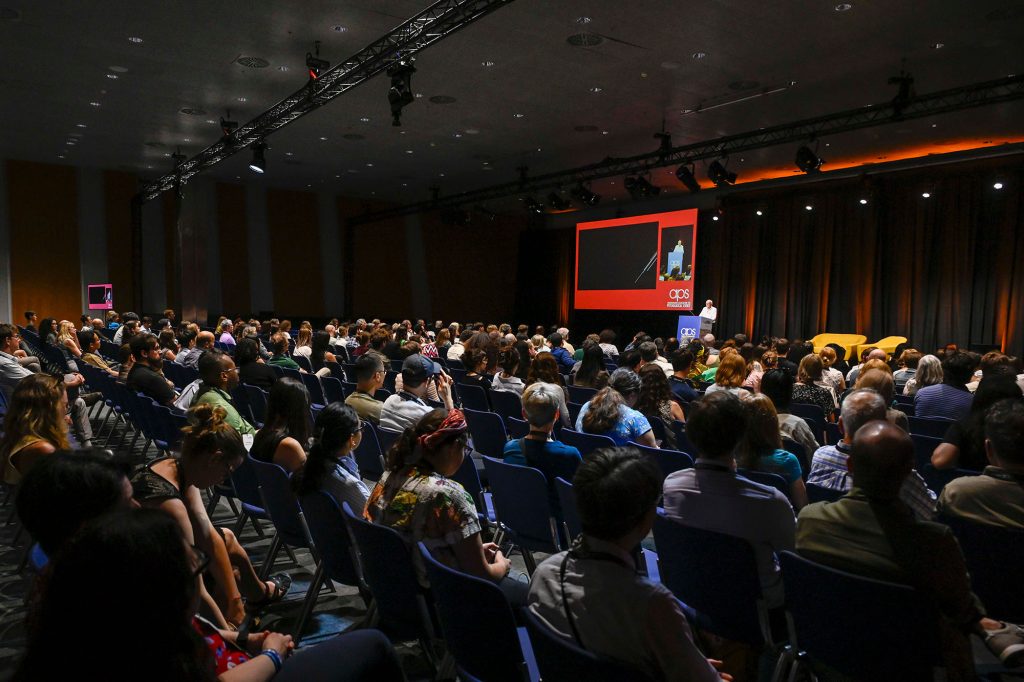
Image above: 2025-2026 APS President James W. Pennebaker welcomes attendees to the 2026 APS Annual Convention during the opening plenary on 28 May 2026.
Multidisciplinary collaboration and approaches to tackling real-world problems were in the spotlight at the 2026 APS Annual Convention in Barcelona, Spain, where nearly 2,500 attendees from 73 countries gathered to present their research and meet with colleagues to discuss the future of the field.
This year’s scientific convention featured an array of innovative programming, including the first-ever Industry Day and six Integrative Science Symposia (ISS), in addition to dynamic plenary sessions, methodological workshops, professional development opportunities, and much more during the 3-day conference.
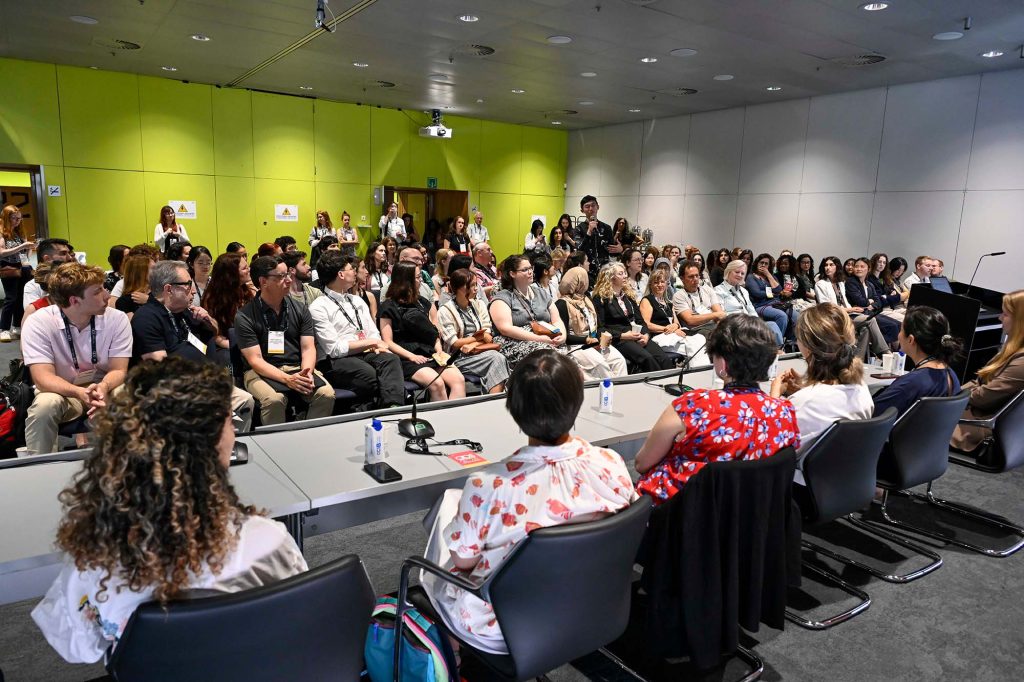
Thursday’s Industry Day, which explored psychological science in nonacademic settings, was designed to bring together doctoral candidates, industry leaders, innovators, and academic researchers to explore the role psychological science plays in the modern, rapidly evolving job market and innovation ecosystem.
Focusing on the contributions of our science to industry, this year’s Industry Day featured dynamic conversations between attendees and presenters across four sessions.
In one standing-room-only session, “Beyond Academia: Creating Value and Transitioning to Industry Roles,” which highlighted how psychological scientists can work in nonacademic environments, participants discussed their transition to industry roles—and the benefits of integrating their psychology expertise into their professions.
“Don’t think too narrow,” said Alexandra Kalpadaki-Smith, who works with AstraZeneca’s digital health technology company Evinova, to early career scientists, “or that your next steps need to be directly connected to your research.”
Instead, Kalpadaki-Smith and the three other presenters advised early career professionals to stay open to outside possibilities. Social psychologist Cindy Chung (Travelers Insurance) stressed, “It’s really the openness, the curiosity to study exactly what’s happening out there in the real world. …You have that curiosity and you can go anywhere.”
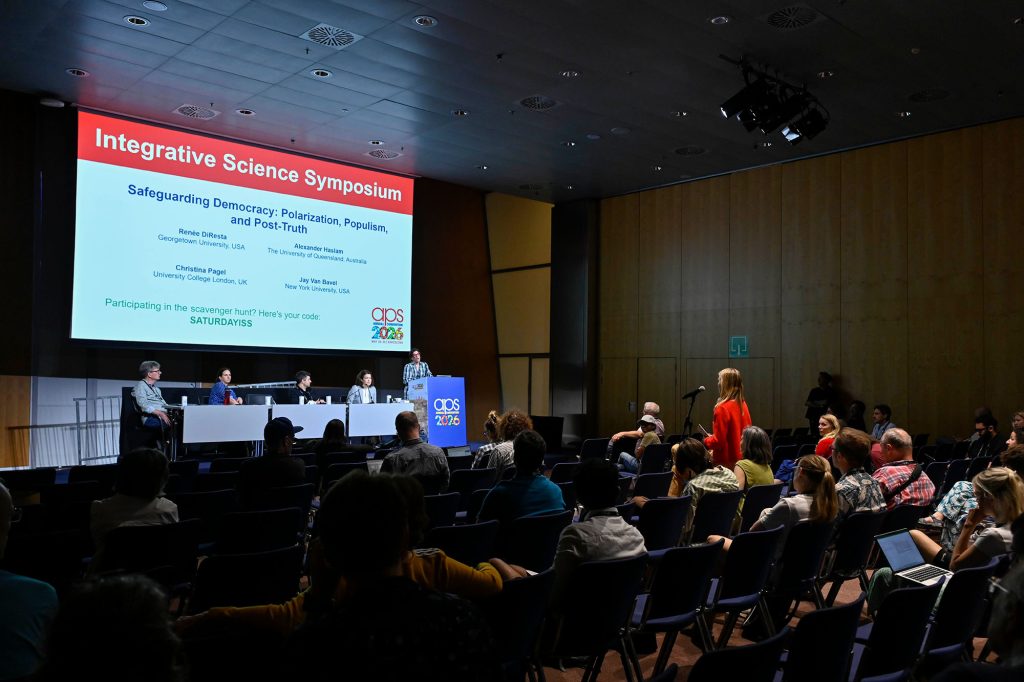
Held on the second and third days of the convention, ISS sessions explored complex scientific questions through research from multiple domains, including the impact of AI on science and our society, explorations of mental health, brain development, individual and collective cognition, and threats to democracy.
In one ISS session, “Safeguarding Democracy: Polarization, Populism, and Post-Truth,” speakers touched on one of the primary themes of this year’s annual convention: Tackling democratic backsliding through scientific resilience.
For registered attendees: The 2026 APS Annual Convention plenaries are now available!
Christina Pagel, a professor of operational research at University College London, explored how scientific bodies are vulnerable to political interference, from funding dependence to legal status and leadership. Pagel stressed that vulnerabilities extend beyond the current backsliding seen in the United States, and recognizing those vulnerabilities could help scientists defend academic freedom now and in the future.
Pagel’s colleague and APS Fellow Stephan Lewandowsky (University of Bristol) spoke further on the topic in a presidential plenary panel on the fall of civilizations, where panelists explored the past and its importance to the modern-day unrest that traditionally democratic countries such as the United States, United Kingdom, and much of Europe, are currently experiencing.
Related content: New Anti-Autocracy Handbook Aims to Give Power Back to Scholars
“Congress has drifted away from evidence towards intuition,” Lewandowsky said during his presentation. “What are the consequences of that?”
Several scientists discussed the future of psychological science during the opening plenary session on Thursday evening with presentations from APS President James W. Pennebaker (University of Texas at Austin), APS Board of Directors Strategic Initiatives Liaison Mary P. Czerwinski (Microsoft Research [ret.] and University of Washington), and Advances in Psychological Science Open Editor Rachael Jack (University of Glasgow).
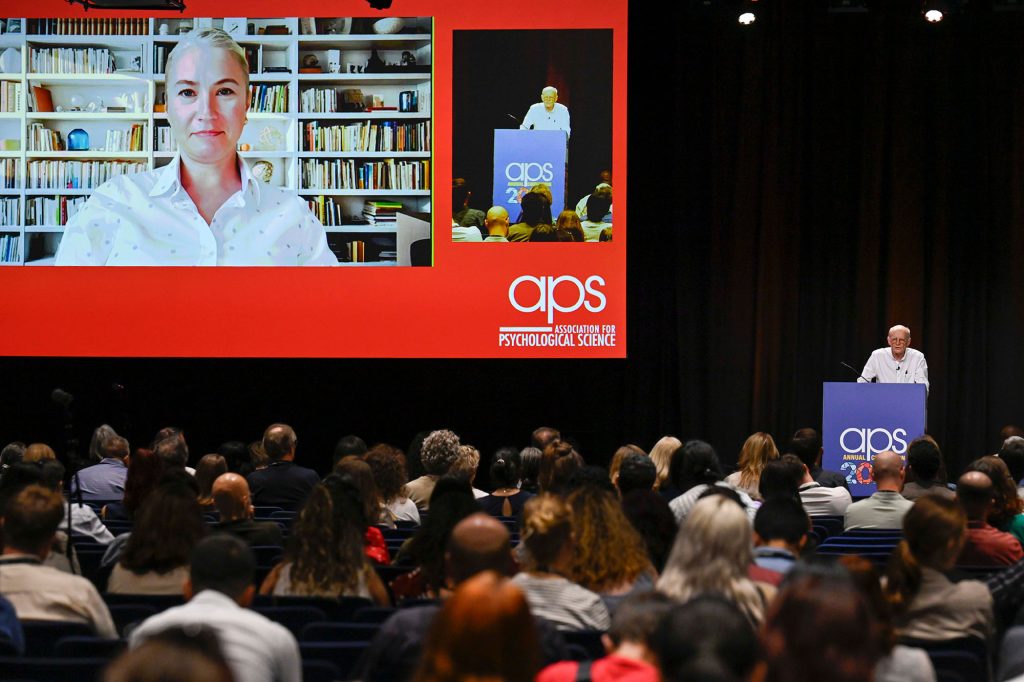
Jack closed out the panel with a presentation on the global challenges and opportunities of recent shifts in psychological science, including the growing usage of AI, technological advancements, changing career structures, and societal uncertainty.
“Psychological science is entering a period of profound transformation,” Jack said. “In many ways the field is being asked to rethink not only what we study, but also how we train scientists, how we collaborate, and what psychology is ultimately for. Those are not challenges that any one institution, country, or scientific tradition can solve alone.”
The plenary panel session on Saturday night explored the future of AI and LLMs with presentations on the collective behavior of AI agents, how AI shapes human attention, and a discussion of the ways AI perceives humans.
In his presentation, Ryan Boyd (University of Texas at Dallas) emphasized the importance of examining what AI will do to humans as it becomes more embedded in our daily lives.
“I have a colleague that says generative AI in academia is like Ozempic in Hollywood—everyone is using it, and no one wants to admit they are using it,” Boyd said.
Boyd argued that psychological science has a major opportunity to use generative AI to test models of complex psychosocial processes in a way that mimics naturalistic experiments. Although scientists from other fields regularly use models to inform their findings, Boyd said the situation facing psychological scientists is unique.
“What we have here is an opportunity that other scientists don’t have,” he said. “We have LLMs that create real psychological change in real people out in the real world.”
However, Nuria Oliver, director of the ELLIS Alicante Foundation and the plenary’s final speaker, cautioned that before allowing AI and LLM systems to make decisions in public domains, researchers must first understand the algorithms they are seeking to utilize. The systems are created by humans, she continued, therefore they have baked-in cognitive biases and societal stereotypes.
“When AI makes judgments of us or when AI generates images of us, it also exacerbates our own biases, but at a global scale,” she said. “They are used by hundreds of millions of people, and they have a multitude of very obvious, but also very subtle, biases that impact our lives—and our decision making.”
The convention also featured 14 poster sessions showcasing 1,580 posters from researchers across the field, providing attendees with the chance to explore each other’s ongoing research, offer and receive feedback from fellow scientists, and collaborate outside of the more structured programming.
Although this year’s conference has come to a close, APS members are invited to begin planning to attend the 2027 Annual Convention, which will be held in Seattle, Washington, May 27–30, 2027. Stay tuned for more details, submission dates, and much more!
See all coverage of the 2026 APS Annual Convention in Barcelona, Spain.
Feedback on this article? Email [email protected] or login to comment.



APS regularly opens certain online articles for discussion on our website. Effective February 2021, you must be a logged-in APS member to post comments. By posting a comment, you agree to our Community Guidelines and the display of your profile information, including your name and affiliation. Any opinions, findings, conclusions, or recommendations present in article comments are those of the writers and do not necessarily reflect the views of APS or the article’s author. For more information, please see our Community Guidelines.
Please login with your APS account to comment.