
Six Psychological Scientists Receive 2026 APS Janet Taylor Spence Award
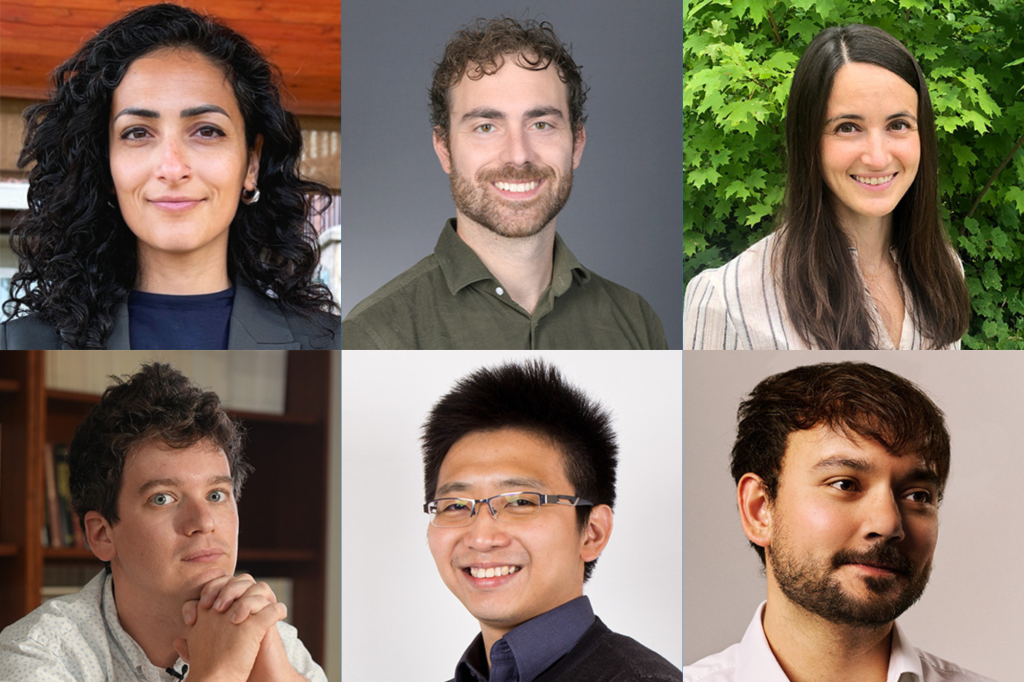
2026 Spence Recipients, clockwise from top left: Dorsa Amir, William Brady, Emily Finn, Daniel Yon, Yuan Chang Leong, Andrew Grotzinger.
Six early career scientists have been selected as recipients for the 2026 APS Janet Taylor Spence Award for Transformative Early Career Contributions. Each recipient has led trailblazing research, including on how our environments shape cognition, the brain’s ability to build models of the world and ourselves, and psychology’s interaction with technology.
First awarded in 2010 and named after APS’s first president, the Spence Award honors creative and promising APS members who embody the future of the field.
The recipients will be honored in May at the 2026 APS Annual Convention in Barcelona, Spain. Spence Awardees are also automatically granted status as APS Fellows in the review cycle following their award.
Learn more about the APS Janet Taylor Spence Award for Transformative Early Career Contributions, including previous recipients, the selection committee, and the nomination process and criteria.
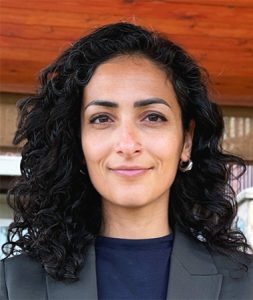
Dorsa Amir
Duke University
PhD 2018, Yale University
Amir’s research examines the relationship between culture and cognition, exploring how cultural environments shape cognitive development and how cognitive processes, in turn, contribute to cultural patterns. Her work features collaborations with families and researchers all around the world, with a focus on small-scale societies. Through this approach, Amir’s research maps if, when, and how culture penetrates cognition, from low-level perceptual processes to higher-level decision making, with the aim of reintegrating the study of culture into core questions in cognitive science.
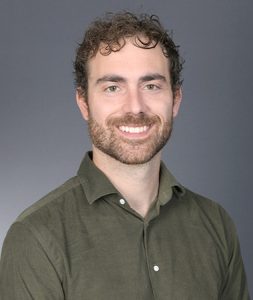
William Brady
Kellogg School of Management, Northwestern University
PhD 2018, New York University
Brady’s research examines how human psychology interacts with technology-mediated social contexts to shape our morality and emotions. His work integrates affective science with computational social science to study social learning, emotional expression, and collective behavior within digital social networks. For example, his recent work sheds light on how AI-driven systems can amplify, suppress, or redirect social learning processes, with consequences for cooperation and polarization. His research has informed policy discussions and regulatory efforts aimed at addressing social media harms and digital platform governance.
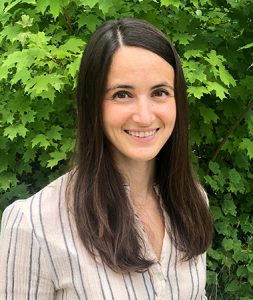
Emily Finn
Dartmouth College
PhD 2017, Yale University
Finn’s research program is focused on across- and within-person variability in brain activity and subjective experience. Her work has established the primacy of individual differences in functional brain organization and new methods for discovering and validating relationships between brain function and behavioral phenotypes. Current work in her lab aims to understand how and why different people, or even the same person at different times, come to different interpretations of the same sensory input, with a particular focus on high-level social information. Straddling social and cognitive psychology and neuroscience, Finn’s work combines neuroimaging, behavior, and computational tools to yield new insights into how traits, states, beliefs, and prior experiences shape our interpretations of ambiguous information.
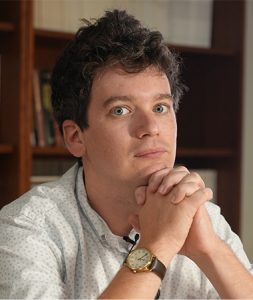
Andrew Grotzinger
University of Colorado Boulder
PhD 2021, University of Texas at Austin
Grotzinger develops and applies multivariate methods to better understand the genetic signal for psychiatric and neurodegenerative conditions. His work is motivated by the observation that these disorders show high levels of comorbidity and genetic overlap. This indicates that genetic risk for any one disorder can only be obtained by placing that disorder within the broader constellation of genetically overlapping traits and disorders. Grotzinger has validated and applied multivariate methods, like Genomic Structural Equation Modeling, to separate out and functionally characterize transdiagnostic versus disorder-specific risk pathways across a wide range of psychological outcomes.
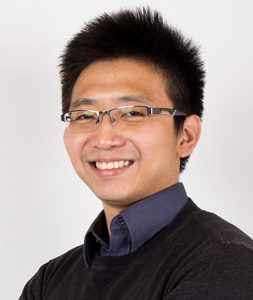
Yuan Chang Leong
University of Chicago
PhD 2019, Stanford University
Leong’s research advances a mechanistic account of the psychological and neural processes through which emotions and social experiences shape perception, memory, and social interaction. He uses a multimodal approach that combines self-report, physiological measures, computational analyses of natural language and naturalistic behavior, and functional brain imaging to study cognition in contexts that resemble everyday life. Research in his lab has investigated how goals and desires warp visual perception, how partisan biases shape the interpretation of political messages, and how emotional and cognitive dynamics influence the way people comprehend and remember stories. Ultimately, his work seeks to reveal how affect and social context construct subjective experience so that these processes can be targeted to improve mental health, reduce bias, and facilitate interpersonal communication.
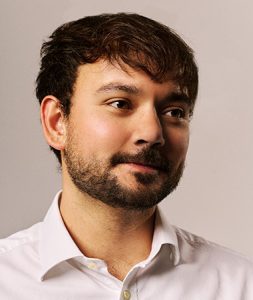
Daniel Yon
Birkbeck, University of London
PhD 2018, Birkbeck, University of London
Yon’s research investigates how our brains build models of the world and ourselves—and how these models shape perception, decision, and belief. A key focus has been on prediction and understanding how predictions made by the brain shape our perception of the external world (objects and other people) and the internal world of our own minds. Yon joined the faculty at Birkbeck, University of London in 2021. He has also held visiting fellowships at the Institute of Advanced Study, Paris, and All Souls College, Oxford. In 2025, Yon published his first book, A Trick of the Mind: How the Brain Invents Your Reality.
Learn more about the APS Janet Taylor Spence Award for Transformative Early Career Contributions.
Feedback on this article? Email [email protected] or login to comment.



APS regularly opens certain online articles for discussion on our website. Effective February 2021, you must be a logged-in APS member to post comments. By posting a comment, you agree to our Community Guidelines and the display of your profile information, including your name and affiliation. Any opinions, findings, conclusions, or recommendations present in article comments are those of the writers and do not necessarily reflect the views of APS or the article’s author. For more information, please see our Community Guidelines.
Please login with your APS account to comment.