
Are We Ready for the Next Public Health Crisis?

- “Cultural defaults” in the United States and East Asian countries played a role in vastly different responses to the COVID-19 pandemic.
- Children presented with a task meant to mimic the social dynamics of mask wearing were able to assess consequences to both the individual and community overall.
- Children’s attitudes toward mask-wearing matched the dominant political perspective of the county where they lived.
- During the COVID-19 pandemic, U.S. individuals with lower incomes experienced more hardships such as unemployment, lost health insurance, evictions, and hunger.
After the COVID-19 pandemic began, it did not take Hazel Markus, Jeanne Tsai, and their colleagues at Stanford and Kyoto University long to notice the different ways people were reacting to the crisis. Their Japanese colleague, APS Fellow and Board Member Yukiko Uchida, appeared notably calm as the events unfolded, compared to her American colleagues who were visibly disturbed.
“We were just trying to process what was going on,” remembered Tsai, another APS fellow. “It was so striking how different Yukiko’s responses were, what she was reporting from Kyoto and in Japan more broadly, and how different it was from what we were experiencing here.”
As the pandemic continued, trends emerged that illustrated the potential consequences of these differences in cultural responses. For example, by the end of 2023, the United States had suffered 4–6 times more deaths per 100 thousand people than did Japan, Taiwan, or South Korea (United States Census Bureau, 2024).
“Despite the fact that the U.S. very quickly developed a highly effective vaccine, the East Asian countries of Japan, Taiwan, and South Korea outperformed the U.S. in responding to and controlling the virus,” Tsai said.
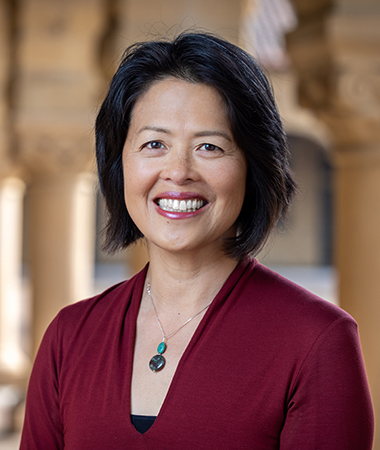
To help make sense of these striking differences, the research team proposed that “cultural defaults”—common-sense, taken-for-granted habits of thinking, feeling, and acting—played a significant role in how countries responded to the pandemic. They examined six contrasting pairs of defaults reflected in the responses of people and organizations in the United States who confronted questions such as “Will this happen to me/us?” or “What should I/we do?”
Their analysis, published in Psychological Science in the Public Interest, links the vastly different responses to the COVID-19 pandemic in United States and East Asian countries to embedded cultural values and practices.
The defaults common in the United States included optimism–pessimism, single cause, higher arousal, influence and control, personal choice and self-regulation, and promotion. The defaults common in East Asia included realism–similarity, multiple causes, lower arousal, wait and adjust, social choice and social regulation, and prevention (Markus et al., 2024).
“The American defaults of optimism and influence and control were useful for motivating the rapid production of a vaccine,” said Markus, an APS William James Award recipient. “Yet the defaults of high emotional arousal and an insistence on personal choice served Americans less well when it came to complying with masking and vaccination recommendations.”
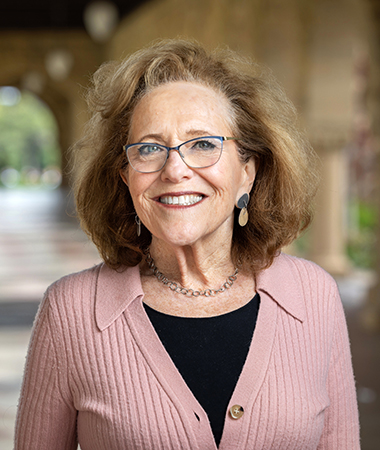
The authors identified these defaults by synthesizing results from empirical literature in cultural psychology that documented differences in the behavior of European Americans and East Asian communities. They then linked those defaults to statements from high-level government officials and other organizational decision makers.
In one example, Anthony Fauci, former head of the U.S. National Institute of Allergy and Infectious Diseases, was initially optimistic. He said of the novel coronavirus that although “you need to take it seriously … this is not a major threat to the people of the United States.” Conversely, the prime minister of Japan at the time, Shinzo Abe, was more realistic and assumed the crisis would affect them, saying, “fighting an enemy that is hard to see and to understand is not easy” and “this is most certainly not someone else’s problem.”
According to the research team, which also included Amrita Maitreyi (Stanford University) and Angela M. Yang (Boston College), these cultural defaults are not fixed human tendencies, stereotypes, or biases to be rooted out. Instead, they are built into cultural contexts through the policies and practices of institutions, as well as into the practices and norms of social networks and daily interactions.
“These can have good or bad consequences,” Markus said. “It just depends on the crisis or the problem to be solved.”
Learn more about this study: Cultural Differences Account for Starkly Different Responses to COVID-19
Understanding cultural differences is especially important for public health officials who are tasked with managing the community response to crises like the COVID-19 pandemic, Markus said, adding that the team identified differences among nations, regions, and political orientations.
“Public health officials confronted the diversity of our multicultural, multiracial, very politicized society in which people may think differently about the same event,” Markus said. “If you’re going to appeal to them, to motivate them, you can’t have a one-size-fits-all message.”
In their paper, the team offers a set of recommendations for how public health officials and other decision makers could consider cultural defaults as they construct new policies and procedures to manage future threats.
These guidelines are designed to embed cultural considerations into each step of the response to a threat, including future pandemics, as well as other crises such as those incited by climate change. For example, recommendation #5 directs decision makers to “prepare for resistance to recommended behaviors that counter cultural defaults.”
Although it may seem such a consideration should and would certainly be acknowledged during a large-scale crisis, cultural factors are rarely considered with the necessary nuance. The dominance of research focused on Western, Educated, Industrialized, Rich, and Democratic (WEIRD) populations throughout psychology contributes to this homogenization, Markus said.
Tsai added that connecting the research to those who are making policy decisions is another challenge—one that motivated the team to direct their paper to the needs of practitioners specifically.
“There’s so much information. It’s just so hard to get at it,” Tsai said. “Even when people want to learn more, it’s hard for them to find it.”
‘Children are really clever’
APS Janet Taylor Spence Award recipient Felix Warneken studies how children think about fairness and morality, including their understanding of social norms and the impacts those norms have on their behavior.
Though he had never conducted any research focused on public health before, the moral dilemmas inherent within the COVID-19 pandemic presented an interesting opportunity to study if and how children respond to a sudden change in social norms.
“We thought it would be interesting to see how kids adopt these completely novel norms that, interestingly, also often go against exactly what has been taught,” said Warneken, a professor of psychology at the University of Michigan, Ann Arbor.
Warneken and his team developed an experiment to mimic the social dynamics of mask wearing, but with a completely new context. In the experiment, they described a society of aliens called Furpees (Probst et al., 2023). Furpees have spikes on their bodies that can injure another Furpee if they get too close and run into one other. The Furpees have caps that they can place over their spikes to protect those around them, but the caps are heavy and uncomfortable.
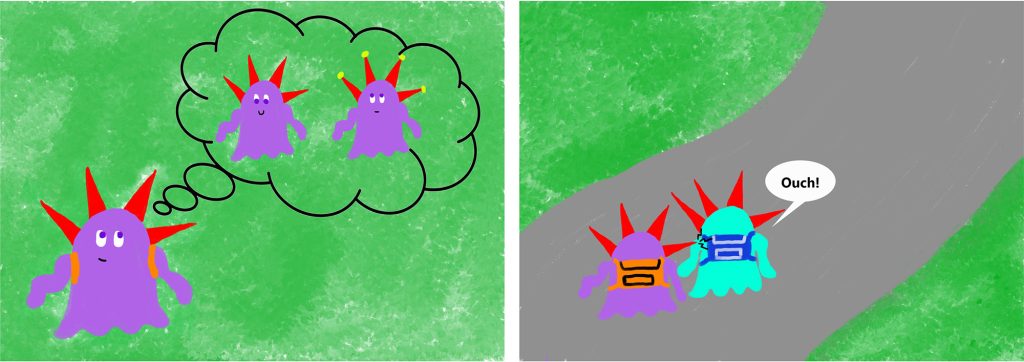
In the study, the children were asked to think about the impacts to the individual Furpee as well as others in the community, and how the severity of that impact might influence whether each Furpee should wear a cap on their spike or not. Warneken and his coauthor Katherine McAuliffe (Boston College) also published an overview of the research in Current Directions in Psychological Science (Warneken & McAuliffe, 2025).
“The kids really track the consequence of it,” Warneken said. “If it really hurts someone else, then the kids say these Furpees should really put on these caps, and a Furpee who doesn’t do it, they don’t like them as much.”
Whereas if the caps don’t make a big difference, the children in general said that the Furpees can choose whether they want to wear the caps or not.
“What this also then tells us is that kids are able to think through this, and they’re not just blindly copying what other people are saying,” he said. “Most of the time that’s the lesson from our studies with kids, that they’re just really clever.”
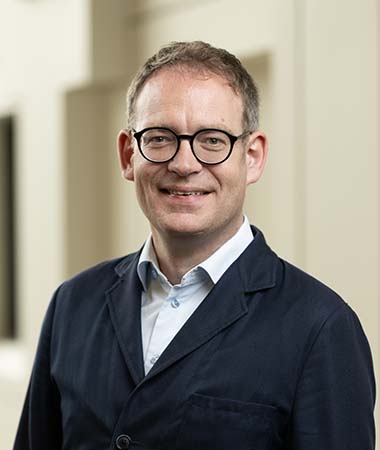
In a separate study, Warneken and McAuliffe worked with Anton Gollwitzer (BI Norwegian Business School), Julia Marshall (Boston College), and other U.S. researchers to analyze children’s attitudes toward mask-wearing by ZIP code (Gollwitzer et al., 2024). The team found that the children’s attitudes matched the dominant political perspective of the county where they lived. Political orientation was found to be a better predictor of COVID-19 behaviors than education, income, religion, population density, or infection rates. These findings show that attitudes toward masks were passed down to children from adults.
But Warneken pointed out that this study doesn’t tell the whole story.
“The kids do have a lot of agency, and there are many, many contexts in which they’re unsupervised,” he said. “Kids also have their own opinions and live in immersing peer groups and do their own thing.”
Warneken emphasized the importance of ensuring that children understand the reasoning behind social norms—that adults take the time to explain it to them—because there are many circumstances where they are faced with making their own choices and not just following the lead of the adults in their lives.
“The children of today are going to be the decision makers of the future,” he said, adding that this future generation may not be as shocked by a public health crisis and better equipped to manage it.
“It would be terrible if we don’t learn any lessons from this,” he said.
The privilege of well-being
Though the physical consequences of the COVID-19 pandemic dominated many public policy discussions, the effects of the crisis on psychological well-being were just as impactful, especially for those facing other stressors.
“In the last couple decades, we have seen Americans exposed to some major historical stressors, one of which was the Great Recession, and then on the heels of that, we have the great pandemic—the COVID-19 pandemic,” said APS Fellow Carol Ryff, Hilldale Professor of Psychology at the University of Wisconsin, Madison. “What the science is showing about those things is that people don’t suffer equally.”
Ryff explores longitudinal data from the Midlife in the United States (MIDUS) study to investigate big-picture trends in health and well-being.
The data clearly show that those who experienced more hardships—such as unemployment, financial insecurity, homelessness, and many other factors—are those who were more vulnerable prior to when a crisis strikes, she said.
“I am deeply, deeply concerned about the magnitude of inequality in the U.S., which is growing over time,” Ryff said.

In a 2024 issue of Current Directions in Psychological Science, Ryff revisited an article she published in the same journal in 1995 that described a new approach to psychological well-being based on ideas from a range of psychological subfields. The focus was on eudaimonic well-being, which speaks to existential challenges such as finding purpose in life, experiencing personal growth, and having self-acceptance.
Her review highlights that well-being is increasingly limited to privileged segments of society (Ryff, 2024), with other new findings showing persistently lower levels of well-being over 20 years among those with only a high school education compared to those with college degrees (Boylan et al., 2025).
Ryff argues that the COVID-19 pandemic exacerbated problems linked to inequality. Those with lower incomes experienced more hardships such as unemployment, lost health insurance, evictions, and hunger. Those with lower incomes were also less likely to stay home and their children made less progress in online education (Serkez, 2021).
Though research findings on these disparities are clear, consistent, and growing, policy decisions during the COVID-19 pandemic did little to address or mitigate the increased vulnerabilities of disadvantaged individuals.
“Basically, it was like run as fast as you can to try to get ahead of this massive societal worldwide challenge just to get people to take vaccines,” she said. “What was missing, and this was also true of the Great Recession, was a broader focus on preexisting differences in people’s socioeconomic standing and their well-being.”
Ryff sees this as a missed opportunity, especially as countries around the world are realizing the instrumental impact well-being has on overall health, thus underscoring its importance for public policies and health decisions.
“It turns out that people with higher levels of purpose in life live longer after you adjust for all kinds of so-called confounding factors,” Ryff said. She added that the finding has been documented in a meta-analysis with over 136,000 participants (Cohen et al., 2016).
“It’s a big reliable finding, and other studies have shown that higher purpose in life also is linked with lower cardiovascular risk, better inflammatory profiles, and better emotion regulation in the brain,” she said.
Ryff has seen well-being research integrated into policy firsthand. She served on an advisory committee for the Organization for Economic Cooperation and Development (OECD), an intergovernmental organization that consists of 38 member countries who work together to promote economic growth and improve social well-being.
“Major historical stressors only heighten the importance of who does and does not have well-being, and they are likely to have a long-term legacy,” she said. “We will track that the people with higher levels of hardships, I think, will be showing the adverse health consequences of those hardships for years to come. I can’t be certain about that, but that’s why we do the research. That’s why we do the science.”
Feedback on this article? Email [email protected] or login to comment.
Boylan, J. M., Choi, J. H., Kirsch, J. A., & Ryff, C. D. (2025). Educational disparities in 20-year trajectories of psychological well-being in a national sample. Scientific Reports, 15(1), 11437.
Cohen, R., Bavishi, C. & Rozanski, A. (2016). Purpose in life and its relationship to all-cause mortality and cardiovascular events: A meta-analysis. Biophysical Science and Medicine, 78 (2), 122–133.
Gollwitzer, A., Marshall, J., Lee, Y. E., Deutchman, P., Warneken, F., & McAuliffe, K. (2024). Parent and community political orientation predicts children’s health behaviours. European Journal of Social Psychology, 54(4), 843–858.
Markus, H. R., Tsai, J. L., Uchida, Y., Yang, A. M., & Maitreyi, A. (2024). Cultural defaults in the time of COVID: Lessons for the future. Psychological Science in the Public Interest, 25(2), 41–91.
Probst, S., Nowack, A., & Warneken, F. (2023). Children’s moral reasoning about self-versus other-benefiting public health measures. Journal of Experimental Child Psychology, 229, 105623.
Ryff, C. D. (2024). The privilege of well-being in an increasingly unequal society. Current Directions in Psychological Science, 33(5), 300–307.
Serkez, Y. (2021). We did not suffer equally. New York Times, March 11, 2021.
United States Census Bureau (2024). US and World Population Clock.
Warneken, F. & McAuliffe, K. (2025). Lessons for the next pandemic: What children taught us about navigating new social norms during COVID-19. Current Directions in Psychological Science, 34(2), 122–130.



APS regularly opens certain online articles for discussion on our website. Effective February 2021, you must be a logged-in APS member to post comments. By posting a comment, you agree to our Community Guidelines and the display of your profile information, including your name and affiliation. Any opinions, findings, conclusions, or recommendations present in article comments are those of the writers and do not necessarily reflect the views of APS or the article’s author. For more information, please see our Community Guidelines.
Please login with your APS account to comment.