
-

Gossip May Create Community
Getting the scuttlebutt on your friends, neighbors, and colleagues’ social slip-ups may be key to building community
-

APS: Leading the Way in Replication and Open Science
Read about the breadth of APS activities on advancing replicability and reproducibility in psychological science.
-
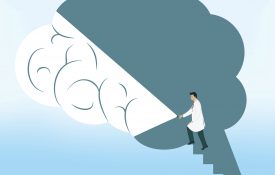
Where Psychological Science and Cancer Research Unite
Acute stress and chronic-stress-induced inflammation contribute to the progression of cancer, research shows.
-

How to Learn What Not to Study
To avoid overestimating your abilities, reflect on past learning rather than trying to guess how you’ll perform in the future.
-
Three Approaches to Understanding and Classifying Mental Disorder: ICD-11, DSM-5, and the National Institute of Mental Health’s Research Domain Criteria (RDoC)
Psychological Science in the Public Interest (Volume 18, Number 2 ) Read the Full Text (PDF, HTML) When people go to a clinician for mental-health assistance, the diagnostic process can often seem quite straightforward: Patients discuss their symptoms, and the clinician then matches those symptoms to a disorder and devises a treatment. However, this simplified view of the diagnostic process belies the complexity inherent in understanding, classifying, and diagnosing psychiatric phenomena. In this issue of Psychological Science in the Public Interest (Volume 18, Issue 2) Lee Anna Clark, Bruce Cuthbert, Roberto Lewis-Fernández, William E. Narrow, and Geoffrey M.
-

Is There an Ideal Number of Health Messages to Prompt New Habits?
Intending to follow through with health recommendations may depend on how many suggestions your doctor gives.
