
-

Some Cognitive Skills Are Easier to Train Later
Older adolescents and adults can learn certain thinking skills, including non-verbal reasoning, more effectively than younger people.
-

Individuals’ Well-Being Linked With When and How They Manage Emotions
Using reappraisal to regulate our emotions in situations we actually have control over may be associated with lower well-being, researchers find.
-
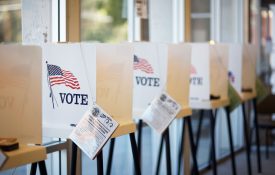
Using Science to Understand How Ballot Design Impacts Voter Behavior
Concern over the security of the voting process is a recurring issue, but psychological science suggests an even bigger problem may lurk within our voting systems: poor design.
-
Brain-Training Claims Not Backed by Science, PSPI Report Shows
A scientific review puts the claims behind brain-training games and apps to the test.
-
Ready, Set, Type! Touch Typists Are Faster, But Not By Much
The first typewriter, invented by a newspaper printer and editor named Christopher Sholes in 1868, had a keyboard arranged like piano keys. Initially, the inventors thought that an alphabetical arrangement of 28 letters in a
-

Faced With Ambivalence, Powerful People Are Less Decisive Than Others
Although powerful people often tend to decide and act quickly, they become more indecisive than others when the decisions are toughest to make, a new study suggests.
