
-
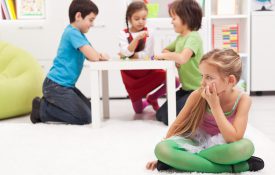
Withdrawn Children Show Predictable Brain Activity During Social Interactions
New scientific findings provide insight into the brain activity of socially withdrawn children.
-
Infants’ Brain Activity Shows Signs of Social Thinking
An innovative collaboration between neuroscientists and developmental psychologists that investigated how infants’ brains process other people’s action provides evidence directly linking neural responses from the motor system to overt social behavior in infants. The research is
-
New Research From Psychological Science
Read about the latest research published in Psychological Science: I Think, Therefore Eyeblink: The Importance of Contingency Awareness in Conditioning Gabrielle Weidemann, Michelle Satkunarajah, and Peter F. Lovibond Associative learning in humans is thought to be
-
Studies Suggest Multilingual Exposure Boosts Children’s Communication Skills
NPR: NPR’s Robert Siegel talks with Katherine Kinzler, associate professor of psychology and human development at Cornell University, about her research into the social skills developed by children raised in multilingual environments versus monolingual environments.
-
The Brain Likes Categories. Where Should It Put Mixed-Race People?
NPR: Humans like to place things in categories and can struggle when things can’t easily be categorized. That also applies to people, a study finds, and the brain’s visual biases may play a role in
-

Where We Live Affects Our Bias Against Mixed-Race Individuals
Whites living in areas where they are less exposed to people of other races have a harder time categorizing mixed-race individuals than do Whites with greater interracial exposure, a condition that is associated with greater
