
-
No evidence to back idea of learning styles
The Guardian: There is widespread interest among teachers in the use of neuroscientific research findings in educational practice. However, there are also misconceptions and myths that are supposedly based on sound neuroscience that are prevalent
-
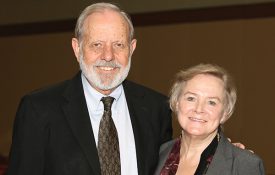
Desirable Difficulties
Most students try to make studying and learning as easy and efficient as possible. But research by APS James McKeen Cattell Fellows Elizabeth L. Bjork and Robert A. Bjork shows that many commonly used learning strategies actually are counterproductive.
-
Notes on Brain Camp
Summers have a special meaning, and perhaps purpose, for academics, whose lives are structured around the 9-month school year. For this reason, and because of the manifold opportunities for internships and summer schools available to
-

Mind Over Midterms
Psychological scientists are studying promising interventions designed to change the mind-sets of students who believe their intelligence is limited or fixed.
-
Bower Reflects on Integrating Two Theoretical Frameworks
At the APS-Psychonomic Society W. K. & K. W. Estes Lecture at the 2016 APS Convention in Chicago, APS Past President and William James Fellow Gordon H. Bower delivered a 60-year retrospective on his attempts
-
Making Science ‘Edible’
Today, parents wanting the best for their children’s intellectual development can turn to a number of “educational” digital apps, a variety of “brain-based” teaching strategies and curricula, and a never-ending stream of videos, toys, games
