
-

Social Psychology Research Today Has More Participants, Online Studies, Self-Report Measures
Collecting data from online participant pools and using self-report measures are two strategies that allow for increased sample sizes while drawing on relatively fewer resources — but have social psychology researchers adopted these strategies?
-

Cross-Examining Our “Fixed Pie” Approach to Truth
The zero-sum fallacy, the idea that a gain in one area must result in a loss in another, may be a confounding factor at work in courtrooms worldwide.
-
Eleven APS Fellows Elected to American Academy of Arts & Sciences
The American Academy of Arts & Sciences has announced the election of more than 200 new members, including 11 APS Fellows. The 2019 class includes APS Past Board Member and James McKeen Cattell Fellow Stephen J. Ceci (Cornell University), and APS Mentor Award Recipient Mark H. Johnson (University of Cambridge) was named an international honorary member. Ceci—who studies the development of intelligence and memory as well the accuracy of children’s courtroom testimony — is the author of approximately 450 articles, books, commentaries, reviews, and chapters.
-
Oral-Health Researchers to Be Recognized at APS Convention
The National Institute of Dental and Craniofacial Research has selected four scientists who are conducting research at the intersection of psychological science and oral health to receive the 2019 Building Bridges Travel Award, offered jointly with APS.
-

Some People Can Thrive After Depression, Study Finds
We may think of depression as a recurring condition with a gloomy prognosis, but findings from one study indicate that nearly 10% of adults in the United States with major depression were thriving ten years later. The findings suggest that some people with depression experience more than a reduction in depressive symptoms over time – they can achieve optimal psychological well-being.
-
Lisa Feldman Barrett Named Guggenheim Fellow
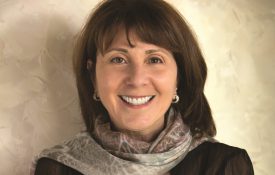
APS President Lisa Feldman Barrett, a leading scholar in emotion research, has received the 2019 Guggenheim Fellowship in neuroscience.
