
Student Notebook: Thinking Beyond the Limits of Screen Time
“Using your phone less” is not a panacea • Screen time is not a single psychological experience • Digital well-being is more than an individual responsibility • Beyond time limits • A shared way forward
It all begins with the best of intentions: You limit your daily social media use to 30 minutes, turn off push notifications, and promise yourself that you will not scroll before bed. Yet only a few hours later, you find yourself instinctively tapping “Ignore Limit for Today.”
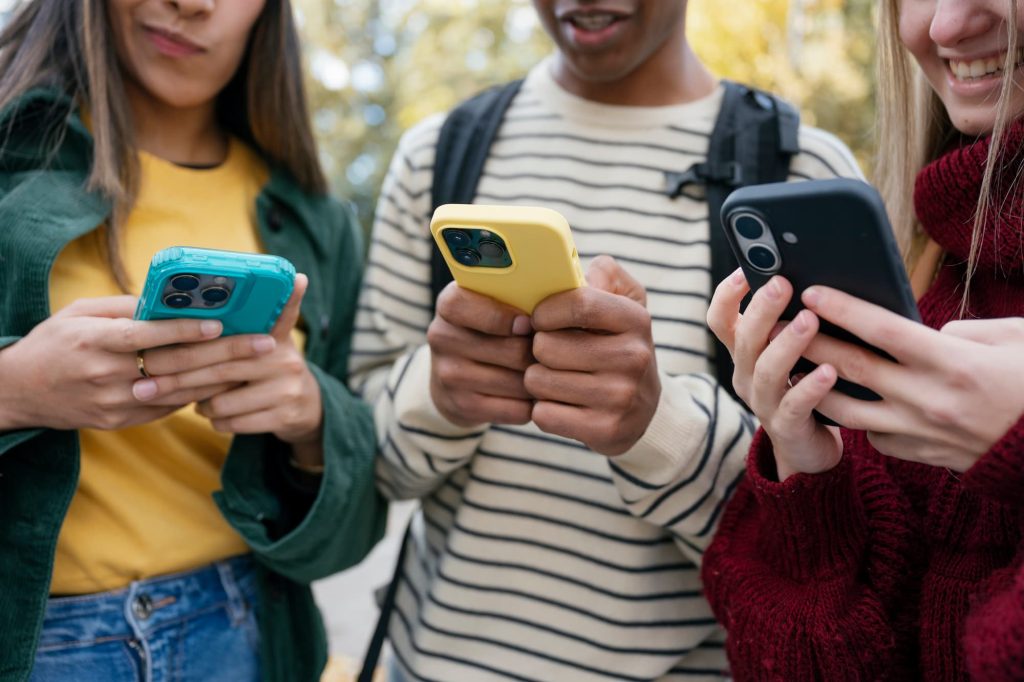
Reaching for a phone, however, is not always a sign of poor self-control. For students, digital life has become deeply intertwined with academic work, social relationships, and everyday routines. We rely on our devices to check university emails, coordinate group projects, stay connected with family and friends who live far away, and access news, information, or mental health support (Vornholt & de Choudhury, 2021). When so much of our academic and personal lives is organized through these devices, putting them down is not only difficult but often unrealistic.
When students struggle to maintain screen-time limits, then, is the problem really just a lack of discipline? Or has our understanding of digital well-being been too simplistic?
“Using your phone less” is not a panacea
A recent four-study investigation by Bradley and colleagues (in press) raised questions about whether strict social media time limits represent a practical and effective solution for young adults. In an attempt to replicate a widely cited study by Hunt and colleagues (2018), the researchers asked young adults, including both students and nonstudents, to limit their social media use to either 30 or 60 minutes per day. Contrary to expectations, restricting use did not significantly improve participants’ psychological well-being compared with using social media as usual.
More importantly, the studies revealed just how difficult these limits were to follow. Despite receiving daily reminders, the vast majority of participants across all four studies regularly exceeded their assigned limits. In the fourth study, only 1.7% of participants successfully followed the limit every day, while more than half did not meet the target on a single day (Bradley et al., in press).
Read more on this article: For Young Adults, Limiting Social Media Use Doesn’t Improve Well-Being
This does not mean that social media is harmless, nor does it mean that reducing use can never be helpful. Rather, these findings suggest that simply recording how much time students spend on social media may provide an incomplete understanding of digital well-being (Ferguson, 2024; Lemahieu et al., 2025). A focus on time alone can easily overlook why students use these platforms, what they do on them, and how different forms of digital activity influence their psychological states in different ways.
Screen time is not a single psychological experience
Two students may spend the same amount of time on their phones, yet that time may mean entirely different things. One student may be passively scrolling through short-form videos, while another is discussing a group assignment with friends. One may become increasingly anxious through repeated social comparison, while another may be seeking a community of people with similar experiences or looking for mental health information (Vornholt & de Choudhury, 2021). Even late-night phone use may involve either habitual scrolling that disrupts sleep or maintaining a sense of connection and social belonging with family members in another time zone (Verduyn et al., 2017).
From a psychological perspective, screen time is better understood as a broad behavioral indicator than as the mechanism that directly shapes well-being. What may matter more is what happens during use: whether repeated upward social comparison intensifies anxiety and negative self-evaluation (Lup et al., 2015), whether online interaction provides belonging and social support (Verduyn et al., 2017), whether anonymity lowers the threshold for disclosing distress and seeking help (Andalibi et al., 2018; Vornholt & de Choudhury, 2021), or whether content repeatedly triggers fear of missing out (Hunt et al., 2018). The same 30 minutes, therefore, will not necessarily produce the same psychological outcome.
Simply measuring time cannot explain what students do online, why they do it, or how those experiences leave them feeling. The effects of social media depend not only on the content students encounter and the ways in which they interact, but also on the purpose and context of use: whether they are seeking information, connection, distraction, or support; whether use is voluntary or academically required; and whether it occurs during study, during social interaction, or late at night. Digital well-being, therefore, cannot be understood through duration alone (Verduyn et al., 2017).
Rather than asking only how long students spend online, we also need to ask what psychological needs they are attempting to meet in digital spaces. Does their use leave them feeling more connected and supported, or more anxious and depleted? When these experiences are simultaneously shaped by academic demands, social relationships, and platform design, digital well-being can no longer be viewed solely as the responsibility of individual students.
Digital well-being is more than an individual responsibility
Students are repeatedly encouraged to reduce their screen time, while at the same time often feeling that they must remain continuously connected: checking university emails, coordinating group projects through messaging apps, submitting assignments through learning platforms, and accessing information and student support through digital systems. In an environment where academic work, social life, and everyday functioning have become highly digitalized, stepping away from screens is not simply a matter of choice; it may carry real costs.
This does not mean that individual agency is irrelevant. Students can protect their well-being by turning off unnecessary notifications, recognizing patterns of use that trigger anxiety, and establishing boundaries around sleep and study. Individual strategies, however, should not be treated as the only remedy. When education, friendship, and essential support increasingly depend on digital systems, asking students simply to disconnect is unrealistic.
Digital platforms are not neutral tools either. Infinite scrolling, autoplay, push notifications, and personalized recommendations continually attract and sustain users’ attention. Tapping “Ignore Limit for Today,” therefore, may not reflect only a lack of willpower. It may also emerge from the interaction between personal needs, institutional demands, and platform design.
Rethinking digital well-being also requires reconsidering how responsibility is distributed. Schools, colleges, and universities can establish reasonable communication boundaries and consolidate fragmented digital platforms. Platform providers should take responsibility by offering controls that are genuinely effective, transparent, and easy to use. Responsibility also extends beyond individual institutions. Public policy and education programs can help establish clearer expectations around platform accountability, privacy, digital literacy, and access to mental health support, particularly for younger users (American Psychological Association, 2023; Office of the Surgeon General, 2023; World Health Organization Regional Office for Europe, 2024).
Rather than relying primarily on generic screen-time limits, such approaches could focus on helping young people recognize how different forms of digital engagement affect their attention, emotions, relationships, and well-being. At the same time, mental health resources need to be accessible, privacy-conscious, and meaningfully integrated into students’ digital realities. Digital well-being depends partly on the choices students make, but it is also deeply shaped by the environments in which those choices occur.
Beyond time limits
If universal screen-time limits cannot capture the realities of digital well-being, a more useful starting point may be to observe how different patterns of use actually affect us. Rather than imposing the same rigid time target on every digital activity, students can notice when they are most likely to open social media automatically or scroll endlessly, which online spaces provide connection and support, and which habits leave them distracted, anxious, or exhausted (Lyngs et al., 2019; Verduyn et al., 2017).
This reflection does not need to become another burdensome form of self-management. More practical approaches involve small, intentional changes, such as turning off unnecessary notifications during study or sleep, reducing app prompts that encourage aimless browsing, or clarifying one’s purpose before opening an app. The goal is not to achieve “perfect” digital abstinence, but to bring technology use into closer alignment with one’s actual psychological needs.
Sometimes, however, changing individual habits is not enough. When online use consistently disrupts sleep, academic work, or emotional well-being, seeking help from peers, campus support services, or mental health professionals is both reasonable and important. Ultimately, the most meaningful question for digital well-being is not, “How many hours was I online today?” but rather, “How did I spend that time, and what did it add to—or take away from—my life?”
A shared way forward
The next time we find ourselves instinctively tapping “Ignore Limit for Today,” we may not need to interpret it immediately as a failure of self-discipline. For some students and in certain circumstances, time limits may still be helpful. Yet a universal time target cannot explain why we go online, what we do in digital spaces, or how different digital experiences affect our lives.
A healthier digital life requires both more intentional technology use by students and more reasonable, supportive digital environments created by educational institutions, platforms, and support services. Ultimately, the key question is not simply how to make students less digitally connected, but how to ensure that, when digital connection has already become part of student life, it helps students access information, maintain relationships, and receive support rather than continually consuming their attention and undermining their well-being.
Student Notebook serves as a forum in which APS Student Caucus members communicate their ideas, suggestions, and experiences. Read other Student Notebook columns here, and learn about the benefits of Student Membership.
Interested in submitting a Student Notebook article of your own? Learn more and indicate your interest by clicking here (logged-in APS members only).
Feedback on this article? Email [email protected] or login to comment.
References
Andalibi, N., Haimson, O., Choudhury, M., & Forte, A. (2018). Social support, reciprocity, and anonymity in responses to sexual abuse disclosures on social media. ACM Transactions on Computer–Human Interaction, 25(5), 1–35.
American Psychological Association. (2023). Health advisory on social media use in adolescence.
Bradley, A. H. M., Gmiro, Y., Stoakes, A., Meloff, Z., Hasan, S. J., Heaslip, A., & Howard, A. L. (in press). Is limiting social media use feasible for young adults? A 4-study replication failure of a screen time reduction intervention. Clinical Psychological Science.
Ferguson, C. J. (2024). Do social media experiments prove a link with mental health? A methodological and meta-analytic review. Psychology of Popular Media, 14(2), 201–206.
Hunt, M. G., Marx, R., Lipson, C., & Young, J. (2018). No more FOMO: Limiting social media decreases loneliness and depression. Journal of Social and Clinical Psychology, 37(10), 751–768.
Lemahieu, L., Vander Zwalmen, Y., Mennes, M., Koster, E. H. W., Vanden Abeele, M. M. P., & Poels, K. (2025). The effects of social media abstinence on affective well-being and life satisfaction: A systematic review and meta-analysis. Scientific Reports, 15(1), Article 7581.
Lyngs, U., Lukoff, K., Slovak, P., Binns, R., Slack, A., Inzlicht, M., Van Kleek, M., & Shadbolt, N. (2019). Self-control in cyberspace: Applying dual systems theory to a review of digital self-control tools. Proceedings of the 2019 CHI Conference on Human Factors in Computing Systems, 1–18.
Lup, K., Trub, L., & Rosenthal, L. (2015). Instagram #instasad?: Exploring associations among instagram use, depressive symptoms, negative social comparison, and strangers followed. Cyberpsychology, Behavior, and Social Networking, 18(5), 247–252.
Office of the Surgeon General. (2023). Social media and youth mental health: The U.S. Surgeon General’s advisory. U.S. Department of Health and Human Services.
Verduyn, P., Ybarra, O., Résibois, M., Jonides, J., & Kross, E. (2017). Do social network sites enhance or undermine subjective well-being? A critical review. Social Issues and Policy Review, 11(1), 274–302.
Vornholt, P., & de Choudhury, M. (2021). Understanding the role of social media–based mental health support among college students: Survey and semi-structured interviews. JMIR Mental Health, 8(7), Article e24512.
World Health Organization Regional Office for Europe. (2024, September 25). Teens, screens and mental health.




APS regularly opens certain online articles for discussion on our website. Effective February 2021, you must be a logged-in APS member to post comments. By posting a comment, you agree to our Community Guidelines and the display of your profile information, including your name and affiliation. Any opinions, findings, conclusions, or recommendations present in article comments are those of the writers and do not necessarily reflect the views of APS or the article’s author. For more information, please see our Community Guidelines.
Please login with your APS account to comment.