
Latest Cattell Sabbatical Researchers Will Focus on Animal Cognition, Child Development, and Emotion

Lisa Berlin, Tae-Ho Lee, and Victoria Templer are this year’s recipients of the Sabbatical Fund Fellowship from the James McKeen Cattell Fund. These funds are awarded for the 2025–2026 academic year to supplement the sabbatical allowance provided by each researcher’s institution, allowing the recipients to expand their research projects.
The James McKeen Cattell Fund was established in 1942 to support the science and application of psychology, and the Association for Psychological Science administered the 2025-2026 sabbatical awards on behalf of the Fund. Learn more about this year’s awardees and their research projects, in their own words, below.
Learn more about the James McKeen Cattell Fund.
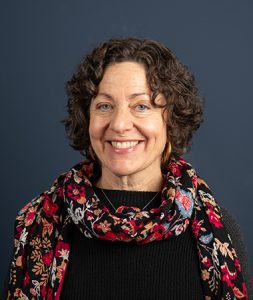
Lisa Berlin
University of Maryland
My research focuses on infant-caregiver relationships and on practices and policies to support early parenting and child development. I am especially interested in working with publicly funded programs for young children, such as Early Head Start, to incorporate attachment-based interventions into their services.
Two goals guide my sabbatical research plan. Both relate to the evidence-based Attachment and Biobehavioral Catch-up (ABC) program. ABC consists of 10 sessions provided to principal caregivers and infants in their homes.
1. Latino children are the largest and fastest-growing segment of the U.S. child population. They have worse health across many indicators than non-Latino white children. I co-lead an ongoing randomized trial testing ABC impacts on toddler health outcomes in low-income Latino families. My first goal is to analyze study data and write empirical articles to address novel questions in this important and underrepresented group.
2. Of the few evidence-based programs targeting infant-caregiver attachment, ABC is most feasible and promising to incorporate into public health services due to its demonstrated impacts, brief duration, and rigorous fidelity criteria. My second goal is to collaborate with local and state organizations to build sustainable capacity to provide ABC in Baltimore and throughout Maryland.
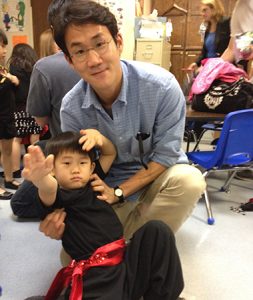
Tae-Ho Lee
Virginia Tech
During my sabbatical, I will advance a research program that examines how emotional and attentional processes unfold across the human lifespan. My career began with a focus on younger adults, investigating the cognitive neuroscience of emotion and attention. During my doctoral training with Dr. Mara Mather (University of Southern California), I expanded this work to aging populations, and in my postdoctoral fellowship with Dr. Eva Telzer (University of North Carolina Chapel Hill), I extended it to children and adolescents. This trajectory gave me a perspective on how brain and behavior interact across development.
In my own lab, I have continued to broaden this scope. We have collected data from children and older adults and are now beginning to gather data from middle-aged younger adults, a group often missed in developmental neuroscience. This step helps build a more continuous picture of brain development across the lifespan.
The sabbatical provides an opportunity to consolidate this work by focusing on the locus coeruleus and norepinephrine system, a small but powerful brainstem region that regulates arousal, attention, and emotion. I will refine imaging and analytic methods to capture locus coeruleus integrity and connectivity and integrate multi-site neuroimaging data to chart its developmental trajectories. The locus coeruleus is one of the earliest regions affected by stress and neurodegeneration, yet also central to resilience. By placing this system at the core of my research, I aim to follow how life experiences and developmental changes shape emotional well-being and vulnerability to psychopathology.
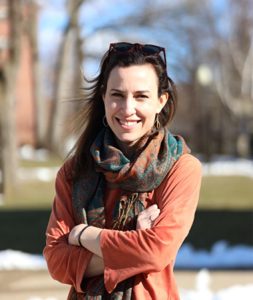
Victoria Templer
Providence College
How do we mentally represent ordered lists like the alphabet? For example, when asked which comes first, V or T, you might mentally run through the alphabet until reaching the first letter. Does this mental representation exist spatially? Similarly, do we use space as a central framework to represent abstract relationships, such as thinking, “I am close with Mary”?
I am interested in understanding how the brain and mind use spatial representations for abstract concepts. The overlap between cognitive domains, such as spatial and social cognition, is a cutting-edge area in psychological science but remains largely unexplored in nonhumans. My research aims to investigate potential shared mechanisms underlying spatial and social cognition in animal models appropriate for powerful neuroscience techniques. This work will contribute to advancing our understanding of cognitive neuroscience.
During my sabbatical leave, I plan to remain in Providence, Rhode Island, to continue directing my work at the Neuroscience and Animal Cognition Laboratory. Though I will maintain data collection on ongoing projects, my primary focus will be on writing. This time will allow me to delve into recent literature, better contextualize my novel findings, and write several manuscripts.
Additionally, I plan to spend about a month traveling to Copenhagen and Stockholm. I will participate in their International Educators Workshop and meet with scholars and instructors in their Danish Institute of Study Abroad program. These experiences will help foster research collaborations and enhance psychology and neuroscience curriculums in the states to be more holistic and interdisciplinary.
Feedback on this article? Email [email protected] or login to comment.



APS regularly opens certain online articles for discussion on our website. Effective February 2021, you must be a logged-in APS member to post comments. By posting a comment, you agree to our Community Guidelines and the display of your profile information, including your name and affiliation. Any opinions, findings, conclusions, or recommendations present in article comments are those of the writers and do not necessarily reflect the views of APS or the article’s author. For more information, please see our Community Guidelines.
Please login with your APS account to comment.