
-
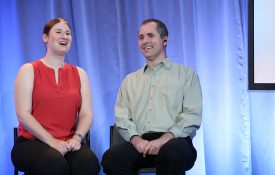
Improving the Reproducibility of Our Research Practices
APS presents a six-part workshop with APS Fellow Brian Nosek, University of Virginia and Executive Director, Center for Open Science (COS), and Courtney Soderberg, COS Statistical and Methodological Consultant.
-

Preschoolers’ Expectations Shape How They Interpret Speech
When someone misspeaks or forgets a word, we use our past experience with language to hear what we expect them to say — research suggests 4- and 5-year-old children show this adaptive ability to the same degree that adults do.
-

Cultivating Employee Curiosity is Good for Business
New research suggests that a strong sense of curiosity may be one personality trait that can enhance people’s creative problem-solving abilities.
-

Major Change in NIH Policy for Clinical Trials Applications
In a significant departure from current practices, NIH has issued new policies relating to grant applications involving clinical trials, including one mandating that all applications involving clinical trials must be in response to a funding opportunity designed for clinical trials.
-

Mental Flexibility May Buffer Against Emotional Stress
Brain imaging research suggests that our ability to do “cold” math calculations may be connected with our ability to regulate “hot” emotions.
-
New Research From Clinical Psychological Science
Read about the latest research published in Clinical Psychological Science: The Vicissitudes of Positive Autobiographical Recollection as an Emotion Regulation Strategy in Depression Aliza Werner-Seidler, Laura Tan, and Tim Dalgleish In this study, the authors examined whether the concordance or discrepancy of a memory with the person's current self impacts the effect of that memory on mood. Depressed and never-depressed British participants rated their mood; never-depressed participants then watched a video designed to induce a sad mood, whereas depressed participants watched a neutral movie.
