
Four Insights to Guide Big-Team Science Projects
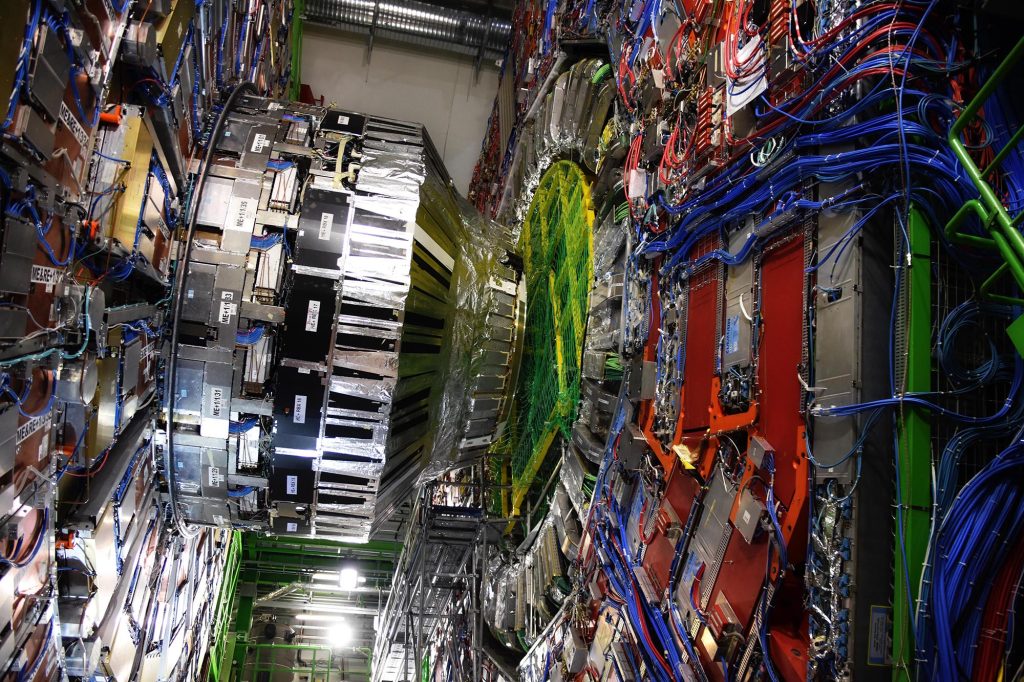
Image above: The Compact Muon Solenoid (CMS) experiment uses a particle physics detector in the Large Hadron Collider (LHC) at CERN. SimonWaldherr, CC BY-SA 4.0, via Wikimedia Commons.
I lay down on my bed, turned on my meditation app, and closed my eyes. A quiet voice gently explained how to control my breath and clear my mind. But it did little to quell my anxiety. It was the middle of the COVID-19 pandemic, and I was struggling to run the largest study of my life—a monster project with 255 authors scattered around the world. I never wanted this job. A handful of collaborators and I decided to launch the study shortly after the world had begun to lock down. Although people were eager to collect data with their favorite measures, everyone felt too overwhelmed to take the lead. So I reluctantly volunteered to lead the project, while trying to manage my lab virtually, adapt my teaching to Zoom, and homeschool my two small kids.
Prior to this project, I had made my mark as a laboratory scientist. I led a productive team of PhD students, postdocs, and undergraduate research assistants at New York University. We typically ran a mix of behavioral experiments, neuroimaging studies, and had even begun analyzing social media data. I was used to overseeing projects with a few trusted lab members. Suddenly, I was stuck leading a project with data collection in 67 countries.
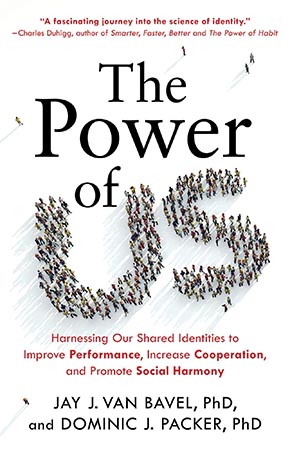
I was out of my depth in terms of experience, so I leaned on my expertise as a social psychologist. I was putting the final touches on a book about the science of social identity, cooperation, and group dynamics, called The Power of Us. The lessons from the book were particularly relevant to coordinating a group of this size. I needed to foster collaboration among strangers in dozens of countries while they were all trying to hold their own lives together in a moment of distress. I reasoned that the lessons from the book might work better than a meditation app.
From Albert Einstein to Marie Curie and Charles Darwin to Isaac Newton, the storybook of science is full of narratives about towering intellectual giants. Many of these discoveries involved other collaborators or research teams, but the myth of individual genius survives, as do many of the incentive structures. Early career scientists are encouraged to establish their independence. Faculty on the tenure track are even instructed to avoid collaborating with mentors or senior colleagues. As a field, we celebrate the top performers with prestigious prizes, endowed chairs, and sprawling lab spaces.
But this culture is changing.
In the past few decades, the major scientific discoveries in most fields have been by large teams rather than brilliant individuals. Instead of a lone patent clerk, it was a team of 5,154 authors who used the Large Hadron Collider, the world’s most powerful particle accelerator, to estimate the size of the Higgs boson—commonly referred to as the “God particle.” This project generated global news and broke the record for the largest number of contributors to a single research article. It also symbolized a new way of doing science.
The rising value placed on teamwork has been one of the most exciting developments across the sciences. Whether researchers are mapping the human genome or trying to understand cultural differences, larger collaborations have become the norm. In 1955, for instance, only 18% of the papers published in the social sciences were by teams, whereas by 2000, this number had risen to 52%. And this trend of large teams seems to have exploded in psychological science in recent years.
Collaborative science is linked to bigger breakthroughs. Research papers and patents by teams are more highly cited than those produced by solitary individuals—even after adjusting for the number of authors. This means that great teams—rather than individual geniuses—have become the new key to innovation. Our project fits this trend perfectly.
I have helped steward a number of these projects, starting with a project on national identity and COVID-19, and more recent mega-studies examining climate change interventions and the causal impact of social media. I recently published a paper outlining how to conduct these large scientific collaborations in Current Directions in Psychological Science. This paper is also available as a PDF guidebook on my website.
In the paper, I describe four principles for building effective large-scale collaborations: The key principles include (1) leveraging social networks for inclusive participation, (2) fostering interdependence to motivate engagement, (3) coordinating collective intelligence through distributed leadership, and (4) managing interpersonal conflict. I also outline some caveats, pitfalls, and challenges of big-team science. These insights draw from the science of cooperation and from my experience working on large-scale projects.
Principle 1: Leveraging social networks for inclusive participation
After settling on a research question, the first step in launching a large project is finding collaborators. In more traditional partnerships, scholars often depend on their immediate interpersonal networks—colleagues, former students, or scholars they meet at academic conferences. However, this approach tends to reinforce existing hierarchies and restrict opportunities for researchers from underrepresented groups or regions. By turning to platforms like academic societies, large professional listservs, and social media, researchers can leverage much broader social networks and tap into far more diverse samples.
In our projects, we issued open invitations for collaboration, and hundreds of researchers from six continents volunteered. Posting these open calls on listservs and social media democratized participation and added tremendous linguistic, cultural, and methodological diversity to our projects. I was shocked when I posted an invitation to join our COVID-19 project on social media and received responses from more than 200 other scholars from around the world. This inclusive approach improves science by producing larger and richer datasets, making it possible to do cross-cultural analyses.
While conducting these projects, my team also noticed that reputation carries a lot of weight (for better and for worse). Researchers said they were more inclined to sign on when the project was led by teams with a proven track record—both in producing high-quality research and in running inclusive collaborations. This dynamic exists in many facets of academia (e.g., more successful academics also receive more graduate school applications) and can reinforce the status of senior academics or faculty at prestigious institutions while leaving others on the sidelines. Establishing formal, inclusive practices is important to ensure that early career researchers and scholars from underrepresented regions can fully participate.
Institutional initiatives for big-team science, like the Psychological Science Accelerator, provide a promising model by building inclusivity directly into their procedures. The Accelerator is a globally distributed network of researchers who pool together their intellectual and material resources to conduct large-scale psychological studies. Alternative approaches can also be especially useful when research questions are time sensitive, such as during a pandemic. Therefore, to create a healthy ecosystem for big-team psychological science, we should embrace multiple approaches with complementary strengths and keep inclusion at the heart of all of them.
“A large body of research finds that when people recognize their outcomes are intertwined with others, they are more likely to cooperate.”
APS FELLOW JAY VAN BAVEL
Principle 2: Foster interdependence to motivate engagement
Because participation in large-scale projects is typically voluntary, figuring out how to spark and sustain engagement is a central challenge. Here, understanding the psychology of interdependence is crucial. A large body of research finds that when people recognize their outcomes are intertwined with others, they are more likely to cooperate. For global collaborations, this sense of shared stakes can be nurtured by designing incentives that align across teams and by ensuring that every contributor has meaningful ways to contribute.
To align incentives, my big-team projects allow every coauthor to propose preregistered secondary analyses and receive early access to the dataset to publish their own papers. This gives them the opportunity to publish papers on their own ideas (on top of earning coauthorship on the project’s primary papers). We also gave collaborators the option to add their own measures to the core study, opening the door for locally specific research questions. This model kept people invested in the research, generated more than 50 follow-up publications from the large dataset, and magnified the overall impact of the project.
By distributing credit and decision-making power, we moved the project away from a centralized model and toward a cooperative one. This structure helped guard against social loafing (i.e., the tendency for effort to drop in large groups) by ensuring each collaborator has clear and visible ownership of specific outcomes. It also promoted fairness by giving contributors privileged access to a rich dataset and opening many different opportunities for (lead) authorship.
After our main paper was in print, we wrote a separate paper making the dataset available to the scientific community (here is an example from our paper on COVID-19 and another from our paper on climate change). These practices broadened the circle of people who could translate their involvement into tangible outputs—publications, career opportunities, and recognition—beyond what many big-team science models typically allow. This is particularly valuable for early career scholars or academics from institutions or regions with fewer resources who would not otherwise have access to such a valuable dataset to test and publish their own ideas.
Principle 3: Coordinating collective intelligence through distributed leadership
While interdependence drives motivation, coordination is what ensures that research moves forward. As teams grow larger, so does the risk of process loss—the wasted effort, redundancies, and coordination problems that inevitably creep in when many people are trying to work together. To avoid these pitfalls, I turned to research on team cognition and collective intelligence.
My team built a modular leadership structure with clear roles and responsibilities and effective communication. We created regional leads, analytic coordinators, and writing teams who managed parts of the project and reported to a central leadership team. This structure allowed for efficient parallel processing, where multiple parts of the project advanced simultaneously without overburdening any individual. It also relied on open communication across groups, collective input on major decisions, and decisive action from the leadership team.
To ensure everyone was on the same page, we created a regular newsletter with project updates. This system cut down on confusion, gave collaborators a sense of shared identity, and helped collaborators around the world stay abreast of any developments. Collective intelligence depends on the efficient exchange of information, and big-team science works best when its infrastructure supports work that is efficiently distributed and tightly integrated. This approach spared everyone from large meetings, which often waste time and stall momentum.
Principle 4: Managing interpersonal conflict
Every successful global collaboration requires a great deal of conflict management. I have found that managing hundreds of collaborators is like running a small institution. To ensure things run smoothly, leaders must resolve conflicts, accommodate people with different challenges, navigate divergent institutional norms, and maintain morale. These responsibilities can be particularly taxing for early career researchers who lack the experience to navigate these issues or the respect necessary to resolve disputes.
In each of our large projects, conflicts arose over research design, data analysis, authorship, and dissemination. Sometimes the solution was straightforward, like sharing authorship or giving collaborators the opportunity to lead their own paper. But no single fix works for every situation; each conflict needs its own tailored response. Handling conflict well depends on clear, well-structured leadership with a dose of emotional intelligence—qualities that help defuse tensions and guide tough decisions.
Although much of this work goes unseen, it deserves recognition and institutional support. Training programs in areas like conflict resolution, inclusive leadership, and emotional resilience could better prepare leaders to handle these challenges. Funders and journals also have a role to play: They should acknowledge and reward the leadership of big-team science, not just the papers that result from it. This can make recognition for authors who take on these responsibilities and grants that support the extra work required of these positions.
Caveats, Pitfalls, and Challenges
Big projects require big budgets
One of the biggest hurdles for this kind of work is the cost in time and money. These projects require a lot of blood, sweat, and tears. Spearheading a global study is akin to leading a small army—or even a large department—and requires major tradeoffs. This can take time away from the typical lab projects that might advance one’s career in a more straightforward fashion. It can also prove to be a significant drain on one’s mental health.
Large-scale projects also require large budgets. In one global project, we asked collaborators to gather representative samples from their countries. Only collaborators from rich countries were able to fund representative samples, while collaborators from other countries were limited to convenience samples. Hence, truly inclusive science will require far larger grant budgets and an equitable distribution of resources (e.g., providing funding to allocate to collaborators in other countries to collect unique data).
Without significant grant funding, projects will continue to fall short, skewing samples toward wealthier nations and institutions. In our current “global social media experiment,” we secured grants early in the process to help fund data collection in diverse sample of 23 countries. The funding also paid for a staff member to help with research coordination, quality control, and other administrative tasks. Unfortunately, recent U.S. funding cuts and policy changes about how to spend grant funds have only made this more challenging.
Obtaining collaborators from non-Western contexts can be difficult
Though our big-team projects were vastly more diverse and inclusive than anything we had ever done before, there were nevertheless several challenges. Issuing open calls for collaboration did not guarantee participation from every country. Many scholars outside Western countries are not on professional listservs and use different social media platforms. Their institutions also may not provide the resources needed to take part in side projects. For example, our study on COVID-19 included collaborators from around the world and data from 67 countries. Yet we were still missing data from many countries in South America, Africa, and Asia.
It is therefore essential for big-team science to create more leadership opportunities for scholars based outside of Western institutions. Doing so would not only diversify our data and strengthen our research but would also spark new research questions and help build global networks and opportunities beyond the field’s traditional centers of influence. Making this possible will require that professional organizations build new research networks and funding agencies back a wider variety of teams. Because resources are distributed unevenly across the scientific world, these limitations will be difficult to overcome, but even incremental progress can help build a better future for big-team science.
A big project should have big impact
Before undertaking a global collaboration, researchers should be sure their question is well suited to the big-team science approach. A big project should address an impactful research question that is worthy of the time, effort, and resources it requires. Many topics would move faster and operate more efficiently in a small lab. Racing to conduct big-team science is not a cure-all and might even be a waste of resources if it addresses narrow research questions or obscure topics. These projects are also extremely stressful to execute. The last thing you want to do is find yourself lying in bed, burned out, and listening to a meditation app.
Feedback on this article? Email [email protected] or login to comment.
References
Castelvecchi, D. (2015). Physics paper sets record with more than 5,000 authors. Nature.
Rathje, S., Asimovic, N., Ventura, T., Mughal, S., Karsting, H., Robertson, C., … Van Bavel, J. J. (2025). Stage 1 registered report: Testing the causal impact of social media reduction around the globe. Nature.
Van Bavel, J. J. (in press). Smarter together: Using the science of cooperation to build effective global collaborations in psychological science. Current Directions in Psychological Science.
Van Bavel, J. J., & Packer, D. J. (2021). The power of us: Harnessing our shared identities to improve performance, increase cooperation, and promote social harmony. Little, Brown Spark.
Van Bavel, J.J., Cichocka, A., Capraro, V. et al. (2022). National identity predicts public health support during a global pandemic. Nature Communications, 13(517).
Vlasceanu, M., Doell, K. C., Bak-Coleman, J. B., Boryana Todorova, Berkebile-Weinberg, M. M., Grayson, S. J., Patel, Y., Goldwert, D., Pei, Y., Alek Chakroff, Ekaterina Pronizius, van, Denisa Vlasceanu, Constantino, S., Morais, M. J., Schumann, P., Rathje, S., Fang, K., Salvatore Maria Aglioti, … Van Bavel, J. J. (2024). Addressing climate change with behavioral science: A global intervention tournament in 63 countries. Science Advances, 10(6).
Wuchty, S., Jones, B. F., & Uzzi, B. (2007). The increasing dominance of teams in production of knowledge. Science, 316(5827), 1036–1039.




APS regularly opens certain online articles for discussion on our website. Effective February 2021, you must be a logged-in APS member to post comments. By posting a comment, you agree to our Community Guidelines and the display of your profile information, including your name and affiliation. Any opinions, findings, conclusions, or recommendations present in article comments are those of the writers and do not necessarily reflect the views of APS or the article’s author. For more information, please see our Community Guidelines.
Please login with your APS account to comment.