
2026 James McKeen Cattell Sabbatical Awardees Will Study Nature Exposure, Adolescence, and Maternal Immunity
Juliet Davidow, Jessica Magidson, and Marisa Spann are this year’s recipients of the James McKeen Cattell Sabbatical Award from the James McKeen Cattell Fund. The award supplements the sabbatical allowance provided by each researcher’s institution for the 2026–2027 academic year, allowing the recipients to expand their research projects.
The James McKeen Cattell Fund was established in 1942 to support the science and application of psychology, and the Association for Psychological Science administered the 2026–2027 sabbatical awards on behalf of the Fund. Learn more about this year’s awardees and their research projects, in their own words, below.
Learn more about the James McKeen Cattell Fund.

Juliet Davidow
Northeastern University
During adolescence, the brain undergoes major growth and organization critical for supporting increasingly sophisticated functions. Adolescents today are in need of innovations that appreciate and capitalize on this growth, especially for their education and mental health. My research suggests that adolescence is a life stage in which motivated learning is prioritized—how can this be harnessed toward bettering the lives of youth?
Foundational research has demonstrated the role of dopamine in supporting motivated learning, yet relatively little is known about how dopamine impacts the development of learning. A barrier to this knowledge has been the inability to measure dopamine processes noninvasively in human adolescents. Advances in noninvasive imaging of iron in brain tissue hold promising new directions for understanding dopamine development and its impact on behaviors like learning.
During my sabbatical, I will leverage innovative structural brain images collected in parallel with a reinforcement learning task in a large cross-sectional sample of children, adolescents, and young adults. Complementary projects will address age-related interactions between motivated learning and structural measures of accumulated iron in brain tissue and will examine the feasibility of repurposing functional brain scans as an inferential measure of iron. Validating this extended approach will invite anyone to “recycle” existing functional data to ask new questions without the burden of collecting new data. These endeavors will offer new directions not only for developmental neuroscience, but also for individual differences and clinical studies. Greater insight into the neurocognitive underpinnings of learning in adolescence may better inform transformative advances for youth.
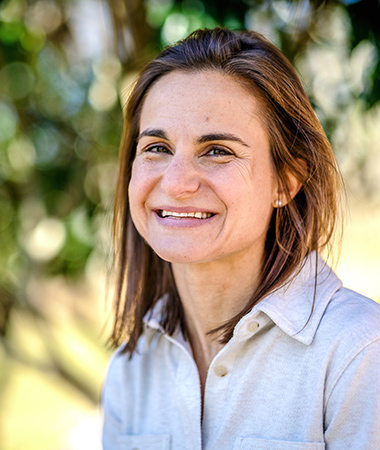
Jessica Magidson
University of Maryland, College Park
Globally, over 80% of people in need of mental health interventions do not receive care. Over the past decade, my team has shown that we can train people with lived experience and community health workers to expand access to care. Yet, no matter how many people we train, we will never have enough providers. Further, providers are facing high levels of burnout. What if one of the most scalable solutions is actually right outside of our doors?
Humans spend 93% of our lives indoors, despite decades of research demonstrating mental and physical health benefits of nature exposure. Through processes proposed in attention restoration theory, nature exposure can shift cognition, reduce burnout, and improve well-being. The overall goal of my sabbatical is to bridge evidence-based mental health interventions, such as cognitive behavioral therapy (CBT), with the benefits of nature exposure to improve patient and provider well-being.
Specifically, I aim to (1) learn from other countries with innovative nature and mental health programs (i.e., Scandinavia and Australia); (2) write and publish a review paper on nature-based delivery of CBT; and (3) develop a clinician manual for nature-based delivery of CBT interventions to compare to office-based delivery. I will spend the sabbatical year at the University of Colorado Boulder and attend the Harvard-led Nature as Medicine Practitioner Training and Certification in Colorado. Through this sabbatical award, I aim to advance the field of nature and mental health and shift norms of practice for CBT providers to leverage the natural world—for themselves, their patients, and the environment.

Marisa Spann
Columbia University
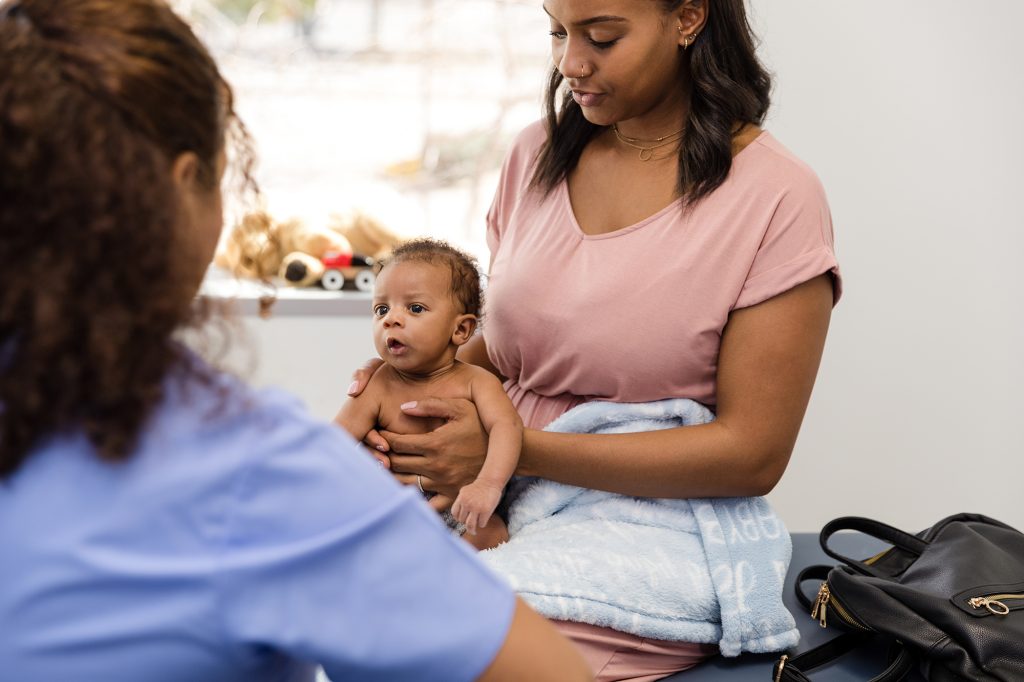
Maternal immune activation (MIA) is important because pregnant women may experience health, environmental, or psychosocial stressors, all of which can activate the inflammatory pathway. Epidemiologic studies demonstrate connections between MIA and neurodevelopmental risk in offspring. The goal of my research is to identify early immune, brain, and neuropsychological antecedents of psychiatric risk to reduce the time to intervention for young children.
During my sabbatical, I will deepen my understanding of the dynamic interaction between the early immune environment and the developing brain. In collaboration with the FinnBrain Group at the University of Turku and the Institute for Exposomic Research at the Icahn School of Medicine at Mount Sinai, I will learn about deciduous “baby” teeth as a biospecimen tool for understanding childhood immune-related exposures. This will allow dedicated time to immerse myself and master novel and advanced techniques in the longitudinal assessment of the developing immune system. The experience will expand my work from the prenatal MIA period to examine how early-life immune variability shapes brain structure and function in utero through childhood.
In my own lab, we will begin collecting deciduous teeth from our existing cohorts. This will provide the groundwork necessary to consider early inflammatory profiles and the developing offspring brain, drawing on my existing experience conducting neuroimmune research. Combining novel neuroimaging, epidemiologic techniques, biospecimens, and data-science techniques, I can begin to elucidate the complex interactions among the maternal immune system, the developing offspring’s immune system, and the developing offspring’s brain.
Feedback on this article? Email [email protected] or login to comment.



APS regularly opens certain online articles for discussion on our website. Effective February 2021, you must be a logged-in APS member to post comments. By posting a comment, you agree to our Community Guidelines and the display of your profile information, including your name and affiliation. Any opinions, findings, conclusions, or recommendations present in article comments are those of the writers and do not necessarily reflect the views of APS or the article’s author. For more information, please see our Community Guidelines.
Please login with your APS account to comment.