
APS Announces Winners of the 2026 Student Poster Awards
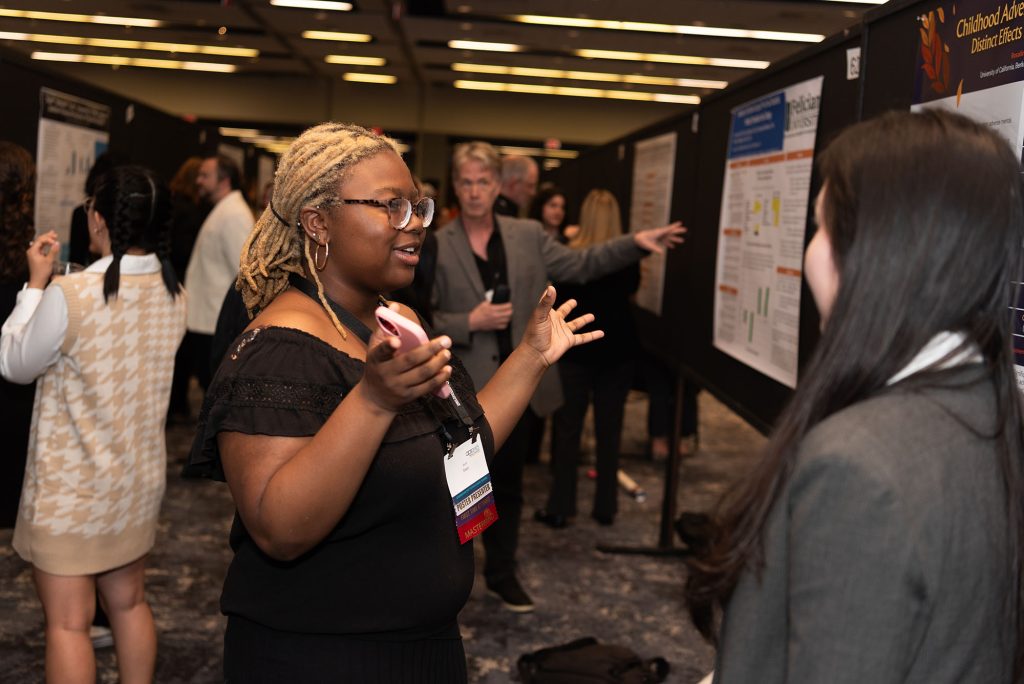
Image above: Students presenting their posters in the APS Exhibit Hall at the APS Annual Convention.
A highlight of every APS convention since 1991 is the poster sessions, where hundreds of undergraduate, graduate students, and psychological scientists at all levels of their career present their research and engage in discussions with interested colleagues. The following responses reveal the personal stories behind many of the best student posters accepted for the APS Convention 2026, 28–30 May, in Barcelona, Spain, as selected by reviewers for the three categories of awards. Congratulations to all the student award recipients!
Responses have been minimally edited for publication.
Learn about the APS Student Awards program.
2026 Student Research Award | 2026 RISE Research Award | 2026 Emerging Scholar Award
2026 Student Research Award Recipients
The Student Research Award promotes and acknowledges outstanding research conducted by student members of APS. Learn more about the Student Research Award, including eligibility and how to apply.
Who Do We Keep at the Table?: Political Disagreement Creates the Most Rigid Social Barrier
Jiu Son (Seoul National University)

What drew you to your research?
There is a saying in Korea: “You don’t talk politics at the dinner table.” I grew up understanding this less as a formal rule and more as a practical way of keeping the peace. In many everyday settings, people seemed to know that once politics entered the conversation, the emotional temperature could rise very quickly.
In recent years, as political controversies in Korea have become especially visible and emotionally charged, I found myself thinking about that saying more seriously. Political disagreement no longer felt like something that stayed quietly in the background. It seemed to enter family conversations, friendships, workplaces, and even casual encounters. What struck me was how easily political differences could move from “We have different opinions” to something closer to “I do not know if I can sit with this person.”
That tension drew me to the research. People differ from one another in many ways: in everyday preferences, such as food or sports teams; in more value-laden views, such as gender norms or attitudes toward ethics and law; and in long-standing social identities, such as religion, region, class, or race and ethnicity. Many of these differences can be acknowledged, negotiated, or simply lived with in everyday life.
But why does politics, among all these differences, seem to carry such unusual social weight? Was this only an impression, shaped by the political climate around me, or would it also appear in how people judge everyday relationships?
I did not want to leave that feeling at the level of an impression. I wanted to put political disagreement next to other kinds of differences—differences in taste, background, and values—and ask, more systematically, how willing people are to accept politically different others across relationship roles, from spouses and friends to coworkers, tablemates, and fellow citizens.
That question eventually became the title of my poster: When disagreement shows up at the table, who do we still keep there?
What did the research reveal to you that you didn’t already know?
One thing the research revealed to me was that social acceptance is not only about how difficult a difference is to accept, but also about how that difficulty changes across relationships.
I began with the question of where political disagreement would sit among other differences, but the results were more nuanced than a simple story that politics is just the hardest difference to accept overall. Given the long history of regional political conflict in Korea, I was surprised that region of origin was among the easier differences to accept. The lower end of the acceptance map instead included differences around ethics and compliance, gender norms, political orientation, and stance on the impeachment of former President Yoon.
The most interesting part was the difference between the height and the shape of a social boundary. A difference in someone’s sense of ethics and compliance was the hardest difference to accept overall, and gender norms were also difficult, especially in close or family-like roles. But these differences became more acceptable as the relationship became more distant. They looked like gatekeepers of intimacy.
Political disagreement showed a different pattern. People who differed in political orientation, or in their stance on the impeachment of former President Yoon Suk Yeol—one of the most salient recent political issues in Korea—were not always the hardest to accept overall. But acceptance of them increased less as the relationship became more distant. If ethics and compliance or gender norms looked like gatekeepers at the entrance to intimate life, political disagreement looked more like a portable identity badge: not necessarily the tallest wall in any single place, but a social signal that seemed to travel with the person across roles.
That is what stayed with me most: Social boundaries have shapes. Some guard the entrance to intimacy; others travel with the person across social roles.
What are your plans going forward?
Going forward, I want to develop this project in three directions.
The first step is to refine the current study into a manuscript. I see this study as a map. It shows that political disagreement is not simply the tallest wall, but a boundary with a particular shape. I want to make that map as careful and transparent as possible, including robustness checks and clearer tests of how acceptance changes across relationship roles.
The next step is to understand the psychology behind the map. In the results, political disagreement looked almost like a portable identity badge. But I do not yet know why. Does politics signal morality, identity, threat, trustworthiness, or something else? That is the question I would like to test more directly.
Finally, I want to bring the work closer to real life. This study asked people to make social acceptance judgments, but I would like to know how those judgments relate to actual conversations, everyday contact, and decisions to keep or avoid relationships. I also hope to compare this pattern across societies.
As someone just beginning my academic career, this award is deeply encouraging. This was my first conference presentation, my first international conference presentation, and my first poster award. I feel truly grateful for the opportunity, and it has made me even more motivated to keep asking, with care, what helps people remain at the table when they disagree.
Toward a Refined Measure of Erotophobia–Erotophilia: Re-Examining the Sexual Opinion Survey As a Window Into Sexual Personality
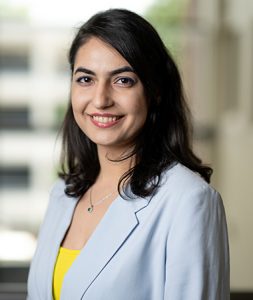
Nazanin Kafaee (University of Michigan)
What drew you to your research?
As an undergraduate, I was passionate about doing cross-cultural sex research and learning about people’s sexual attitudes across different cultures using the Sexual Opinion Survey (SOS). However, I soon realized the measure was very outdated, so I set out to update it first. I fell in love with the project and was fascinated by how much it could help explain people’s sexual and relational behaviors and experiences. When I started graduate school, I wanted to see it through and conducted additional studies to fully revalidate the scale.
What did the research reveal to you that you didn’t already know?
Perhaps this should have been obvious to us from the beginning, but it was fascinating to see that erotophobic individuals experienced negative affect simply by reading the SOS items themselves. The research also made it clearer to us how often sex positivity/negativity and erotophobia–erotophilia are conflated with one another, even among academics, and highlighted the importance of distinguishing between them.
What are your plans going forward?
I think the SOS is a powerful instrument predictive of many sexual (health), and interpersonal outcomes. I would love to use it as a guide to study sexual attitudes across cultures and how they change over time.
I also believe understanding affective reactions to sexual stimuli has very important implications across many sectors of society, such as policymaking, patient–provider communication in the medical field, and educational settings. It’s important to recognize the role erotophobia may play in politicians’ decision making, and the support of a portion of the general public when it comes to sex education, transgender rights, and abortion policies. I hope to contribute to helping researchers and the general public better understand this construct and its important applications.
Busting the Myth of “Just Provide Resources”: Evidence From a Field RCT on Behavioral Supports for Teleworkers
Swathi Vepachedu (North Carolina State University)

What drew you to your research?
Adults spend a significant portion of their waking lives working, and while work can bring meaning, purpose, and a strong sense of identity, it can also create challenges that spill over into our emotional, physical, and mental well-being. The pandemic and the widespread shift to remote and hybrid work only made that tension more visible, creating new opportunities while also introducing new challenges. I have always been deeply interested in understanding the relationship between work, identity, and well-being, particularly in the context of how rapidly the workplace is evolving through technology and changing work structures. As someone trained in industrial and organizational psychology, with a strong appreciation for social psychology, I am especially interested in understanding how we can design workplaces that help people thrive. Questions like the following interest me: When organizations provide evidence-based resources intended to improve employee well-being and productivity, what actually drives change? Is access to helpful resources enough, or does the real impact depend on whether people meaningfully engage with and use them? These questions sit at the intersection of behavioral science, organizational practice, and methodology, and that is exactly what made it so exciting to pursue.
What did the research reveal to you that you didn’t already know?
One of the most fascinating takeaways was seeing, yet again, just how powerful the intention–action gap can be. In psychology, we often talk about the fact that good intentions do not always translate into behavior, but it is always striking to see that principle emerge in new contexts. Even when both organizations and employees genuinely want to improve work experiences, positive change is not guaranteed simply because helpful resources are available. One of the more humbling insights from this work was the reminder that motivation alone is often not enough. We also need to understand what helps people translate intention into action. That has important implications for how we think about workplace interventions. Designing effective resources is only part of the challenge; helping people actually engage with them may be just as important.
What are your plans going forward?
I am excited to build on this work in a couple of directions. First, I am interested in understanding the conditions under which employees are more or less likely to engage with workplace resources. For example, are there individual or contextual factors, such as gender or other structural experiences, that shape people’s motivation or ability to use the support available to them? Second, I am increasingly interested in how emerging technologies, particularly AI, may function as workplace resources. As AI becomes more integrated into day-to-day work, I am curious about how employees interact with these tools, when they support well-being and productivity, and when they may create entirely new challenges.
2026 RISE Research Award Recipients
The RISE Research Award acknowledges outstanding psychological science research related to underrepresented populations or conducted by students from diverse backgrounds. Learn more about the RISE Research Award, including eligibility and how to apply.
The Adaptation Paradox: Communal Norms Render Openness Maladaptive but Neuroticism Protective in Moroccan Farmers
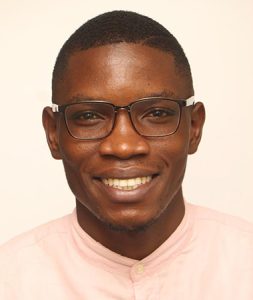
Perez Lionnel Kemeni Kambiet (University Mohammed VI Polytechnic)
What drew you to your research?
I came to this direction of research while searching for an alternative angle in my PhD thesis. Trained as an applied economist, I initially set out to study the relationship between farmers’ climate risk perceptions (perceivers versus nonperceivers) and farmers’ adaptation/economic outcomes. But in Morocco, every farmer had already perceived climate change, at least in the way the literature measures it. That path quickly closed, yet I noticed something striking: Although all farmers had observably perceived similar levels of drought, they acted differently. This puzzle led me to retool my research exploration toward what makes people respond differently to the same environmental shocks. I came across literature on personality traits, climate change, and, later, the emerging work on psychological resilience. With guidance from very generous professors, I was able to bring these strands together, and that is how I ended up studying this adaptation paradox.
What did the research reveal to you that you didn’t already know?
Initially, I thought individuals were alike; as such, I did not expect that the expression of personality traits could be so unique across communities. My initial expectation was that neuroticism would be strongly negative and openness strongly positive across resilience components. Instead, conscientiousness emerged as the most consistent predictor. Even more surprising, neuroticism showed a positive association with adaptive risk-taking, a result almost unthinkable in other contexts. The higher-order metatraits also revealed unexpected dynamics: Structured exploration and sociopersonal predisposition played significant roles, sometimes dampening innovative self-reliance. These findings showed me that resilience is not universal; it is negotiated between personality and communal norms.
What are your plans going forward?
I am currently on the job market and look forward to joining policy-oriented labs and institutions where I can design behaviorally informed policies. My aim is to deepen my knowledge in transdisciplinary research while continuing to explore how psychological and behavioral insights can strengthen climate-adaptation strategies.
Linguistic Markers of Temporal Focus in Behaviour Change: Insights From a Smoking-Cessation Trial of Acceptance and Commitment Therapy
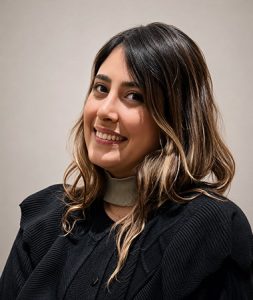
Parnian Rafei (Trinity College Dublin)
What drew you to your research?
I’ve always been fascinated by how people change their behavior under different motivational forces and by what helps us inhibit or strengthen that change. My background is in clinical psychology, and before starting my PhD, I worked in private practice in my home country, Iran, mostly with clients struggling with addictive behaviors such as substance use, gambling, and smoking. In that work, I kept noticing that traditional therapeutic techniques, while often valuable, did not always feel sufficient on their own or as evidence-based as I desired. That led me to ask what is really happening in the brain and behavior beneath these patterns, and how that knowledge could help us build better clinical tools. That curiosity drew me into addiction neuroscience research. My first major step was an fMRI study on cannabis users, where I examined potential impairments in future-oriented cognition, and that project opened the door to the work I do now. Today, I use neural, behavioral, and, more recently, linguistic data to better understand the cognitive mechanisms behind compulsive behaviors, with the hope that this work can eventually inform more precise and effective therapeutic approaches.
What did the research reveal to you that you didn’t already know?
So many things! One of the biggest lessons has been that individual differences matter far more than we often give them credit for. I have also learned how strongly culture shapes the picture, especially in the field of addictive disorders. I published an opinion paper on cannabis use across cultures and why that context matters (link to paper), and it reminded me how understudied cultural context still is in quantitative mental health research. More broadly, my research has made me much more aware of how essential it is to develop valid, reliable measures and reproducible analytic methods, particularly in clinical science. I constantly hear about researchers’ experiences (including my own) running similar projects across different time points, populations, tools, and analytic approaches and finding different results. That experience has made reproducibility feel very concrete to me, not just as a scientific ideal, but as something with real consequences for how findings can or cannot translate into clinical practice. Another lesson that has become clearer with experience is that community matters in research; doing research in teams and in collaboration with people who care about similar questions makes the process not only stronger but also far more meaningful. I am sure many more lessons are still ahead, which is one of the things that keeps research exciting for me.
What are your plans going forward?
I’ll be graduating with my PhD at the end of 2026, and I’m already looking ahead to the next chapter of my academic career as a postdoctoral researcher. My PhD has given me a strong foundation in mental health research and methodological skills I’m very grateful for, especially for working with general populations and complex behavioral data. Going forward, I want to bring all of that together: my clinical psychology background and experience as a therapist, my research interest in compulsive behaviors and addiction, and the advanced methodological skills I’ve developed during my PhD. I hope to continue building research that is both methodologically rigorous and clinically meaningful and that can ultimately contribute to a better understanding and treatment of addictive and compulsive behaviors. I’m excited for what comes next!
2026 Emerging Scholar Award Recipients
To celebrate the research and contributions of the APS Student Caucus members from diverse backgrounds, the Emerging Scholar Research Award recognizes individuals on the basis of their personal statement, poster abstract submitted to the APS Annual Convention, and CV. Learn more about the Emerging Scholar Research Award.
Rumination As a Correlate of Self-Injurious Thoughts and Behaviors Postpartum: A Bayesian Analysis
Nicolette Molina (University of Oregon)

What drew you to your research?
It is estimated that for every suicide, 135 people are impacted. I have been one of those people, and that experience shaped my commitment to understanding suicide risk with greater nuance and care. My work focuses on self-injurious thoughts and behaviors during reproductive periods, especially pregnancy and postpartum, because these are periods when hormonal, psychological, relational, and social pressures can converge in powerful ways.
I am especially interested in understanding these experiences within reproductive and socioecological contexts. For me, this means examining which individual-level factors are associated with risk and how stress, social conditions, and systems of power and privilege shape the environments in which risk emerges. Intersectionality theory guides much of my thinking and pushes me to consider suicide risk as something situated within people’s lives, relationships, communities, and broader social structures.
What did the research reveal to you that you didn’t already know?
First, this study showed that several postpartum psychological processes were associated with self-injurious thoughts and behaviors, including emotion dysregulation, sleep quality, mindfulness, feelings about parenting, and rumination. However, when these factors were considered together, rumination emerged as the strongest unique correlate. This finding helps clarify the potential importance of repetitive negative thinking during the postpartum period.
My findings regarding the impact of socioecological context were not consistent with my hypotheses. I expected pregnancy-related chronic stress and neighborhood disadvantage to moderate the associations between psychological factors and postpartum self-injurious thoughts and behaviors. Instead, the evidence for contextual moderation was limited in this sample. I do not interpret that as evidence that context does not matter. Rather, it suggests that the contextual factors we measured may operate more indirectly, more upstream, or at a different level of analysis than we were able to capture here. More research in different communities, at different levels of analysis, and with different analytic approaches is needed.
What are your plans going forward?
Going forward, I hope to apply more intersectional methods to the study of suicide risk in context. I am interested in understanding how systems of power and privilege shape environments, exposures to stress, access to support, and risk for self-injurious thoughts and behaviors, particularly among women and girls.
Professionally, I will begin my 2026 APPIC clinical psychology residency at Weill Cornell Medicine/NewYork-Presbyterian, where I will gain additional training in women’s health through the Women’s Health Program. Long term, I hope to build a program of research focused on reproductive mental health, suicide risk, and the social conditions that shape psychological suffering and support.
Cognitive Jams from Voids: When Unknown Irrelevant Information Slows Decisions
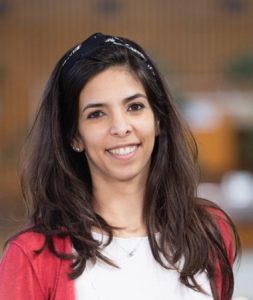
Hodaya Levy-Schulman (The Hebrew University of Jerusalem)
What drew you to your research?
I am interested in how different types of information influence the dynamics of decision making. While extensive research, like the famous Stroop task, has shown that known irrelevant information can slow us down, there was a significant gap in our understanding of how we handle unknown irrelevant information. I wanted to explore whether a “void”– an absence of a clear mental representation – could be just as taxing on our cognitive resources as a known distractor. Specifically, I wanted to see if our brains are hardwired to automatically search for identity even when it serves no purpose for the task at hand.
What did the research reveal to you that you didn’t already know?
The research revealed that nothing can be just as heavy as something when it comes to mental workload. When people see a symbol they do not recognize, they are slower to make decisions, even when that symbol should be ignored. It appears that encountering a mystery causes a cognitive jam. Because the brain cannot find a label for the unknown symbol, it gets stuck in a loop trying to identify it, even if it is irrelevant to the goal at hand and prevents it from moving forward.
What are your plans going forward?
For this project, we hope to pinpoint the exact mechanisms causing these delays, such as whether the brain raises its evidence threshold for decisions. For myself, after my PhD at the Hebrew University, I plan to pursue a postdoctoral training and eventually resume the role of a principal investigator in my own lab.
Psychological and Behavioral Correlates of Political Outgroup Moral Derogation
Nyx Ng (University of Texas at Austin)

What drew you to your research?
Broadly, my research program investigates people’s judgments of morality and truth. I study the social–cognitive factors underlying people’s judgments of what is right and true because these judgments often play a central role in driving social conflict. Over time, my research program has also expanded to examine people’s social perceptions of others’ moral character. As a researcher interested in the real-world implications of this work, and in light of the high levels of political polarization in the United States, I have focused much of my current research on understanding the nature of and factors shaping perceptions of political outgroup morality.
What did the research reveal to you that you didn’t already know?
Prior research has shown that partisans in the United States exhibit a general morality bias, such that they perceive political outgroup members as less moral than political ingroup members. However, the specific nature of this misperception has been less clear—does the bias reflect inaccurate evaluations of the political ingroup’s morality (i.e., inflation of ingroup morality), inaccurate evaluations of the political outgroup’s morality (i.e., deflation of outgroup morality), or both?
In work that I presented at the APS Convention in 2024, I found evidence that partisan moral misperceptions are primarily characterized by outgroup moral derogation rather than ingroup moral enhancement. Specifically, partisans do not inflate the morality of their political ingroup relative to a shared social ingroup (i.e., Americans), but instead systematically deflate the political outgroup’s morality relative to both their political ingroup and shared social ingroup.
In follow-up work that I will present at the APS Convention this year, I find further evidence consistent with negative partisanship: Moral misperceptions are linked primarily to outgroup-directed evaluations (e.g., perceptions that the outgroup is more influenced by nonnormative factors such as propaganda, as compared to the ingroup; perceptions that the outgroup poses symbolic and realistic threats to the United States; and feelings of aversion toward the outgroup) and are not associated with ingroup identification or collective narcissism. In other words, the moral gap that partisans perceive between political ingroup and outgroup members is not explained by attachment to their own political group, but instead reflects the deep animosity they feel toward political others.
What are your plans going forward?
I am continuing this line of research by examining whether similar patterns of moral misperception emerge in political contexts outside the United States, and whether this phenomenon is best understood as a general ingroup–outgroup effect, a specifically moral ingroup–outgroup distinction, or a uniquely political form of group perception. More broadly, I will continue developing my research program on morality and truth judgments at New York University Stern School of Business, where I will be a postdoctoral research scientist beginning in August 2026.
Feedback on this article? Email [email protected] or login to comment.



APS regularly opens certain online articles for discussion on our website. Effective February 2021, you must be a logged-in APS member to post comments. By posting a comment, you agree to our Community Guidelines and the display of your profile information, including your name and affiliation. Any opinions, findings, conclusions, or recommendations present in article comments are those of the writers and do not necessarily reflect the views of APS or the article’s author. For more information, please see our Community Guidelines.
Please login with your APS account to comment.