
From Those Who Admired Them: Lives Lost

Boris B. Baltes • Jagannath Prasad (J.P.) Das • Judy DeLoache • Paul Ekman • Ruth Kanfer • Michael Kubovy • Arthur Samuel Reber • Jerome M. Sattler • Luminita Tarita-Nistor
In the past year, friends, family, and colleagues have had to say goodbye to a number of remarkable psychological scientists who helped shape the field through their research and mentorship. We remember several of these individuals with comments from their mentors, peers, and friends.
This article has been updated to reflect other passings since its original publication in the APS Observer.

Boris B. Baltes
Professor of Psychology, Wayne State University
November 10, 1965 – August 21, 2025
Read Baltes’ full obituary | Read Baltes’ meta-analysis of flexible and compressed workweek schedules
Boris B. Baltes was a professor of industrial–organizational psychology at Wayne State University and a distinguished researcher who studied aging in the workplace, work–family conflict and balance, and work ethic.
Words from Cort W. Rudolph (Wayne State University): “Boris was my doctoral advisor, and he was a close friend and colleague for nearly 20 years. He opened doors for people, and he held them open. He taught me that I could do hard things, and that hard things were worth doing. He taught me to prioritize the most important things in life, to take advantage of opportunities, and to be resourceful.”
Read the Society for Industrial and Organizational Psychology’s memorial post on Baltes.

Jagannath Prasad (J.P.) Das
Emeritus Professor, University of Alberta
January 20, 1931 – October 19, 2025
Read Das’ full obituary | Read Das’ work on the PASS theory of intelligence
APS Fellow and distinguished scholar J.P. Das made lasting contributions that shaped the fields of educational psychology, with his research leading to the development of both the PASS (Planning, Attention-Arousal, Simultaneous and Successive) theory of intelligence and the Das–Naglieri Cognitive Assessment System.
Words from APS Fellow John R. Kirby (Queen’s University): “Professor Das was my PhD supervisor in the 1970s, and my mentor, colleague, and friend over many years. Das was born in Puri, Odisha, India. After completing his PhD at the University of London and working at universities in India and the United States, he joined the University of Alberta in 1968, and served for decades as a Professor and Director of what was later named in his honour the J. P. Das Centre on Developmental and Learning Disabilities. He supervised many doctoral students who remember him as a valued mentor, colleague, and friend. He received many honours, being a Fellow of APS, APA, and the Royal Society of Canada, and was awarded the Order of Canada.”
Judy DeLoache
Professor of Psychology Emerita, University of Virginia
September 10, 1943 – October 23, 2025
Read DeLoache’s full obituary | Read DeLoache’s research on the credible shrinking room
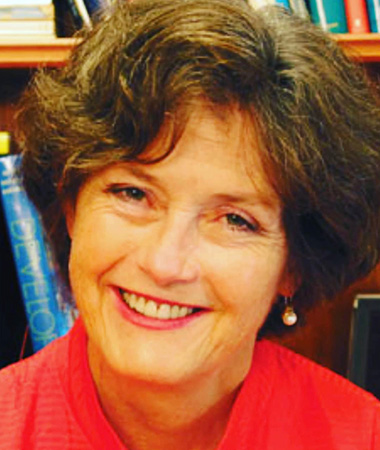
APS Fellow and William James Award recipient (2013) Judy DeLoache was an internationally known researcher in children’s cognitive development and a beloved professor at the University of Virginia.
Words from APS Fellow Dennis Proffitt (University of Virginia): “Judy built an international representation for her research on cognitive development and is best known for her studies on how children acquire knowledge of symbols. Symbols require dual representations because they are both distinct entities and serve as referents for something else. Especially noteworthy is Judy’s (1997) Psychological Science paper with Keven Mill and Karl Rosengren, “The Credible Shrinking Room,” which reported a wonderfully clever investigation on the role that dual representation plays in the development of symbol understanding and use. While conducting this research, Judy noticed an odd behavior occasionally exhibited by her toddler research subjects. They would attempt to act on miniature toy objects as if they were full-sized. For example, they would try to sit in a toy chair or get into a toy car. These observations led her to investigate these “scale errors,” resulting in a (2004) Science paper with co-authors David Uttal and Karl Rosengren.
Judy was the recipient of numerous national and international awards including the following: APS William James Fellow Award, Fellow of the American Association for the Advancement of Science (AAAS), Fellow of the American Academy of Arts and Sciences, SRCD Senior Distinguished Contributions Award, and the Distinguished Contribution Award from the International Congress on Infant Studies (ICIS). Georgia State University awards an undergraduate fellowship on Judy’s name. Judy’s distinguished career was complemented by her generosity and cheerful optimism that made her a wonderful colleague and a much beloved mentor.”
Read the University of Virginia’s in memoriam feature on DeLoache.
Paul Ekman
Paul Ekman Group, LLC
February 15, 1934 – November 17, 2025
Read Ekman’s full obituary | Read Ekman’s research on facial and emotional expressions across cultures
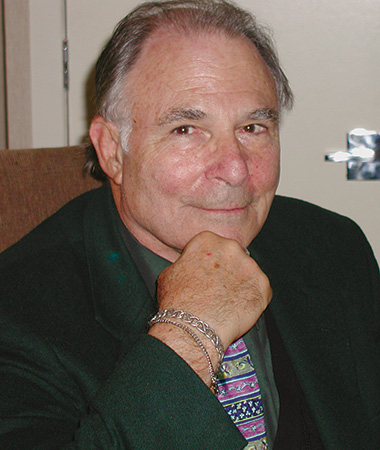
Paul Ekman was a pioneering psychological scientist whose research into emotion and facial expressions across cultures shaped the field as we know it. Ekman created the Facial Action Coding System and Micro Expression Training Tools, providing scientists and the public a system for reading the faces. In addition to being an APS Charter Member and Fellow, Ekman was also a recipient of the William James Award in 1998.
Words from APS Past-President and Charter Member Robert Levenson (University of California, Berkeley): “Paul Ekman lived a remarkable life that brimmed with exploration, discovery, generosity of spirit, and a deep commitment to using science to serve the greater good. Like a great novel, his life unfolded across many chapters. In the 1960s, when psychology was in the throes of the “cognitive revolution”, emotion research was nascent, and cultural relativism was the prevailing zeitgeist, he catalyzed the emergence of modern affective science. Travelling to visually isolated cultures in New Guinea, he found evidence for cross-cultural consistencies in the expression and recognition of emotion in the face. Recognizing the need for an anatomically based method for comprehensively measuring changes in facial behavior, he developed the Facial Action Coding System, which led to a renaissance of research on emotion. Although often cited as supporting evolutionary, universalist views of emotional expression, his innovative experimental work also revealed the influence of cultural “display” rules. His empirical and observational research gave birth to a sophisticated theory of emotion that incorporated hard-wired, culturally determined, contextual, and individual-level influences. Seeking a deeper understanding of how emotions are embodied, he later engaged in collaborations with neuroscientists and psychophysiologists to conduct studies exploring the interplay between facial actions, affect, and physiology.
His voracious scientific appetite spanned the basic to the applied. A longstanding interest in how emotions can be hidden and disguised led to an important body of work on deception. This included studies of facial and other signs of deceit and individual differences in the ability to detect lies. This deception research led to collaborations and consultations with law enforcement and national security agencies; training tools to help sharpen ability to detect “micro-expressions”; both academic and popular books; and even a television show (Lie to Me). In 2000, Paul attended a conference in Dharamsala, India organized to promote interactions between western scientists and his Holiness, the Dalai Lama. This meeting launched yet another remarkable chapter as the two men became friends and collaborated on a series of public dialogs, books, articles, and web-based materials designed to promote compassion and empathy.
Paul Ekman’s long life was lived on a grand scale. His curiosity, generosity, kindness, and support profoundly and positively affected the lives of his family, friends, colleagues, and countless others. With his passing, the sense of loss is enormous. However, there are many memories to savor, a magnificent body of work to continue to learn from, a set of methods to guide new discoveries, and the enduring model he leaves us for what it means to be a great scientist, a good person, and a deeply engaged citizen of the world.”
Watch APS’s Inside the Psychologist’s Studio interview with Ekman from 2015.

Ruth Kanfer
Professor of Psychology, Georgia Institute of Technology
February 1, 1955 – August 13, 2025
Read Kanfer’s full obituary | Read Kanfer’s research on aging, adult development, and work motivation
APS Charter Member and Fellow Ruth Kanfer researched motivation and self-regulation at work, adult learning, and workplace aging. The work she conducted at Georgia Tech’s PARK (Phillip Ackerman Ruth Kanfer) Lab and beyond shaped the field of industrial–organizational psychology and psychological science as a whole.
Words from APS Fellow Margaret Beier (Rice University): “Dr. Ruth Kanfer’s seminal contributions to the field of psychology include a cognitive resource framework for self-regulation, motivation, and performance that laid a foundation for later developments in basic and applied psychology and has shaped the direction of research for generations of scholars. Her work bridged disciplinary boundaries as she considered the determinants of worker behavior and the systems in which workers operate. Her recent research examined the timely topics of workforce adaptability and lifelong learning within the context of economic upheaval and technological disruption associated with the future of work; research focused on the continuous development and engagement of vulnerable and aging workers who are understudied in psychological research.
Dr. Kanfer was a brilliant scientist with the ability to reduce complicated theory and research to its essential elements and to elegantly communicate her ideas. A scholar of motivation, Dr. Kanfer knew the importance of what she called “fire in the belly” and inspired her students and collaborators to do great things. She built a life dedicated to her craft and would often invite graduate students to engage in intellectual debate and idea generation with her and her long-time collaborator and husband, Phillip Ackerman, also a faculty member at Georgia Tech. For students, these sessions were as awe inspiring as they were educational and set the stage for the intellectual rigor associated with scientific careers.
Always supportive, Dr. Kanfer maintained relationships with collaborators and students throughout her career. She built people up, was a great listener, and made others feel like they were the most important people in the room when speaking with her. She possessed a sharp wit that filled interactions with laughter and fun. She had a vibrant circle of friends with whom she balanced her prolific scholarship with famous Halloween parties, bike trips, and worldwide travel. She built an enduring partnership with Phillip Ackerman, leading to multiple scientific breakthroughs and publications, but more importantly, their amazing daughter Sarah, Sarah’s husband Lewis, and their granddaughter Lucy. Ruth Kanfer was simply a force of nature in all aspects of life. She showed, by example, how to live each day to the fullest, and she will be sorely missed.”
Read Beier’s full piece about Kanfer.
Michael Kubovy
Professor of Cognitive Psychology, University of Virginia
June 14, 1940 – August 21, 2025
Read Kubovy’s full obituary | Read Kubovy’s research on lives as a collection of strands
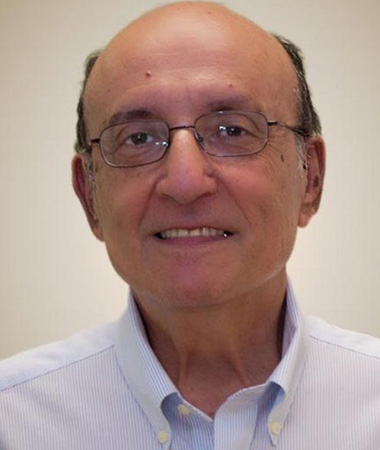
Michael Kubovy was a professor of cognitive psychology at the University of Virginia, where he researched visual and auditory perception, decision making, and the psychology of art and pleasure. Kubovy was an APS Charter Member and Fellow, as well as a James McKeen Cattell Fund Fellowship recipient.
Words from Hudson Golino (University of Virginia): “Michael was not only an early student of Amos Tversky and Daniel Kahneman, he was a pioneer in the modern study of perception. A true force of nature. A wonderful and inquisitive colleague. One of the most prominent researchers in the field of human perception.”
Words from APS Fellow Dennis Proffitt (University of Virginia): “Michael was a leader in the rebirth of Gestalt psychology in the late 20th century, setting the stage with his 1981 volume co-edited with James Pomerantz, Perceptual Organization. Michael’s research showed that Gestalt principles of grouping could be studied with a methodological and quantitative rigor that many people felt had been lacking in the work of earlier proponents of Gestalt psychology. Michael’s 1986 book, The Psychology of Perspective and Renaissance Art, blended a detailed treatment of perspective geometry with the aesthetic pleasures that are evoked through its employment. His research interests spanned a wide variety of fields including decision making, visual and auditory perception, the psychology of art, and the psychology of pleasure.
Michael was the recipient of numerous national and international awards including a Guggenheim Fellowship, membership in the Society of Experimental Psychologists, and the Paolo Bozzi Prize in Ontology. Michael’s breadth of interests, combined with his virtuosity in experimental design and quantitative analyses, brought him international fame and admiration. His generosity, goodwill, and mirth made him a beloved colleague and mentor.”
Arthur Samuel Reber
Professor of Psychology, Brooklyn College, City University of New York
March 11, 1940 – September 2, 2025
Read Reber’s full obituary | Learn more about Reber’s book, Implicit Learning and Tacit Knowledge: An Essay on the Cognitive Unconscious
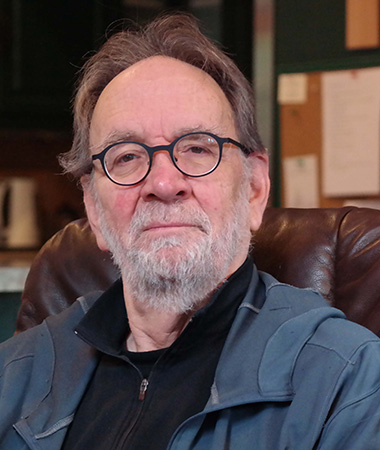
APS Charter Member and Fellow Arthur Samuel Reber was a trailblazing psychological scientist in the realm of the unconscious mind. Reber also wrote articles and books on gambling, of which he was an avid enjoyer, including Gambling for Dummies. Reber was named the Broeklundian Professor of Psychology at Brooklyn College, where he stayed until his retirement in 2006.
Words from Rhiannon Allen (Long Island University): “Arthur Reber’s scientific research was hugely influential, emphasizing the study of the cognitive foundations of statistical learning processes when the field of cognitive psychology showed relatively little interest in the topic. His early and best-known work used the “artificial grammar” paradigm to examine the nature of implicit learning: a form of learning in which participants acquire knowledge about the structure of a set of stimuli without explicit awareness of the nature of that structure or even the fact that they have learned it. He popularized the concept of implicit learning and propelled research on the cognitive unconscious. As Science pointed out, ‘In arguing forcefully for the concept of implicit learning, and in backing his arguments with provocative, well-designed experiments, Reber has made important contributions to the study of the cognitive unconscious.’”
Read the CUNY Graduate Center’s full in memoriam post.
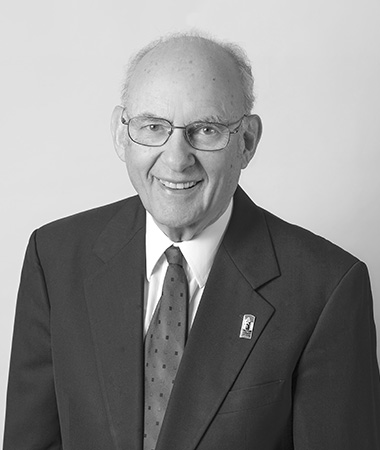
Jerome M. Sattler
Professor Emeritus of Psychology, San Diego State University
March 3, 1931 – November 16, 2024
Read Sattler’s full obituary | Learn more about Sattler’s book, Assessment of Children: Cognitive Foundations and Applications
Jerome M. Sattler was a world-renowned psychological scientist in the field of child psychological assessment, child maltreatment, and forensic interviewing. Sattler was professor emeritus and adjunct professor at San Diego State University.
Words from APS Fellow Joseph J. Ryan (University of Central Missouri): “He was my professor when I attended the psychology graduate program at San Diego State. He was my mentor for 50+ years and helped me focus my practice and research over my entire career.”
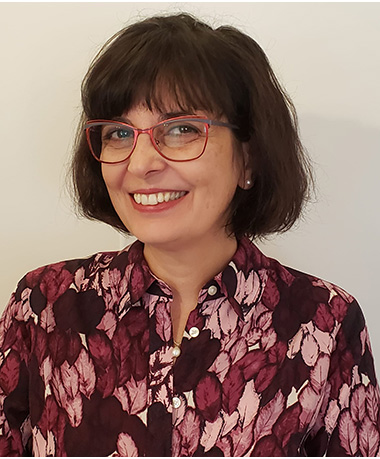
Luminita (Lumi) Tarita-Nistor
Scientific Associate, Krembil Research Institute
September 2, 1968 – May 28, 2025
Read Tarita-Nistor’s full obituary | Read Tarita-Nistor’s review on the preferred retinal locus
Luminita Tarita-Nistor was a prominent research scientist in the field of low vision. Her research at the Krembil Research Institute—part of the University of Health Network in Toronto—focused on exploring age-related macular degeneration, using retinal loci to improve patients’ fixation stability and reading performance, and developing tools for patients to use at home.
Words from APS Charter Member and Fellow Gordon Legge (University of Minnesota): “Those of us who knew Lumi personally, and others who knew her only through her work, learned quickly how smart, capable and insightful she was. In a relatively short career as a vision scientist, she made major contributions to our understanding of age-related macular degeneration and related challenges in low vision. We will miss her as a colleague and as a scientist!”
Feedback on this article? Email [email protected] or login to comment.
To honor someone who passed away in 2026, please share their information via this form.



APS regularly opens certain online articles for discussion on our website. Effective February 2021, you must be a logged-in APS member to post comments. By posting a comment, you agree to our Community Guidelines and the display of your profile information, including your name and affiliation. Any opinions, findings, conclusions, or recommendations present in article comments are those of the writers and do not necessarily reflect the views of APS or the article’s author. For more information, please see our Community Guidelines.
Please login with your APS account to comment.