
Paul Ekman: Lives Touched
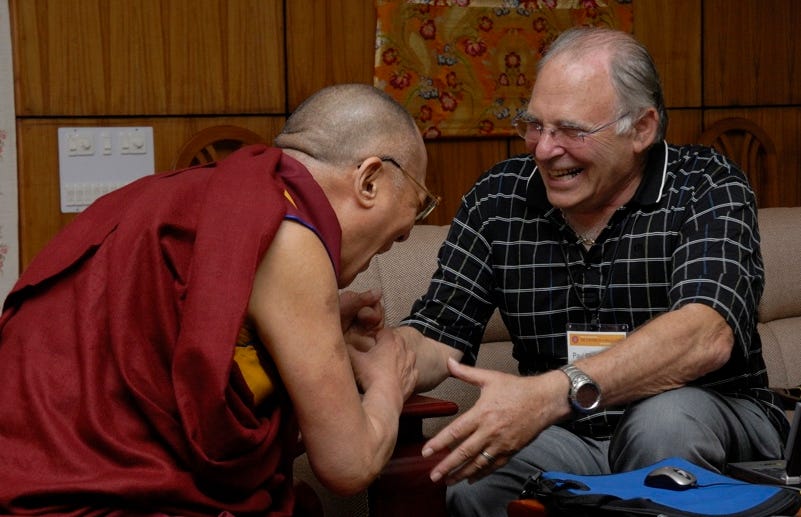
Paul Ekman with His Holiness the Dalai Lama. Photo courtesy of Robert Levenson.
In the months since APS Charter Member, Fellow, and William James Award recipient Paul Ekman’s death on November 17, 2025, his absence has been felt profoundly across the psychological science community. Earlier, I had a chance to share some of my own thoughts about his life and work in the Observer and in Affective Science. Because he impacted so many others, I invited a group of eight people he mentored, collaborated with, and influenced to share some of their experiences, thoughts, and feelings. Admittedly, this is but a small sample drawn from the large universe of people he affected. Hopefully, it will provide a sense of how deeply he influenced our science and its scientists.
Unlike many psychological scientists who spend their professional careers in psychology departments located in research universities, Paul spent his entire academic career in the Department of Psychiatry in the School of Medicine at the University of California, San Francisco (UCSF). Supported for 35 years by National Institute of Mental Health (NIMH) Career Development and Research Scientist awards, he did not have to teach courses and there were few doctoral students at UCSF to mentor. Nonetheless, he was fiercely committed to training the next generation of affective scientists.
To develop the nascent field of affective science, he organized workshops and symposia, edited foundational volumes, and worked to create new professional organizations (e.g., the International Society for Research on Emotion). A recurring theme in all of these efforts was fomenting spirited discussion and debate across many points of view. He regularly sought out collaborators with complementary expertise, resulting in a remarkable body of science and scholarship. He became a major educator, mentor, program developer, and collaborator who influenced a large group of individuals spanning disciplines, career stages, and points of view.
Educator, mentor, and program developer
I met Paul in 1981 when I travelled from Indiana to San Francisco to spend my first sabbatical working at his Human Interaction Laboratory at UCSF. Emotion research circa 1981 was still in its infancy. Indicative of this, a Google Scholar search reveals a total of 78 articles with “emotion” in the title published that year (for comparison, in 2025 that number was 12,400). Paul was deeply committed to providing the tools needed to grow the field. Three years before I arrived, working with his long-time collaborator Wallace Friesen, he published the Facial Action Coding System (FACS; Ekman & Friesen, 1978). FACS enabled precise measurement of facial expressions and could be learned through readily available training materials. Paul had long thought that being able to characterize such a central aspect of emotional responding accurately and reliably would open the floodgates to new discoveries and important applications.

Paul also believed that the field needed to produce a new generation of more broadly trained affective scientists. In 1987, he convened a diverse group of emotion researchers and NIMH staff involved in emotion research funding and training to develop a new model for postdoctoral training in emotion research (see Figure 1). The resulting model added to trainees’ existing specializations by including exposure, experience, and greater understanding of theory, methods, and empirical data spanning multiple species, physiological systems, levels of analysis, contexts, disciplines and subdisciplines, and measurement techniques. A postdoctoral training grant that embodied this model was funded by NIMH starting in 1989 and continued until 2019 (shifting to a predoctoral focus along the way and spawning a parallel training program housed at the University of Wisconsin–Madison). Trainees in the postdoctoral version of the program spent their first year at Berkeley, where they received a common set of training experiences, and then 2 years in the laboratory of one of the program’s 14 core faculty who were located at 11 universities in the United States and abroad. Paul argued for making seminars, workshops, colloquia, and other events open to others who were not officially in the program. As a result, the program’s reach was extended to many other predocs, postdocs, and faculty who were interested in emotion research.
What follows are the stories of some of those who were influenced by Paul through the affective science training program and more generally in his role as educator and mentor.
APS Charter Member, Mentor Award Recipient, and Fellow James Gross (Stanford University)
“I had always found the expression “larger than life” puzzling. How could someone be larger than life? Then I met Paul Ekman in person and understood.
It was 1988. That summer, just before I started my PhD in clinical psychology at University of California, Berkeley, my advisor (Bob Levenson) said I could apply to participate in the inaugural year of the Bay Area Training Program in Affective Science, which Paul Ekman would be directing. I practically had a heart attack at the thought of being in the same room as Paul, whose work I had long read. It was to be a postdoctoral training program, and as a first-year graduate student, I pictured myself sitting meekly in a corner without making a noise.
That first day Paul strode into the room and immediately started in on his trademark lists of points to make. They were never the modest two or three points I had seen others make. He always had extravagant lists of 11 or 17 points. Always an unusual number and always conveyed with such force that the building shook. We were mesmerized, drawn in by the power of his enthusiasm, and by the prospect of helping fashion a new field of affective science. We instantly forgot (or at least I did anyway) who was or wasn’t a postdoctoral trainee. Paul made us all feel welcome and utterly engaged. What followed shaped all of our careers, namely the enactment of Paul’s extraordinary vision. Major figures throughout the field of emotion came to Berkeley for week-long stays, during which we got to read and discuss their papers and have dinner together. We got a first-hand view of the various debates and a keen sense of core questions and emerging answers.
During the years that followed, my appreciation for Paul only grew. I spent late nights learning FACS, which taught me how to carefully observe behavior. This was followed by long discussions about what it took to link facial behavior to emotion. One summer, he projected wildly unrealistic confidence by inviting me to draft a report on cultural differences in lie detection. I knew nothing about either culture or lie detection, but Paul’s enthusiasm was irresistible, and I was inducted into both topics at once. Later, I had the good fortune of having meetings with Paul in his Human Interaction Laboratory in San Francisco. I also enjoyed his visits to Bob Levenson’s laboratory, feeling vicarious pleasure at the sight of Paul and Bob effortlessly blending personal friendship and professional collaboration. Perhaps most shaping of all, however, was my participation in the annual summer workshops of the Bay Area Training Program in Affective Science. It was in this context that I learned both to present my research and to ask questions. Later still, I benefited from Paul’s extensive feedback on my dissertation on emotion regulation, an experience that prepared me well for the rigors of the many “Reviewer 2”s to come.
In the end, it’s oddly difficult to summarize what Paul’s impact on me or the field has been. Paul was such a larger-than-life force in shaping our worlds that it’s hard to imagine a world without his enthusiasm, his dedication to science, his commitment to big questions and even bigger visions, or his mentorship, not just of individuals, but of the field. But what I can see clearly is how very lucky I am—and we all are—to have been shaped by Paul.”
APS Fellow Brian Knutson (Stanford University)
“In 1993, Paul Ekman admitted me as a postdoctoral fellow to the NIMH-funded training program in mental health and emotion. I moved from Stanford University up the peninsula to UCSF to live and work for a year. I got a footnote for helping to review manuscripts and attained certification in FACS, but we did not end up publishing together. Coming into the program, I had proposed to learn facial coding with Paul at UCSF, then to learn vocal coding with Klaus Scherer in Geneva, and finally to join the two in publication. But thanks to Paul’s advice, I ended up following a different path.
Late in my year at UCSF, Paul called me into his office. He noted that while I was completing my laboratory work, I was also taking medical classes in neuoranatomy. He suggested that if I wanted to continue learning about the brain and emotion, there were only three people in the world who could help—all affiliated with the postdoctoral program (Joe LeDoux, Richie Davidson, and Jaak Panksepp). He suggested I reflect for a week and decide whether to continue with my original plan or learn about the brain. He also warned me that if I pivoted to neuroscience, I would probably not land a conventional academic job, because most thought that emotion could not be studied in the brain (at the time, he was right). Over the next week, I contacted those potential mentors. Of the three, Panksepp offered a slot, so I made a fateful decision to spend the next two years in Bowling Green, Ohio, learning about behavioral pharmacology and running rats.
Paul also connected me with UCSF psychiatrists Owen Wolkowitz and Victor Reus, who gamely agreed to support a study on the influence of selective serotonin reuptake inhibitors (SSRIs) on personality and social behavior in healthy humans. Thus, I began a program of research focusing on how increasing brain serotonin can reduce negative affect in humans (UCSF) and rats (BGSU). Without Paul’s foresight and flexibility, I would not have entered the nascent field of affective neuroscience.
Professionally, Paul’s pioneering contributions to emotion theory are unquestionable and widely known. But personally, he gave me license to operate as an ethologist with respect to facial movement, carefully observing and measuring what I witnessed free of theoretical assumptions. Interpersonally, Paul projected dominance and could appear intimidating and gruff, but he also was deeply warm-hearted and protective. Paul’s persona abruptly shifted, however, from a countenance of power to one of compassion midway through a presentation to the Dalai Lama at the Mind and Life Conference of 2000, which I was fortunate to witness. This shift shaped much of Paul’s subsequent life, interactions, and contributions. In the end, I feel fortunate not only to have learned and benefited from such a giant of science, but also to pay witness to such a beautiful transformative arc in his life story.”
APS Charter Member Erika Rosenberg (Erika Rosenberg Consulting, LLC; The Compassion Institute Center for Mind and Brain, UC Davis; Humain Studios)
“My life changed the day I met Paul Ekman. I found him at our graduate proseminar at the end of my first year in UCSF’s health psychology program. I had spent that year trying to figure out how to study stress and illness, growing increasingly frustrated with the field’s lack of specificity. It was the late 1980s, mind you, and the prevailing approach in health psychology was to define stress by situations rather than by how individuals responded to them. I felt this distinction was critical to understanding susceptibility to illness, and although I’d arrived independently at the idea that I needed to study emotions, I wasn’t sure how.
Then I walked into that proseminar, and there was Paul, waxing poetic about how emotions spoke to us through gestures. Here was someone who had taken something as subjective as emotion and made it observable! I went to meet with him. He immediately assigned Darwin, then Tomkins, and told me to learn FACS. As I tell my FACS students these days, Paul handed me a binder and a VHS cassette and simply said, “Learn this.” It was a daunting prospect. FACS revealed an extraordinary mind, one characterized by a meticulousness that bordered on obsessiveness. Paul’s striving for objectivity was so rigorous that he and Friesen even avoided the word “smile,” opting instead to describe behavior through anatomically deconstructed facial movements. This approach followed the ethological tradition of documenting what happens without imposing theoretical assumptions. Just what I was looking for!
Learning to be a scientist under Paul Ekman taught me research skills as well as life lessons. He taught me to observe first, before reaching conclusions. This meant spending time with descriptive statistics and getting a feel for the data before imposing inferential tests. He told me “the data don’t lie” if you’ve designed and conducted the study carefully. And if the data contradict your beliefs, you must be willing to change.
Being his graduate student wasn’t easy. Paul was passionate about his ideas and, in those days, possessed a fiery temper and a formidable ego. Yet, with similar intensity, he cared deeply about the world.
I remained connected with Paul through the ups and downs of both our lives for more than 30 years, and we became deep friends. He softened with time, his heart opening further with age and through his connection with the Dalai Lama and their shared vision of a more compassionate world (Figure 2). Paul entered that world as a rigorous scientist with no interest in religion, but he possessed an open mind and a lifelong social conscience. Ultimately, Paul brought Western affective science together with Buddhist wisdom to develop tools that help people understand their emotions and cultivate compassion, most notably through the Cultivating Emotional Balance project.
I started meditating in the Tibetan Buddhist tradition as a graduate student, never mentioning it to Paul. When he connected with the Dalai Lama years later, I told Paul of my practice, and he jokingly accused me of being a “closeted Buddhist.” I find it so sweet that our paths intersected in this final, beautiful way, centered around compassion. Vis-à-vis my connection to Paul, I got involved with the Mind and Life Institute, which paved the way for my work on compassion cultivation and research at Stanford’s Center for Compassion and Altruism Research and Education (CCARE), UC Davis, and the Compassion Institute.
Paul Ekman was a giant. I feel privileged that our paths crossed, and I am honored to carry forward, in some small way, his legacy of studying the face.”
APS Fellow Jeanne Tsai (Stanford University)
“I had the good fortune to start my graduate studies while my advisor (Bob Levenson), Paul, Richie Davidson, and other greats were funded by NIMH to train postdocs in affective science. It was an incredible honor to be in the same room with Paul, the father of emotion research, but it was stressful, too. One of the most stressful times was during an annual summer workshop, when he and other faculty would evaluate the trainees’ work. When I had the opportunity to present my work as a predoc, I was scared. But Paul was enthusiastic and encouraging, and he provided exactly the type of validation that I needed. My dissertation was inspired by the first studies Paul did with Friesen on display rules in Japanese and American men. Paul not only agreed to be on my dissertation committee, but he also took time to help me pilot the tasks and procedures. When I was a postdoc at UCSF, I’d go to the Human Interaction Lab to update him on the progress of my dissertation and show him my data. And when it was time to apply to assistant professor positions, he and his assistant sent out (all 80!) letters of support.
When I was an assistant professor at the University of Minnesota, Richie invited Paul, me, and others to participate in the Destructive Emotions conference in Dharamsala, India, with His Holiness the Dalai Lama. On that trip, Paul made a commitment to studying the cultivation of emotional balance, and he subsequently convened a community of scientists (including myself, Bob, his colleagues, and former students), monks, and practitioners to work on these topics, some of which was funded by the Dalai Lama. My students and I got to work with Thupten Jinpa on the effects of Buddhist-inspired meditation on emotion and compassion in part because of Paul’s dedication to the work and the legitimacy he brought to it. Through this project and the training grant, Paul, Bob, and others built a vibrant community of affective scientists in the Bay Area that continues to this day.
When I was still in Minnesota and then later after I started at Stanford, I’d visit Paul when I could, whether it was at his beautiful house at Twin Peaks in San Francisco, in the Berkeley Hills, or in downtown San Francisco. He always made time for me. I would bring him my FACS codes, and he would help me interpret them. He’d ask me about my work on culture, tell me how important it was, and give me suggestions for readings I might do, or things I might look at. We’d talk about the compassion projects. It was extra special when his wife, Mary Ann, was there because they would share stories about being a dual career couple and about being parents. When Brian (Knutson) and I were expecting our first child, I asked Paul for his best parenting advice. He said he always wanted to cultivate a close bond with his kids so that when they were in trouble, they would call him first. That advice left as lasting an impression as his professional advice, and it has guided me as a parent for 19 years.
For me, Paul modeled courage and openness as a scientist, generosity as a mentor, and warmth as a person. We are all grateful to him for his indelible contributions to our field. But I am also grateful to him for his enduring interest in culture and emotion, for the community of affective scientists he and others built, and for his advice about balancing work and family. I don’t think my life—professional and personal—would be the same without him. Thank you, Paul.”
Collaborator and influencer
Paul Ekman blended intellectual gregariousness with a penchant for focused solitude. Reflecting the former, his career included a remarkable number of collaborations, some lasting for decades, some for years, and others lasting for a single project. In empirical studies he almost always worked with others, but in books, theoretical articles, and reviews, he often worked alone, reveling in the uncompromised freedom to say what he believed in exactly the way he wanted.
When I arrived at his laboratory for my sabbatical in 1981, he told me that I needed to master FACS before we would be able to have serious discussions. Once I became “FACS-legal,” we began meeting regularly to talk about ways to study the connections among facial actions, emotional experience, and autonomic nervous system (ANS) responses in emotion. He asked me to conduct a weekly “seminette” for him and Friesen (I recently found a faded copy of the notes I made for those sessions). It turned out that when developing FACS they had utilized electrical stimulation to map the appearance changes that occurred when specific facial muscles were contracted. After a while, they both reported feeling certain “sensations” when they contracted particular combinations of facial muscles. They expected that these sensations arose from the ANS and hoped that I could provide the expertise to study this more systematically.
Related content: From Those Who Admired Them: Lives Lost
These weekly sessions and discussions that ensued led to new directions in both Paul’s research and mine. After I joined the faculty at Berkeley in 1986, our research collaboration deepened, leading to a highly productive period where we conducted a series of studies on the relationships among voluntary facial actions, affect, and ANS responses. As part of that work, we traveled together to West Sumatra to determine if the relationships we found in U.S. samples would also be found in this distant culture with very different practices and beliefs about emotional expression (Levenson et al., 1992). This period also saw the beginning of our collaboration in developing and codirecting the emotion research training program.
Paul’s other collaborators were profoundly influenced by him, as were others with whom he interacted in other important ways. Here are some of those stories.
APS Charter Member and William James Fellow Award Recipient Richard Davidson (University of Wisconsin–Madison; Center for Healthy Minds)
“I first met Paul Ekman in 1978, soon after receiving my PhD. I was speaking at the International Neuropsychological Society meeting in San Francisco and reached out in advance, hoping for a brief conversation. Instead, Paul picked me up at my hotel, drove me across the Bay to Berkeley, and spent hours over dinner in animated discussion. I was barely two years out of graduate school. His generosity, intellectual intensity, and fierce curiosity were unmistakable. That evening marked the beginning of a collaboration and friendship that would profoundly shape my scientific life.
Our early work together helped lay foundations for what would later be called affective neuroscience. We combined Paul’s rigorous measurement of facial behavior—using FACS—with electroencephalography (EEG) to examine the neural correlates of emotion. Participants viewed emotionally evocative films while their facial behavior was videotaped unobtrusively and their brain activity recorded. Facial expressions coded objectively with FACS provided precise temporal markers that allowed us to extract emotion-specific EEG activity.
These studies were among the first systematic efforts to integrate fine-grained behavioral measures of emotion with neurophysiology. One line of work examined distinctions among smiles. We reported that only Duchenne smiles—those involving activation of the orbicularis oculi muscle around the eyes—were associated with patterns of asymmetric prefrontal activation we had previously linked to positive affect (Davidson et al., 1990; Ekman et al. 1990). Non-Duchenne smiles did not show this pattern. These findings provided early neural evidence that different facial expressions—even ones that look superficially similar—reflect distinct underlying affective processes.
Our collaboration extended beyond empirical studies. Together with Bob Levenson, we co-led the first NIMH-supported T32 training grant devoted to emotion research. It was a bold, multi-institutional undertaking at a time when emotion was still viewed by many as peripheral to “serious” psychology. I vividly recall the initial grant-writing meeting Paul convened in Inverness, near his country home—a setting that would host many spirited scientific exchanges over the years. That original T32 became the foundation for a training program that has now continued for more than three decades, helping to establish emotion as a central domain of psychological science.
Another major collaboration was the edited volume The Nature of Emotion: Fundamental Questions (Ekman & Davidson, 1994). Rather than organizing chapters around topics, we framed the book around 12 enduring questions: Are there basic emotions? How do emotions differ from moods and traits? Can emotions occur without awareness? Can we regulate them? Leading scholars were invited to respond in short essays, after which Paul and I wrote integrative commentaries. The format encouraged genuine debate and intellectual transparency. It remains one of the most stimulating collaborative projects of my career.
Paul’s intellectual courage was perhaps most evident in his later openness to dialogue across cultures and disciplines. When I invited him to participate in a meeting with the Dalai Lama in Dharamsala, India, he was initially skeptical. Yet he agreed to attend—encouraged in part by his daughter, Eve Ekman. The encounter proved transformative. Deeply moved by the Dalai Lama’s psychological insights and moral clarity, Paul began to reconsider certain assumptions about emotion and its regulation. This dialogue ultimately culminated in Emotional Awareness (Dalai Lama & Ekman, 2008), a book that bridged affective science and contemplative traditions.
That meeting also helped catalyze Eve’s subsequent work integrating emotion science with contemplative practice, extending Paul’s legacy into applied domains concerned with emotional balance and compassion.
Paul was among the most passionate scientists I have known. He possessed a rare combination of empirical rigor, theoretical boldness, and moral seriousness. At a time when emotion was marginalized within psychology, he insisted on its centrality. Through meticulous cross-cultural research demonstrating universality in facial expressions (Ekman, 1992), through methodological innovations such as FACS, and through institutional leadership, he helped establish emotion as a major subfield of psychological science.
In the final decades of his career, Paul increasingly emphasized both the study of emotion and the possibility of cultivating emotional balance. That arc—from description to transformation—reflected his conviction that science should illuminate pathways toward human flourishing.
I miss him deeply. His influence endures in laboratories, in generations of trainees, and in applied settings where emotional understanding matters profoundly. But most of all, it endures in the example he set: to pursue questions with passion, precision, and courage.”
John Gottman (University of Washington)
“My first memory of Paul was hearing him on the radio in my car when I had just started my first set of studies on couples’ interaction. I pulled my car over and listened to this powerful and amazing analysis of what nonverbal behavior could mean. I started reading Paul’s book that systematically refuted Jerome Bruner’s contention that the face was a researcher’s nightmare. What a book! And then it turned out that Paul was just continuing the work that Charles Darwin started in his amazing 1872 book on emotions in man and animals. What a glorious treasure Paul was creating in continuing Darwin’s work with precise measurement of the face!
I then sent Paul my own book titled Marital Interaction (1979), and Paul wrote back saying that he liked the book a lot, but that he didn’t think I knew what I was talking about when it came to studying nonverbal behavior. I had coded nonverbal behavior in my couples, but I used research by Albert Mehrabian. Paul then challenged me to come to his lab and bring a few videotapes of couples I’d studied. In a fateful visit to Paul’s lab in San Francisco, I sat between Paul and Friesen, and, using a reel-to-reel slow-motion analysis, they proceeded to show me why I really was totally ignorant of observing emotions in the face. Our subsequent visits over the years were a lot of fun, and very exciting, and we also became close friends over the next 50 years. It became a relationship of deep respect and love.
During that first visit I was completely convinced by Wally and Paul that I really didn’t know how to observe the face. So, I then learned to use FACS and their more rapid EMFACS, which took me a full 2 years to truly master. I later went on to develop my own Specific Affect Coding System (SPAFF), which included FACS but supplemented it by also observing emotions in the words people spoke, their paralinguistic features, emotions in the voice, and other nonverbal behaviors. Beautiful measurement.
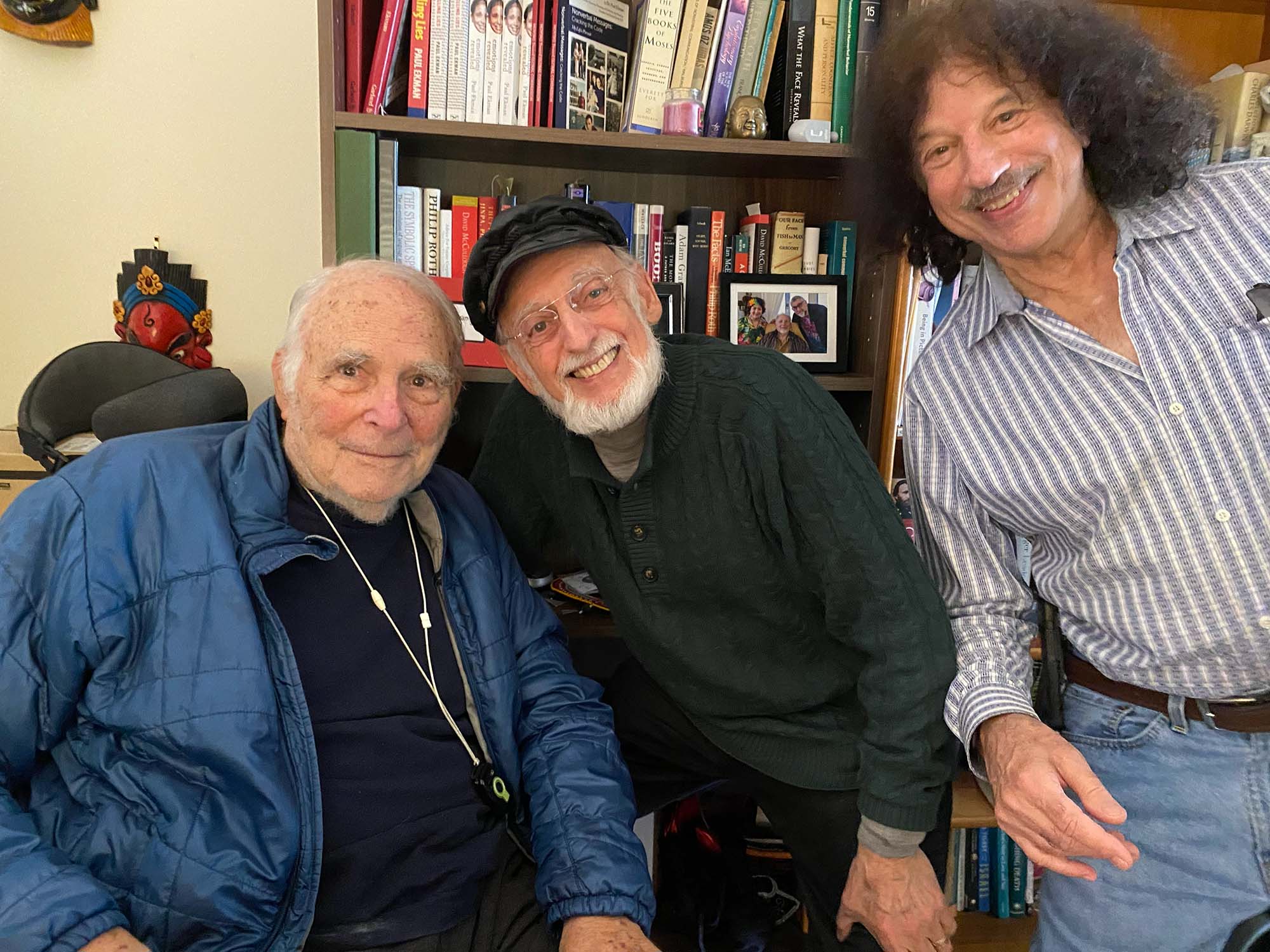
Paul was very interested in my use of information theory to study sequences of interaction, and time-series analysis to get at physiological linkage and the dynamics of couples’ interactions, and he subsequently invited me to present my work at a conference in Paris. That was the beginning of a very long collaboration.
Eventually that collaboration involved working with Bob Levenson and talking to Paul many times to get his insights into the study of relationships (Figure 3). Bob went on to do his first sabbatical with Paul and do some beautiful groundbreaking cross-cultural research on emotions and their physiology in the Minangkabau culture in Indonesia. With guidance from Paul, Bob and I began to understand the importance of sequences of emotion in revealing the dynamics of couples’ relationships. Paul also invited me to become a faculty member in a postdoctoral training program in emotion research centered at Berkeley, and that led to some wonderful years of discussions about studying and understanding emotions from a wide variety of perspectives.
Most of social psychology had long ago abandoned the use of observational methods. Researchers also favored the use of self-report cognitive—not emotional—measures, but Paul led the way into the incredible fruitfulness of direct observation. I have never experienced Paul’s equal as a groundbreaking scientist in doing this very basic, fundamental observational research. He made observing a lot of fun, and his work illuminated how important it was to actually observe and focus on the emotions. I also loved the fact that because of Paul and the work Bob and I did together, I could travel everywhere on the planet and be able to watch people and know almost instantly what kind of relationships they had.”
Clifford Saron (UC Davis Center for Mind and Brain)
“Sometime in the late 1970s, Paul Ekman entered the Natural Science Building at SUNY Purchase, invited by my friend, colleague, and mentor, psychology faculty member Richie Davidson. I was a research associate in Richie’s lab at the time. Paul had recently finalized the creation, with Friesen, of FACS. Compared to our simple recording of forehead or cheek muscle tension for measuring frowns or smiles, Paul and Wally’s system was astounding in its comprehensive rigor.
Paul came to undertake a collaborative study with our lab in which facial signs of emotion elicited by films Paul had been using in prior research would be coupled with moment-by-moment measures of EEG laterality. The study drew on an emerging literature from Richie’s and other’s laboratories that suggested that the differential activation of the two cerebral hemispheres was associated with different affective states, with relative left hemisphere activation seemingly associated with more positive affect.
Paul had gifted us a single-frame controllable 8-mm film projector, and I immersed myself in implementing this study from the ground up—while being accompanied by films of dancing gorillas, cute puppies, a horrible burn victim, and grainy images of a leg amputation. As the study began to take shape, Paul visited frequently and took a particular interest in my technical solutions and the myriad instrumentation that I was stitching together to present the film stimuli, capture subjective reports of emotional states, and record facial expressions in sync with EEG recording. During these visits I came to see the more geeky and gadget-prone side of Paul, and we established a sort of techie camaraderie. That study (Davidson et al., 1990) showed that it was only during facial signs of happiness or disgust that we saw reliable EEG laterality differences.
After Richie and I moved the laboratory to the University of Wisconsin–Madison, Paul joined us for additional collaborative work, and I continued to absorb his deeply informed logical approach to investigating the nature of emotion in the context of evolutionary theory. He articulated the emotion process as a multitiered rapid response system engaged by conscious and nonconscious appraisal processes relevant to a particular person–situation.
In the early 1990s, I followed my San Francisco Symphony cellist wife Barbara Bogatin to California while continuing my PhD in neuroscience in the Bronx. Paul and his family quickly became dear friends. His personal mentorship shifted to helping me think about how I might fashion a life in science given my nontraditional career path. Around this time, I had the opportunity to present some of the affective science research from Richie’s lab to the Dalai Lama at a small Mind and Life conference in MacLeod Ganj, India. This life-changing experience resulted in further research with Tibetan monks in India, in part using some of Paul’s methods.
As I reflect on my decades of friendship with Paul, I am left with an unexpected consequence—his gift to me of an unshakeable confidence is my own capacity to chart an intellectual course in life, often against fashion and good career moves. Over time, this allowed me to flourish with students and colleagues in ways I could not have imagined. In his last days he had the largest of perspectives, asking how it all had gone, with the gentle touch of a soon-to-depart sage.”
APS Fellow Michelle “Lani” Shiota (Arizona State University)
“I first encountered Paul Ekman as a distant star in the sky of my academic world. He occasionally visited classes and lab meetings I attended as a grad student and postdoc at UC Berkeley, and we met once to prepare for a panel on compassion that he’d encouraged me to join. Although he was never a direct mentor or collaborator, there’s no one in the world whose ideas have had more impact on the path my research has taken, and the scientist I’ve become.
It’s not an exaggeration to say that my field exists because of Paul. His writings were absolutely fundamental to my training. I grew up as a scholar during the first wave of the “discrete vs dimensional” battle, absorbing and engaging critically with all of the issues at stake. The kinds of questions I’ve tackled in much of my own research, grounding predictions about the features of positive as well as negative emotions in theories of their adaptive functions, are deeply shaped by the rich, nuanced way Paul thought about emotions. He was everywhere in my professional life, long before I had the chance to get to know him.
As my own career has evolved, I’ve increasingly been asked to take on the role of representing, clarifying, and standing up for the conceptual core of the ideas Paul proposed. It’s been an honor, and I’ve done it not because I agreed with everything he said, but because what he said was so often misunderstood and misrepresented. Paul’s actual ideas about the psychological mechanisms underlying human emotion were far more sophisticated than commonly recognized, and it would be a huge loss to the field to let that slide. One memory in particular warms my heart. Asked to write an encyclopedia entry on “Ekman’s Theory of Basic Emotions,” I drafted it, and, both as a courtesy and to make sure I hadn’t screwed anything up, I asked Paul to review it. He said: “Don’t change a word.” That gave me the confidence to keep going. I’m grateful for the opportunities I’ve had to engage deeply with the complexities of Paul’s ideas and writings, explain them to skeptical audiences, and critically assess the relevant evidence. This work has pushed me to reach beyond his theorizing and expand the boundaries of my own. I like to think Paul would have applauded that.
In the long run, my actual relationship with Paul was more personal rather than professional. In the past 15 years, we’ve enjoyed dozens of jazz performances, celebrated many birthdays, and toasted the start of several new years. Along with his beloved wife Mary Ann, Paul showed up at my dance performances on the streets of San Francisco and listened as I shared the highs and lows of life as a mid-career professor. They grew from being my husband’s (Bob Levenson) treasured friends to being my own. By this time Paul was deeply invested in his collaboration with the Dalai Lama and in using emotion science to improve people’s lives. He was still fierce, and I avoided topics that might provoke his ire! But he was also caring, loyal, intellectually vibrant, joyful, and capable of great love. In his last years, he seemed ready to let go of the fierceness. His warmth, curiosity, laughter, and kindness remained. Through it all he was larger than life, and I will miss him.”
Final thoughts
These eight voices, each with a unique story, provide a sense of the breadth of Paul Ekman’s influence on affective science and its practitioners. Despite the striking differences in detail, time, and place, common themes emerge. Paul was truly sui generis, a larger-than-life figure who cared deeply and was always willing to go the extra mile. Although at times prone to ferocity, he also had vast reservoirs of generosity, gentleness, and compassion, which deepened over time. He was not bound by hierarchy; his willingness to engage and give support to others was based on the quality of their ideas and the seriousness of their pursuits rather than their status and rank. Even a small dose of Paul had powerful effects on those who received his attention–changing lives, career paths, and beliefs in profound ways. He was an irreplaceable force of nature who will live on through the magnificent body of work he created and influenced as well as the vivid memories he leaves for those who had the privilege to know and know of him.
References
Emotional awareness: Overcoming the obstacles to psychological balance and compassion: A conversation between the Dalai Lama and Paul Ekman. Times Books/Henry Holt and Co.
Darwin, C. (1872). The expression of the emotions in man and animals. London: Murray.
Davidson, R. J., Ekman, P., Saron, C. D., & Senulis, J. A. (1990). Approach-withdrawal and cerebral asymmetry: Emotional expression and brain physiology: I. Journal of Personality & Social Psychology, 58, 330–341.
Ekman, P. (1992). An argument for basic emotions. Cognition and Emotion, 6, 169–200.
Ekman, P., & Davidson, R. J. (Eds.). (1994). The nature of emotion: Fundamental questions. Oxford University Press.
Ekman, P., Davidson, R. J., & Friesen, W. V. (1990). The Duchenne smile: Emotional expression and brain physiology: II. Journal of Personality and Social Psychology: Personality Processes and Individual Differences, 58, 342–353.
Ekman, P., & Friesen, W. V. (1978). Facial action coding system. Consulting Psychologists Press.
Gottman, J.M. (1979). Marital interaction: Experimental investigations. New York: Academic Press.
Levenson, R. W. In Memoriam: Paul Ekman (February 15, 1934 – November 17, 2025). Affec Sci (2025).
Levenson, R. W., Ekman, P., Heider, K., & Friesen, W. V. (1992). Emotion and autonomic nervous system activity in the Minangkabau of West Sumatra. Journal of Personality & Social Psychology, 62, 972–988.




APS regularly opens certain online articles for discussion on our website. Effective February 2021, you must be a logged-in APS member to post comments. By posting a comment, you agree to our Community Guidelines and the display of your profile information, including your name and affiliation. Any opinions, findings, conclusions, or recommendations present in article comments are those of the writers and do not necessarily reflect the views of APS or the article’s author. For more information, please see our Community Guidelines.
Please login with your APS account to comment.