
-
Tracing the Source of Children’s Racial Attitudes
How children learn about race, ethnicity, and religion depends largely on how their parents present information about different individuals and groups during crucial developmental periods. As part of a symposium at the 2016 APS Annual
-
Study Supports Suspicion That Police Are More Likely to Use Force on Blacks
The New York Times: The vast majority of interactions between police officers and civilians end routinely, with no one injured, no one aggrieved and no one making the headlines. But when force is used, a
-
Religion Past and Present
0:13 – How Religions Became Moral and Spiritual – Pascal R. Boyer, Washington University in St. Louis 15:17 – I’m Learning (,) God: Spirituality and Religion in African American Life – Jacqueline S. Mattis, University
-
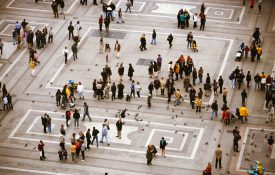
When the Majority Becomes the Minority
Rapidly expanding racial and ethnic diversity in many industralized countries has sparked a new wave of research on the ways people react to changes in their power and social status.
-
The Brain Likes Categories. Where Should It Put Mixed-Race People?
NPR: Humans like to place things in categories and can struggle when things can’t easily be categorized. That also applies to people, a study finds, and the brain’s visual biases may play a role in
-
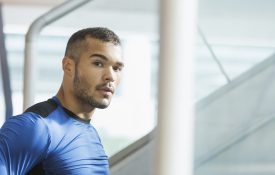
Where We Live Affects Our Bias Against Mixed-Race Individuals
Whites living in areas where they are less exposed to people of other races have a harder time categorizing mixed-race individuals than do Whites with greater interracial exposure, a condition that is associated with greater
