
Psychologists Are Seeking Alternative Research Support Amid Funding Uncertainty
Opportunities for students and early career researchers are dwindling as the U.S. political landscape shifts. How can researchers navigate these challenges?
The trickle-down effect • Navigating uncertainty • Building value in communities
- Funding for psychological science has been thrown into disarray due to shifting budgets in the federal government. These changes have trickled down, leading to dwindling opportunities in an already shrinking job market for early career researchers.
- To overcome these challenges, psychologists are looking at alternative funding sources and seeking support within their communities.
- Researchers are leveraging their multidisciplinary backgrounds to not only foster new collaborations, but also to create new research opportunities.
In early 2025, Amanda Merner saw the news that all National Institutes of Health (NIH) awards related to diversity, equity, and inclusion would be canceled. Grounded in neuroethics and health disparities, much of Merner’s work was funded by these federal grants.
“It was like a funeral in our lab meeting that Monday,” she recalled. “We were like, oh, we’re definitely getting our funding canceled.”
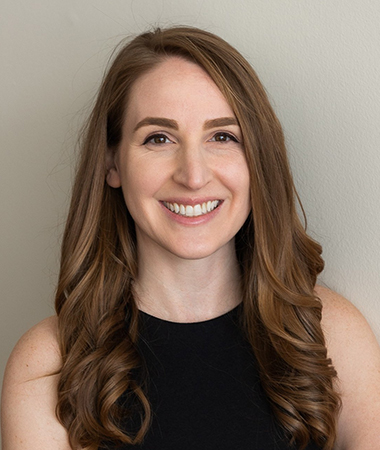
As expected, Merner received a notice shortly thereafter that one of the grants in her lab was terminated; this grant was tied to a project investigating financial and care obligations to patients who participate in experimental neural implant trials.
About a year before, Merner, who is now a researcher at Harvard Medical School and Mass General Brigham, transitioned from a postdoctoral role into a faculty role. She submitted three grants for her ongoing projects to get her research program off the ground. They received high scores and seemed to have a good chance of being approved. However, to date, two of those grants are suspended in an indefinite pause, and the third can no longer be funded as the funding opportunity was canceled entirely.
Since February 2025 stories like Merner’s have cascaded through the broader scientific community in the United States. Over the course of 2025, an estimated 5,844 grants from NIH and 1,996 grants from the National Science Foundation (NSF) were either canceled or suspended, according to reporting from Nature. Although some funding has been restored as early 2026, challenges remain. Psychology has a particular emphasis on topics like closing gaps across diverse communities and understanding how social factors influence behavior, which the lands the discipline directly in the crosshairs of the current U.S. administration. This not only affects domestic researchers, but also many visiting scholars, international scientists, and global collaborations, destabilizing much of the foundations of psychological research around the world (Kaiser, 2026).
Early career researchers, as well as graduate students, have felt the brunt of this impact. As funding declines for more experienced researchers, all the opportunities these labs give—including graduate, doctoral, and postdoctoral positions—dwindle, too. This comes at a time where positions for psychology researchers, especially at a graduate level, are already shrinking in numbers.
“There’s this huge trickle-down effect, because many [postbaccalaureate] positions are paid off of grants,” explained Bria Gresham, a research instructor at St. Jude Children’s Research Hospital who studies social determinants of health and neighborhood stressors. Navigating these uncertain waters creates immense amounts of pressure, she added, pushing early career psychologists to find alternative paths.
The trickle-down effect
In a typical year, scientists can plan their research activities around the timing of federal grants. These awards are varied, covering research and career development alike, and were relatively consistent and predictable.
Merner’s usual schedule had been organized around this rhythm, as her lab depended primarily on grants to fund research and researcher salaries. “We planned our cadence for grants very well, and planned for resubmissions,” Merner said. She added that her team didn’t anticipate that every grant would land, as funding was already competitive.
Overall, the cadence worked. Merner’s lab had a strong record of funding, with five or six NIH R01s previously funded, successfully navigating one of the most competitive grant mechanisms for independent health-related research. They would submit an R01 application each year, so there was sufficient overlap in grants. From those submissions, the lab would get enough financial support to carry them through the year.
But seemingly overnight, in early 2025 these grant mechanisms started disappearing. The specific questions Merner’s lab researched—related to disparities in accessing brain stimulation therapy, caregivers’ perspectives on treatments for epilepsy in children, and the ethics of a new genetic test for opioid use disorder—suddenly had no place in the federal funding sphere.
“In any other funding cycle, we would have a slam dunk and that would be funded,” Merner said about a recent grant application, which had received a nearly perfect score during the grant evaluation process.
In this current climate, that is no longer the case. Grants are being stalled, delayed, and paused. In this limbo, Merner is still carrying out her research, but she is fearful that her job will no longer exist by the end of the year. “We can’t survive,” she said.
Money that’s in pause not only affects newly minted faculty like Merner, but also incoming postdoctoral positions and graduate students. Many training grants are also “being stalled out or not funded,” Merner said. For instance, many grants that help postdoctoral researchers transition to independent positions are being reduced, which means that these scholars have fewer options to fund their pathways to becoming a faculty researcher or associate professor.
Supplements for those from diverse backgrounds have also been “severely gutted,” Merner added, leaving those researchers without a safety net to fall back on. Merner herself is a first-generation and low-income researcher.
“I think we’re going to see smaller cohort sizes and more competitive admission to graduate programs, on top of the already increasing competitiveness in recent years,” said Gresham, who is also a first-generation college graduate. “And for postdocs, we hear about this postdoc shortage. People are choosing alternative career paths.” Merner believes we may see “a crazy amount of shrinking in terms of the academic workforce.”
Navigating uncertainty

Even without the looming threat of unpredictable funding, graduate school can be overwhelming, said Mariel Barnett, a current graduate student at Purdue University. “You’re a researcher, you’re also still a student. You might be a graduate research assistant or a teaching assistant, or asked to review a manuscript,” she said. “I think in this time, there’s varying amounts of uncertainty.”
Barnett considers herself lucky. The lab she’s a part of focuses on skill acquisition. The research is currently funded by the U.S. Department of Defense and did not face cancellations or stalling. But Barnett worries whether there will be future funding to support her research in graduate school, or whether there will be any opportunities when she ultimately graduates and enters the job market.
As the editor of the APS Student Notebook, a column that features student perspectives in the Observer, Barnett noted that there is actionable advice to be shared to students when it comes to navigating this uncertainty. First is to look at alternative sources of funding, and start small. For instance, Barnett has received a number of travel grants in recent years, which help her travel to conferences to present her research and find community support. It’s also important to tap into your own institution, she added, which may have a variety of sources of financial support available.
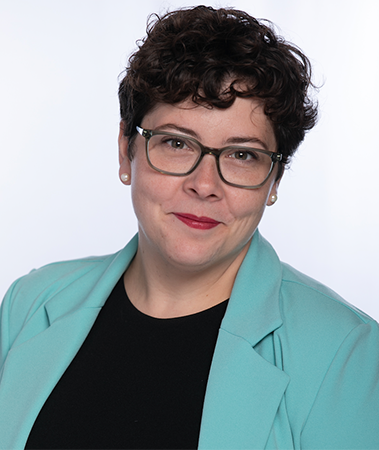
“You really do have to seek alternate forms of funding,” Gresham echoed. For researchers at the postgraduate level, it’s important to build your track record. Having a history of receiving grants, big or small, can show your merit, and increase your chances of getting future support. It’s also helpful to cast “a wide net, taking any opportunities that you can to get a funding track record going,” Gresham said, especially when resources are scarce in a changing funding climate.
Foundation grants are a popular alternative to federal funds, such as those from the American Psychological Foundation. APS, too, has a database of resources that can help early career researchers stay on top of funding opportunities. In addition, Merner noted that there are state-based foundations and trusts, biomedical and life science agencies, and state departments and health services that also have alternative sources of funding, although these are often smaller awards. “It might not support your lab, but it might support you to weather the storm,” Merner said.
To find these opportunities, Barnett suggests digging into your university’s websites. Sign up for email blasts from various member organizations or listservs that routinely send out listings (APS has an ongoing jobs board with an email opt-in). Social media, like Bluesky and LinkedIn, also often have award callouts and job opportunities. “Every little bit helps, and there are awards and opportunities out there,” she said.
But perhaps the most useful action, Barnett noted, is to tap into your own network. Ask your colleagues and mentors. They’ve likely been through this same process of applying for funding and may be able to lend a hand, even amidst shifting political landscapes, she said.
Merner echoed that sentiment. “Working with colleagues who are more senior, who are able to mentor you in those times is the most helpful thing, because they’ve seen science when it works.”
It’s important to “take it one day at a time,” Barnett said. Psychological research is more uncertain than ever, to the point where Barnett sometimes wonders if this expertise will be seen as valuable in the coming years. But she chooses to be optimistic.
“Historically and now, science and research tend to prevail,” she said. “Even if you’ve experienced funding cuts, your research is still quite important. I still believe there are sources of funding out there that do see the value in your own research.”
Building value in communities
As someone who didn’t have a traditional path into psychology, Gresham saw how valuable psychology was in supporting the goals of other disciplines. She originally wanted to be a lawyer. She previously worked as a paralegal and studied criminal justice for her bachelor’s degree. However, when she took her first developmental psychology class, something clicked. She realized that psychology was how she could help families and children, the very thing that had inspired her to go into law in the first place. After that class, she immediately switched her major.
Gresham, now at St. Jude Children’s Research Hospital, credited her interdisciplinary background for her pursuit of impactful research and resilience in an uncertain funding environment. “There’s a lot of benefit to it: Establishing early in your career some really strong collaborations with interdisciplinary scholars [is crucial]. I feel like having expertise or training that crosses multiple facets … has broadened the opportunities that I’ve had,” she said.
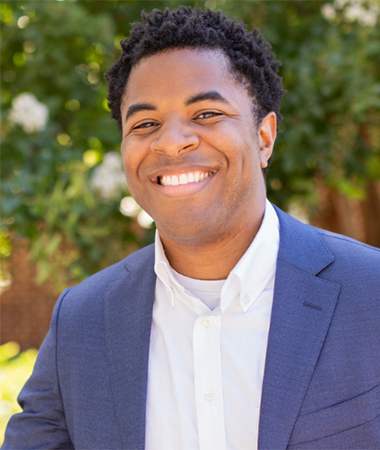
These sorts of community-level opportunities and collaborations are also what Kyle Dobson, APS Advocacy Task Force member and an assistant professor at the University of Virginia, said are a great resource for early career researchers. Dobson, along with his colleague Andrea Dittmann, runs the Solutions Lab, which works directly with organizations around the world to help them better serve their communities, while also providing opportunities for scholars to do on-the-ground work.
“We were really trying to make our own version of research that was not so focused on only doing things in a very self-oriented way,” Dobson said. This means focusing on building community partnerships, like with police departments, to help them see the value of psychology in their workplace. In doing so, Dobson’s goal is to create opportunities so that “younger scholars have an ability to do the kind of work that they’ve been told they would only get to do after they get tenure.”
Dobson urged other senior researchers to try a similar approach, especially in current turbulent times. “I really want people, especially the ones who have more security, to take those risks,” he said. That may mean reaching out to connections outside of academia to start a research program or using existing connections to get funding from other disciplines. The Solutions Lab, for example, has received support from a philanthropy called Arnold Ventures, which offers grants for organizations that work in criminal justice and healthcare.
As for gaining those opportunities and funding, Dobson recommends demonstrating to funders how psychology can make a difference in the world, not just in science. “You need to be valuable to someone for them to give you that kind of resource,” he said. “And if they are giving you something so that you can do work, that will eventually contribute to the greater scientific community.”
Feedback on this article? Email [email protected] or login to comment.
References
Kaiser, K. A. (2026). How U.S. funding restrictions endanger the future of psychology: consequences for research, training, and clinical care. Perspectives on Psychological Science.



APS regularly opens certain online articles for discussion on our website. Effective February 2021, you must be a logged-in APS member to post comments. By posting a comment, you agree to our Community Guidelines and the display of your profile information, including your name and affiliation. Any opinions, findings, conclusions, or recommendations present in article comments are those of the writers and do not necessarily reflect the views of APS or the article’s author. For more information, please see our Community Guidelines.
Please login with your APS account to comment.