• News & Research
    • Research Topics
    • Podcasts & Videos
  • Conventions & Events
    • 2026 APS Annual Convention
    • Webinars & Virtual Events
    • Past and Future Conventions
  • Journals
    • Psychological Science
    • Current Directions in Psychological Science
    • Psychological Science in the Public Interest
    • Perspectives on Psychological Science
    • Clinical Psychological Science
    • Advances in Methods and Practices in Psychological Science
    • Advances in Psychological Science Open
  • Advocacy & Policy
    • Policy & Position Statements
  • The Observer 
    • Archive
    • About the Observer
    • Advertising
    • Contact the Editor
    • Presidential Columns
  • Members
    • Awards & Honors
    • Member Directory
    • Lifetime Members
    • Student Members
    • Teaching of Psychology
    • Donors
  • Career Resources
    • Employment
  • About
    • Diversity, Equity, & Inclusion
    • Board of Directors 2025-2026
    • Staff Directory
    • Ethics Policy & Code of Conduct
APS Homepage
APS
  • Login
  • Join APS
  • Good News: You’ve Got a Better Brain Than You Think

    TIME: If babies could gloat, they would. The rest of us may have it all over them when it comes to size, strength and basic table manners, but brain power? Forget it. The brain you had at birth was the best little brain you’ll ever have. The one you’ve got now? Think of a Commodore 64—with no expansion slots. That, at least, has been the conventional thinking, and in some ways it’s right. Our brains are wired for information absorption in babyhood and childhood, simply because we start off knowing so little. At some point, though, absorption is replaced by consolidation, as we become less able to acquire new skills but more able to make the most of what we do know.

  • The Price of Certainty

    The New York Times: It’s alarming to see how polarized politics have become in the United States. The wider the gulf grows, the more people seem to be certain that the other side is wrong. Certainty can be a dangerous thing. Two years ago, I met the social psychologist Arie Kruglanski while researching a documentary about extremism. Dr. Kruglanski, a professor at the University of Maryland, studies what motivates people to join terrorist groups like ISIS. My producing partner, Eric Strauss, and I had fascinating conversations with Dr. Kruglanski about the psychology of binary thinking, and decided to make a short film about his work instead Read the whole story: The New York Times

  • Well-dressed male driver angrily yelling at traffic.

    Higher Status People Are Meaner Drivers

    Frustrated drivers are more likely to lash out aggressively at vehicles they perceive as having a lower social status.

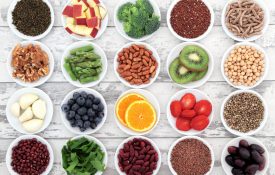
  • Food selection in white porcelain dishes

    Scientists Explore How Nutrition May Feed Mental Health

    A special section in Clinical Psychological Science highlights the different approaches that psychology researchers are taking to understand the many ways in which nutrition and mental health intersect.

  • Studying Perception of Animate Versus Inanimate Objects With LEGO Blocks

    Animate objects, such as animals and humans, hold a special sway over humans’ attention. For example, when presented with two scenes (one containing an animal and one not), people will preferentially orient to the one containing the animal. People are also faster and more accurate at detecting change in animate objects compared with inanimate objects The privileged attention of animate objects compared with inanimate objects makes sense from an evolutionary viewpoint, as it has historically been — and continues to be — important to quickly determine if one is seeing a friend or foe, a predator or prey. In a 2016 study, Mitchell R. P.

  • RAND Summer Institute Announces Two Conferences on Aging

    RAND announces its two annual RAND Summer Institute conferences that address issues facing our aging population: The Mini-Medical School for Social Scientists on July 10–11, and the Demography, Economics, Psychology, and Epidemiology of Aging conference on July 12–13, 2017. The conferences will convene at the RAND Corporation headquarters in Santa Monica, California and are sponsored by the National Institute on Aging and the National Institutes of Health (NIH) Office of Behavioral and Social Scientists Research. Qualified Institute applicants must hold a PhD or have completed two years of a PhD program and be actively working on a dissertation.

« FirstPrevious...102030...854855856857858...870880890...NextLast »
  • Who We Are
  • Privacy Policy
  • Contact Us
  • Donate
  • Advertising
  • Follow APS
  • Facebook Logo link to APS's Facebook
  • BlueSky Logo link to APS's BlueSky
  • Youtube Logo link to APS's YouTube
  • Instagram Logo link to APS's Instagram
  • LinkedIn Logo link to APS's LinkedIn
  • Twitter Logo link to APS's Twitter

© Association for Psychological Science

Cookies
We use cookies on our website to give you the most relevant experience by remembering your preferences and repeat visits. By clicking “Accept”, you consent to the use of ALL the cookies. To accept or reject certain categories of cookies specifically please click the Cookie Settings link. Please read our Cookie Policy for more information.
Do not sell my personal information.
Cookie settingsAccept Reject
Privacy & Cookies Policy

Privacy Overview

This website uses cookies to improve your experience while you navigate through the website. Out of these cookies, the cookies that are categorized as necessary are stored on your browser as they are essential for the working of basic functionalities of the website. We also use third-party cookies that help us analyze and understand how you use this website. These cookies will be stored in your browser only with your consent. You also have the option to opt-out of these cookies. But opting out of some of these cookies may have an effect on your browsing experience.
Necessary
Always Enabled
Necessary cookies are absolutely essential for the website to function properly. This category only includes cookies that ensures basic functionalities and security features of the website. These cookies do not store any personal information.
Functional
Functional cookies help to perform certain functionalities like sharing the content of the website on social media platforms, collect feedbacks, and other third-party features.
CookieDurationDescription
__cf_bm30 minutesThis cookie, set by Cloudflare, is used to support Cloudflare Bot Management.
Performance
Performance cookies are used to understand and analyze the key performance indexes of the website which helps in delivering a better user experience for the visitors.
CookieDurationDescription
AWSELBCORS5 minutesThis cookie is used by Elastic Load Balancing from Amazon Web Services to effectively balance load on the servers.
Analytics
Analytical cookies are used to understand how visitors interact with the website. These cookies help provide information on metrics the number of visitors, bounce rate, traffic source, etc.
CookieDurationDescription
at-randneverAddThis sets this cookie to track page visits, sources of traffic and share counts.
CONSENT2 yearsYouTube sets this cookie via embedded youtube-videos and registers anonymous statistical data.
uvc1 year 27 daysSet by addthis.com to determine the usage of addthis.com service.
_ga2 yearsThe _ga cookie, installed by Google Analytics, calculates visitor, session and campaign data and also keeps track of site usage for the site's analytics report. The cookie stores information anonymously and assigns a randomly generated number to recognize unique visitors.
_gat_gtag_UA_3507334_11 minuteSet by Google to distinguish users.
_gid1 dayInstalled by Google Analytics, _gid cookie stores information on how visitors use a website, while also creating an analytics report of the website's performance. Some of the data that are collected include the number of visitors, their source, and the pages they visit anonymously.
Advertisement
Advertisement cookies are used to provide visitors with relevant ads and marketing campaigns. These cookies track visitors across websites and collect information to provide customized ads.
CookieDurationDescription
loc1 year 27 daysAddThis sets this geolocation cookie to help understand the location of users who share the information.
VISITOR_INFO1_LIVE5 months 27 daysA cookie set by YouTube to measure bandwidth that determines whether the user gets the new or old player interface.
YSCsessionYSC cookie is set by Youtube and is used to track the views of embedded videos on Youtube pages.
yt-remote-connected-devicesneverYouTube sets this cookie to store the video preferences of the user using embedded YouTube video.
yt-remote-device-idneverYouTube sets this cookie to store the video preferences of the user using embedded YouTube video.
yt.innertube::nextIdneverThis cookie, set by YouTube, registers a unique ID to store data on what videos from YouTube the user has seen.
yt.innertube::requestsneverThis cookie, set by YouTube, registers a unique ID to store data on what videos from YouTube the user has seen.
Others
Other uncategorized cookies are those that are being analyzed and have not been classified into a category as yet.
SAVE & ACCEPT
Powered by CookieYes Logo