
Scenes From an Inaugural Event

APS Fellow Terry K. Au, University of Hong Kong, China, kicks off an Integrative Science Symposium on life-span development of executive control.

Audience members watch a presentation at the inaugural ICPS.
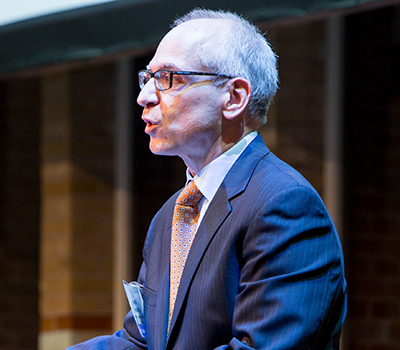
ICPS advances a new era of truly integrative scientific efforts, says APS Fellow Daniel Cervone, University of Illinois at Chicago. Cervone cochaired the program committee for the event.
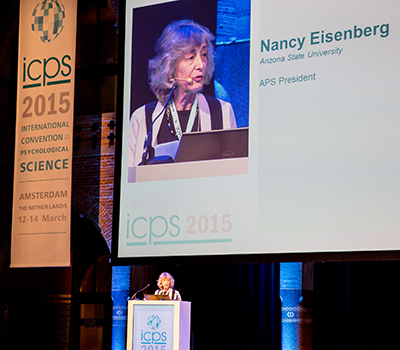
Today APS is a truly international organization, committed to reducing geographical boundaries as well as scientific ones, says APS President Nancy Eisenberg, University of Arizona, Tempe.
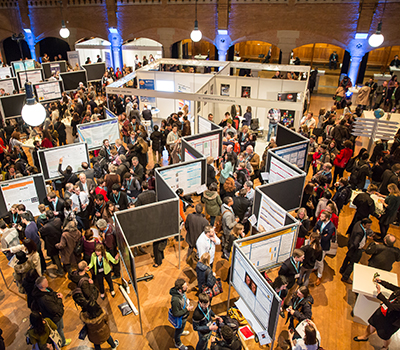
More than 1,100 scientists presented posters over the course of the 3-day convention.
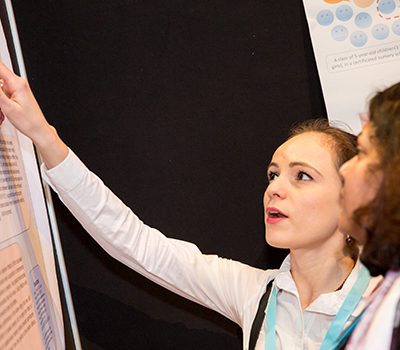
An attendee examines a poster in the exhibit hall at ICPS.
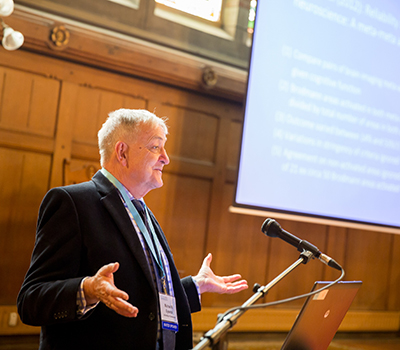
The rise of cognitive neuroscience signals that psychology teachers need to become experts in brain functioning, Michael Eysenck, Royal Holloway, University of London, argues during his keynote address at a preconference Teaching Institute.

ICPS attendees speak outside the Beurs van Berlage in Amsterdam.
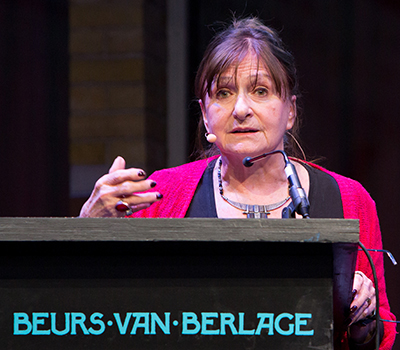
As discussant in an Integrative Science Symposium on executive control across the life-span, APS Board Member and Initiative for Integrative Psychological Science Steering Committee member Annette Karmiloff-Smith, Birkbeck, University of London, applauds the range of methodologies presented by a diverse group of researchers.
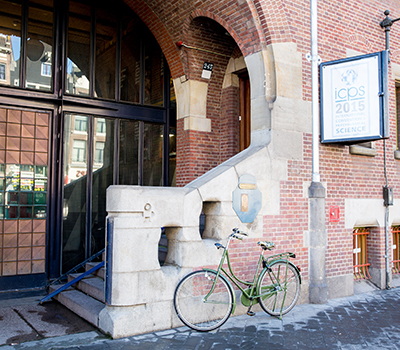
The inaugural International Convention of Psychological Science was held at the Beurs van Berlage, Amsterdam, the Netherlands.
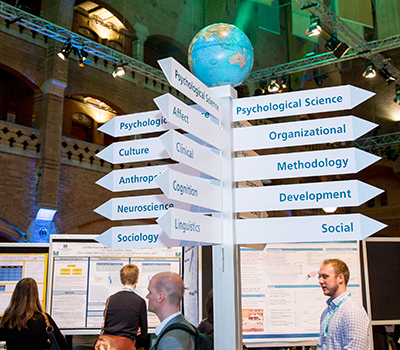
A signpost directed ICPS attendees toward different facets of psychological science.
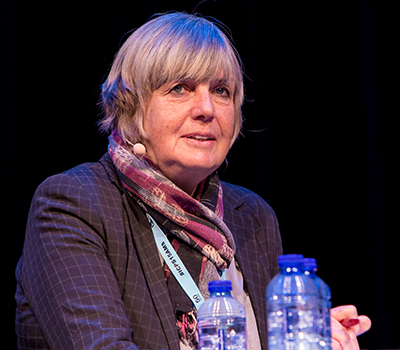
An Integrative Science Symposium chaired by APS Fellow Anne Maass, Universitá di Padova, Italy, blended psychological and anthropological research perspectives on nonverbal communication. Maass is a member of the Initiative for Integrative Psychological Science Steering Committee.
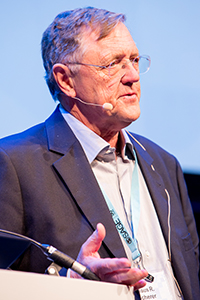
In an Integrative Science Symposium on nonverbal communication, University of Geneva, Switzerland, psychological scientist Klaus Scherer, an APS Fellow and member of the Initiative for Integrative Psychological Science Steering Committee, outlines the evolutionary development of emotion and the nature and architecture of the human emotion system — particularly motor expression.
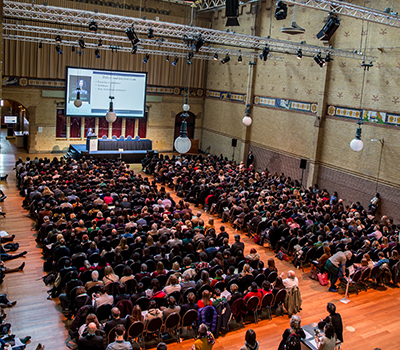
Audience members watch a presentation at the inaugural ICPS.
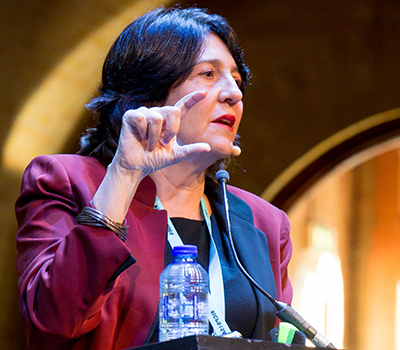
Although they face a variety of disadvantages, immigrants display fewer risky and delinquent behaviors than subsequent and more acculturated generations, reports Cynthia García Coll, Carlos Albizu University in San Juan, Puerto Rico, during an Integrative Science Symposium on psychology and economics.

ICPS participants converse at a reception.
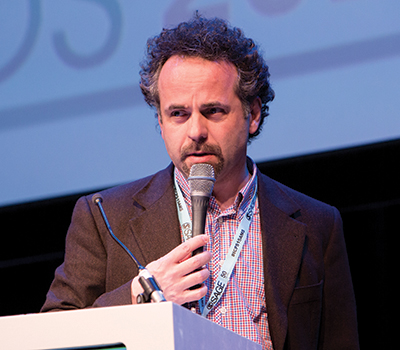
Cross-fertilizing the various scientific approaches to religion should foster understanding of its role in our dynamic world, Arnaud Rey, CNRS & Aix-Marseille Université, France, cochair of the ICPS Program Committee, says as he kicks off an Integrative Science Symposium on evolutionary and contemporary spirituality.
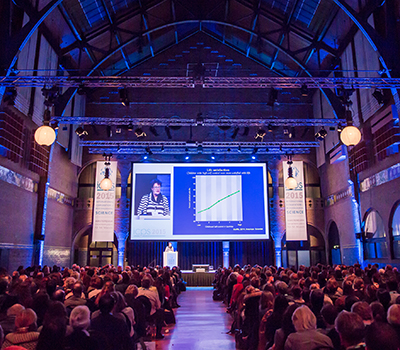
APS Fellow Terrie E. Moffitt speaks on the lifetime effects of self-control at the inaugural ICPS.

Anthropologist Pascal Boyer (left) of Washington University in St. Louis questions the very usefulness of the category “religion” as a topic of empirical inquiry. Among those joining Boyer in a symposium on the evolutionary and contemporary aspects of religion were psychological scientists Vassilis Saroglou, Université catholique de Louvain, Belgium, and Jacqueline S. Mattis, University of Michigan.
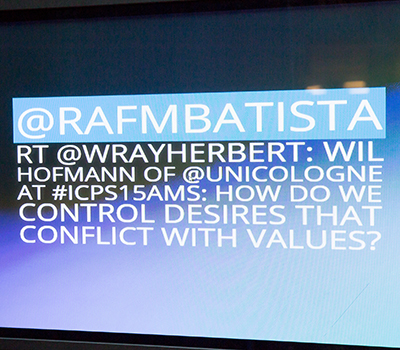
A tweet reflects one of the topics covered at ICPS.
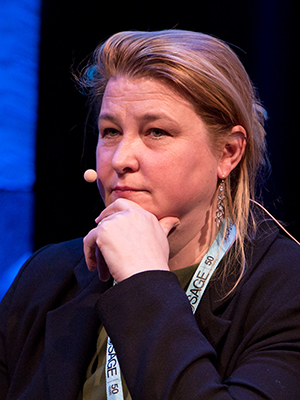
APS Fellow Tania Singer, Max Planck Institute for Human Cognitive and Brain Sciences, Germany, discusses findings from the ReSource Project, a multimethod interdisciplinary mental training study aimed at cultivating mental capacities such as attention, mindfulness, and metacognition.
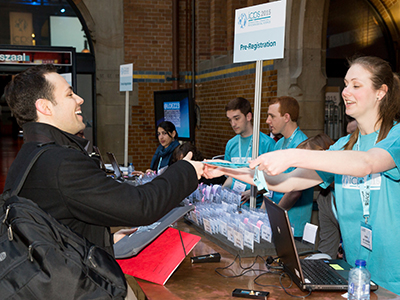
Volunteers help check in registrants at the inaugural ICPS.
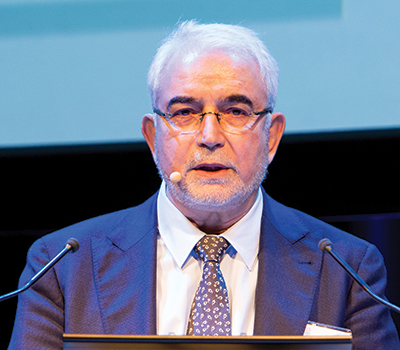
Gün Semin, ISPA-Instituto Universitário, Portugal, and Utrecht University, the Netherlands, welcomes a packed auditorium to Stanislas Dehaene’s keynote address. Semin is APS Secretary and cochair of the Initiative for Integrative Psychological Science Steering Committee.



APS regularly opens certain online articles for discussion on our website. Effective February 2021, you must be a logged-in APS member to post comments. By posting a comment, you agree to our Community Guidelines and the display of your profile information, including your name and affiliation. Any opinions, findings, conclusions, or recommendations present in article comments are those of the writers and do not necessarily reflect the views of APS or the article’s author. For more information, please see our Community Guidelines.
Please login with your APS account to comment.