
Vaccines, Tylenol, and Leucovorin: Autism Scientists Band Together to Refute Misinformation
APS’s Advocacy Task Force is committed to bringing psychological science into the forefront of both public policy and public understanding. This regular column features insights from psychological scientists who have become vocal advocates for science-driven policy.
Explore the APS Advocacy & Policyhub, your gateway to up-to-date policy statements, expert analysis, action tools, and resources to engage meaningfully with legislation, funding decisions, and public discourse.
During a press conference in April 2025, Robert F. Kennedy Jr., secretary of the U.S. Department of Health and Human Services, declared that autism is a preventable epidemic caused by an environmental toxin.
Just over a week later, more than 200 autism scientists banded together to form a new organization to counter this misinformation as well as other inaccurate and offensive claims about autism. The group, which now has more than 350 members, call themselves the Coalition of Autism Scientists.
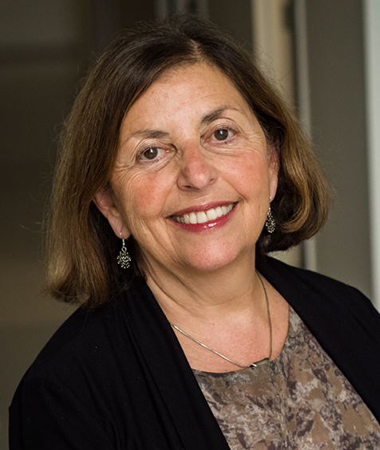
At the helm of this new organization is APS Charter Member and Fellow Helen Tager-Flusberg, who has conducted research on autism and other developmental disorders for over 50 years. She is professor emerita at Boston University, where she established the Center for Autism Research Excellence, and is well recognized internationally for her contributions to the field.
A year after the Coalition of Autism Scientists was established, the Observer’s Managing Editor Hannah O. Brown asked Tager-Flusberg to talk about the creation, impact, and future of the organization.
Brown and Tager-Flusberg spoke on May 26, 2026. Edited excerpts of their conversation follow.
You created the Coalition of Autism Scientists just a few days after Robert F. Kennedy Jr.’s April 2025 press conference, which dismissed past autism research and spread other misinformation. What specifically about that announcement convinced you that a new coalition was needed?
I think before that press conference, there had been rumblings. Everyone knew that Kennedy [commonly known as RFK Jr.] was not going to be a helpful force for the scientific community, and certainly not for the autism community, and so there had actually been some media coverage before then. At that press conference, as with everything, you know it’s going to be awful, but then it’s really awful and you say, “Why am I so shocked and distressed? You knew this was coming.”
I think what really precipitated it for me was that the very next day, a whole slew of autism advocacy organizations got together, and they issued a joint statement. They were pushing back against the really degraded and inhumane descriptions of autistic people. And they also pushed back against the dismissal of science. And I thought, well, this is wonderful that these other advocacy groups are doing this, but where are the scientists?
I had been in touch with the board of the International Society for Autism Research, but they’re slow moving. The president was not from the United States. They feel that they’re an international organization and therefore they’re not going to take on politics. Everyone was retreating from taking political stances at this point. So I thought, well, I just have to do something. So that’s how it got started.
I’m semi-retired. I’m never applying for another research grant. All my trainees were all taken care of. So I was in the least threatened position, and I felt like, okay, just do something.
What an amazing point to get to in your career and have that freedom and that network. It must feel powerful.
Yes. I actually was planning to do some advocacy as part of one of my retirement activities, but I thought it would be advocacy on the part of the community, people with autism, et cetera. I didn’t plan to have to advocate on behalf of science. But yes, you just always want to do something, and I feel fortunate that I was in a position to be able to. It seems that all the people—now 350 who have joined the coalition—feel that even for them, that it’s just a step to be able to do something at this point.
How did the Coalition build consensus across more than 350 scientists from different disciplines quickly enough to issue authoritative statements, and where have internal disagreements been hardest to navigate?
You know what? We’re not all in agreement. We wouldn’t be scientists if we would all agree with one another. We study different aspects of autism, and we probably have different political stances on some topics.
But it’s not a question of reaching consensus. For our very first statement, I did put it out there and invited people to edit it. But that was that very first weekend, and I realized that you can’t actually do that. You have to be responsive in the moment news happens.
If people approach me as the founder of the coalition and other people who are associated with the coalition, when we speak, it’s in our individual names. And that seems to have been a comfortable situation. But we do meet every two weeks. There’s a Zoom call, anyone can join it, and we discuss the topics that have risen to the top that are focused on our mission.
So it’s more about capturing all those different perspectives rather than coming to one consensus.
Exactly, exactly.
The Coalition has pushed for autistic individuals and their advocates to be stakeholders in research design and dissemination. How can this idea be operationalized in federal funding decisions? What is at stake if these communities are left out of the research process?
I think the autism community is itself much more divided on what areas of research should be pursued than we in the scientific community might be. And we’re not advocating as a group for a very specific approach to be taken. The truth is the National Institutes of Health [NIH] has already embraced the idea of having community participation. About a year ago, they released the request for applications for what was called the Autism Data Science Initiative. They were pouring $50 million into this initiative that had a very particular focus, but one of the requirements of this Request for Applications was that they include people from the community. So I think the NIH has already moved in that direction. The extent to which other funders, whether it’s in this country, or elsewhere, require that varies depending on the organization.
And when you say there’s disagreement among the community of autistic individuals itself, can you talk a little bit about some examples of those disagreements?
I think one hot one is the extent to which we ought to be doing research on the genetics of autism. We know that autism genetics is the single largest etiological factor in autism. There are people who worry that studying genetics is kind of a step along the path toward eugenics.
As a scientist, I don’t agree with that position. And this last year, I came up with a statement that talks about the importance of genetics in autism. And we’re not telling anyone what they should fund. That’s sort of not where we are at all.
In my capacity as a co-chair of this new Independent Autism Coordinating Committee, we will come up with a strategic plan for areas of research. But I’m not doing it in the name of the coalition. That’s my perspective.
But given what our goal is, our mission is to push back against the false narratives that RFK Jr. has been pushing, which focus on the role of Tylenol and vaccines. It’s important to push back by saying, “No, genetics is a key factor here.”
Decades of psychological and genetic research have established that autism is highly heritable, yet public discourse keeps returning to debunked environmental causes. How can the public be better informed and engaged in this research?
I think this is a huge challenge. What you have is a disorder that is primarily the result of genetics, both heritable and novel mutations. This starts as a process of altered brain development during the prenatal period, and there’s considerable research on this. We know that in infants, long before the emergence of behavioral symptoms, we see differences in brain structure and function. And yes, the public is not as aware of all of this research as they should be.
But when you put the research hat aside and you think about a parent that has a seemingly normal baby who’s going through all the right developmental stages, has no physical stigmata—they don’t look different like babies with Down syndrome—and then sometime during the second year of life, their development goes off course. They show a dip in terms of behavioral symptoms. It’s those behavioral symptoms that lead to a diagnosis of autism.
Parents can’t really see where the genetics piece comes from. What they can see is that, “Oh, my baby started to look different, and people were worried about my baby during the second year of life.” And “Oh boy, we have all these cognitive biases, and we’re looking for a cause. It feels like it’s something from the outside.” Even though the roots were there at birth, they weren’t visible. And that’s the difficulty with neurodevelopmental disorders in general.
In September 2025, President Trump and RFK Jr. held a White House event linking prenatal Tylenol use to autism, and the FDA initiated a label change. How did the Coalition respond in the days that followed?
We didn’t need a discussion. A couple of weeks before the official press conference with the President and the Secretary of Health and Human Services and his entourage, the reporter from The Wall Street Journal, who has since been laid off because The Wall Street Journal decimated their science and health department, she had heard the rumor that this was what he was going to announce. Everybody knew something was coming in September because that’s what he promised us back in April.
This journalist had been in touch with me and with other people. So we were pretty primed for looking at the studies. We were very prepared. I will say that the timing of their press conference was a nightmare for me personally. We’d all expected the press conference to take place a week later, which would have fit my schedule better. I was driving to New York, and I had all these journalists wanting to speak to me about this and also some of my colleagues. And then 5 o’clock that afternoon, The New York Times op-ed group had convened a panel to talk about it. They wanted to come up with something that same day.
I will say the media has been fantastic. I sometimes wonder if this is sort of a mea culpa for fanning the flames of the vaccines back in the late 90s, and now, they’re trying to make up
for it. I don’t know. But they have been very diligent and very supportive and very, very knowledgeable. So it’s been a productive and supportive situation to work with.
The coalition includes clinical psychologists, pediatricians, developmental pediatricians, pediatric neurologists—and these clinicians have really been at the center of all of this, because they’re the ones who are having to deal with parents who are worried: “Oh my gosh, I took Tylenol during my pregnancy. Is that why I have an autistic child?” Or, “Should I not take Tylenol?” And it’s a real conundrum because it turns out Tylenol is the only pain and fever medication that is recommended [for pregnant women]. That in fact, the others, like Advil or aspirin, they are not indicated for pregnant women to take. So that was very disturbing. And then, of course, the treatment that they came up with during that press conference, leucovorin, this vitamin treatment for which there is almost no credible evidence, that is still ongoing. The physicians in our group are still having to cope with families clamoring for prescriptions.
I remember when this announcement happened, and as a new mother, it was just really alarming. It’s such a heaviness to put that on parents for taking the only thing that you’re allowed to take. When I listened to your C-SPAN interview on this topic, you had people calling in talking about that heaviness and the guilt they were carrying. Can talk about hearing those stories from people and the impact on you personally? Did hearing those stories verify the value of speaking on this issue so publicly?
My career began many years ago in the ’70s, and I came from the United Kingdom where the idea that mothers caused their children’s autism had already kind of gone out the window. I came to this country and then started to study autism, and I had the hardest time in Boston. We think of ourselves as the center of the scientific universe, right? I was trying to find children to enroll in my research, and I went to a clinic that served largely African American families. I was told by the Director that their children don’t have autism because these children are raised in multigenerational families, so the mothers can’t be harming their children.
Many of the people that I met at that time, families I’d met, anyone from that generation, that’s what they had been told, that the mother’s behavior had caused their children’s autism. So we’ve always been there. That’s been there all along. And we come back to this mother blaming repeatedly, because again, you go back to the cognitive bias. Here you had a seemingly normal child who is now withdrawing socially and is more focused on toys. And you could see how that explanation might fit with a very superficial understanding of the evidence. And there wasn’t any research on this until the late ’70s.
So, you know, this has been around. I think every parent of a child who comes down with some severe illness or has a developmental disability, every parent, especially the mothers, feels guilty and worry that they in some way have been responsible.
So this wasn’t a new dynamic for you to witness at all.
No, it wasn’t. But it’s one that I feel passionately about because I can’t imagine anything worse than a parent feeling that guilt. When in fact, the parents are truly the most significant and positive force in their autistic children’s lives. That’s what I have witnessed for 50 years.
If federal autism research stabilizes, does the Coalition wind down, or do you see this as a permanent feature of how psychological scientists engage with policy? What lessons are you taking away from your first year?
No, I don’t see us as permanent. As long as RFK Jr. is the secretary of Health and Human Services, we are going to have to be in existence. But if things change, if we have a rational
leader of Health and Human Services, someone who understands science and isn’t willing to put out false prophets and all the rest of it, we will just disappear.
Which won’t be hard. We don’t have a budget. We’re not a formal organization. We’re not a 501(c)3 or anything like that. We just have a name and a website and the most amazing professional media publicist, Jessica Daitch.
Is there anything coming up that you would like to mention? Or are you in a reactionary phase where you’re just waiting to see what announcements are made and how you can best respond?
We’re waiting to see if we need to respond to the direction of this federal committee. It’s called the Interagency Autism Coordinating Committee. It’s been around since 2006. It’s part of the Autism CARES Act. And yes, it’s the prerogative of the Secretary of Health and Human Services to appoint people to this committee. I was a member of this committee up until last year. Our main responsibilities were to come up with a strategic plan, to monitor autism research, and to come up with reports related to services and housing and all the aspects of life that impact autistic people.
RFK Jr. has now appointed a group of people who haven’t come up with a plan. They’re not researchers and a large number of them are believers in the vaccine–autism link. So that’s something that we’re going to have to keep our eye on. Right now, it seems based on everything I read that vaccines are kind of verboten to talk about openly until after the midterms. But come December, I think that that’s when our work may again bubble up. So things are quieter now.
What I will say is whenever a paper comes out that’s relevant to these issues, journalists do turn to us to ask for evaluations and comments. So we’re quite busy with that, which feels like a constructive activity for our membership.
Ready to take action? Visit APS’s Act Now page to learn more about how to speak with your U.S. Representatives and Senators.
Feedback on this article? Email [email protected] or login to comment.



APS regularly opens certain online articles for discussion on our website. Effective February 2021, you must be a logged-in APS member to post comments. By posting a comment, you agree to our Community Guidelines and the display of your profile information, including your name and affiliation. Any opinions, findings, conclusions, or recommendations present in article comments are those of the writers and do not necessarily reflect the views of APS or the article’s author. For more information, please see our Community Guidelines.
Please login with your APS account to comment.