
New Clinical Psychological Science Editor Aims to Break Down Barriers to Care
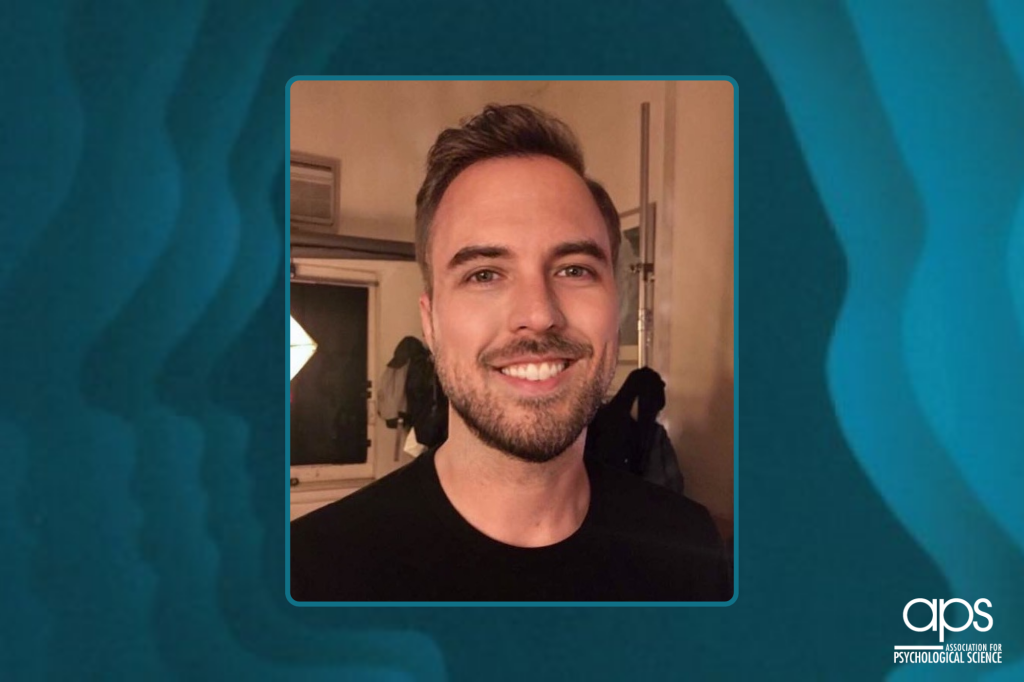
Beginning January 1, 2026, Nicholas Eaton will take over APS’s journal Clinical Psychological Science (CPS) as the next editor-in-chief.
Eaton is a professor of clinical psychology at Stony Brook University. His research interests include the classification and structure of psychopathology, personality, and other constructs. He also studies sexual orientation, gender diversity, and LGBTQIA issues, as well as the intersection of other individual/group differences and mental health.
The Observer asked Eaton a few questions about his plans for the journal.
Can you tell our readers a bit about your background? How will your previous experiences help guide your approach as the new editor of Clinical Psychological Science?
My route to this role has been anything but linear. I grew up in a small, disconnected lower-middle-class suburb in Missouri. I was the only child of parents for whom higher education was more aspiration than expectation.
I was raised in a charismatic, fundamentalist Pentecostal denomination. The certainty of the worldview it espoused was supremely comforting, but I was a very inquisitive child. My parents, to their great credit, never once tried to stifle my curiosity, as was the case with many children in my church.
From a young age, I felt quite different, and I was profoundly shy and socially anxious. I was too reserved and conventional to fit in with many of the kids at school. I soon realized I was too gay to fit in with the fundamentalist kids at church, too. My parents were a saving grace in that regard; they realized I was not the child they expected in many ways, but they only had one kid, and they decided to love and support him unconditionally. In a life marked by seeming contradictions, I began to notice the parts of me that conferred privilege (that I did not earn) and the parts that conferred marginalization (that I did not deserve). I did not have the words for it then, but I felt it—for myself and for others.
After my parents, I credit Deanna Barch, who mentored my fMRI undergraduate honors thesis and whose passion for clinical psychology research ignited my own. Thomas Oltmanns, who hired me as his research coordinator for two years, introduced me to a new idea, “clinical science,” and even arranged for me, at 23, to have lunch with a visiting Dick McFall. (I still have the copy of his Manifesto I asked him to autograph after dessert.) Tom’s lab focused on personality disorder research, which I found interesting as a topic, but more importantly, the papers we read were at the vanguard of psychopathology classification. I quickly knew that defining these “mental disorders” that seemed to shift across time and place—and that were never directly measurable but were so impactful that they simply had to be studied—was what I wanted to do. Bob Krueger accepted me as his graduate student at the University of Minnesota, where I took every statistics class I could. Finally, the faculty at Stony Brook University, which became my professional home one month after receiving my doctorate, modeled almost perfectly what clinical psychological science—the two-way reciprocal bridge between practice and research—should look like in action.
As editor-in-chief of Clinical Psychological Science, these experiences, opportunities, and hardships will all influence my efforts. The journal will be an increasingly welcoming place to publish research on diversity, equity, inclusion, social justice, accessibility, anti-racism, and so on. It will continue to prioritize submissions that ask big questions. The journal will build on Jennifer Tackett’s remarkable efforts to promote open science within its pages with new initiatives. The contrasts I have experienced—between constraint and opportunity, stigma and support—shape how I think about science. They remind me that intellectual rigor and human empathy (from parents, mentors) are not competing values but complementary ones. As editor, I want CPS to embody that balance: A journal that pursues precision with purpose, transparency with compassion, and excellence in the service of inclusion.
CPS features advances in clinical science and provides a venue for cutting-edge research across a wide range of conceptual views, approaches, and topics. What topics are you most interested in seeing represented?
The power of CPS lies in its breadth. I hope to sustain that openness while drawing attention to areas that can redefine how we think about mental health and its contexts. I am particularly interested in scalable psychological solutions to social problems—research that breaks down barriers to care and helps interventions reach entire populations rather than remaining confined to laboratories or clinics.
I often ask, “With empirically supported treatments, assessments, and even classification systems now, we know what we do works. However, the global burden of mental health problems continues to increase rapidly. If we know what we do works, why is what we’re doing not working?”
Manuscripts that identify and demonstrate effective ways to stem that trend will be most welcome.
I see enormous promise at the intersection of clinical psychological science and various forms of artificial intelligence (AI), for both research and practice. Studies examining the careful and responsible use of AI to further clinical science efforts will be particularly welcome. I believe tools from data science can be particularly useful—new data visualization approaches to provide clear interpretations and investigations of extremely large datasets, which would only be tractable with machine learning and related methods, hold great promise. I am interested in studies that can make justifiable claims about (at least partially) causal processes, particularly those that make use of approaches showing ecological validity, although of course experimental designs will always be welcome. Bayesian, probabilistic, and idiographic questions interest me a great deal. I am less excited about studies that have, say, 1,000 participants divided into two groups, and each set of 500 participants is flattened to a single numerical mean, and these two flattened means are used to test the differences between these 1,000 individuals. This is not all about quantitative methodologies, and I should state right out: I am very interested in strong qualitative and mixed-methods studies. Great quantitative work often relies on great qualitative prework, and I do not think the latter is any less important than the former.
I want the journal to remain a home for advances in the classification and measurement of psychopathology, including efforts like the Hierarchical Taxonomy of Psychopathology (HiTOP), network psychometrics, clinical staging approaches, and the Alternative Model of Personality Disorders (AMPD). I would also like to see these classification-related advances used to frame mental health disparities and the mental health of minoritized populations. This represents the sort of integration I think we need to move toward. Studies that situate mental health within structural and cultural realities—and that bridge levels of analysis from neural circuitry to social systems—are, I think, essential to the next era of clinical science.
Finally, I will add that I think this outlet has space to host coverage of clinical psychological science as a discipline, such as training initiatives and debates.
What are some things authors should keep in mind when considering whether to submit their articles to CPS? Are there particular questions or issues their papers should address to increase their chances of having their article accepted?
“Show us that your methods are sound and your thinking is bold—that your findings illuminate something as being different than we had conceived of it before. That combination of precision and insight is what CPS seeks to amplify.”
A strong CPS paper is both meticulous and imaginative. Rigor and transparency are nonnegotiable—clear reporting, reproducible analyses, and careful reasoning remain the foundation of credible science. Yet, the journal also prizes ideas that reach beyond the incremental: work that reframes a question, bridges disciplines, integrates “competing” theories, or compels us to rethink assumptions we have taken for granted.
Authors sometimes underestimate the power of intellectual curiosity. Even when a study cannot answer every question, posing a question in a way that expands the field’s imagination can be transformative. Show us that your methods are sound and your thinking is bold—that your findings illuminate something as being different than we had conceived of it before. That combination of precision and insight is what CPS seeks to amplify.
In law, there is the notion of establishing a prima facie case. Basically, when a legal challenge is brought by a prosecutor or a plaintiff, their evidence is presented and it goes unchallenged. The question becomes, even if all of this evidence were assumed true, would it be adequate to support the legal claim being brought?
I think a version of the prima facie case is a good one for authors considering submitting to CPS. That is, assuming everything they say in their manuscript was true and replicable, what would be the ultimate impact on clinical psychological science and practice, or on individuals with lived experience of mental health problems? Doubtless, their claims will be challenged during review, but if their prima facie results, in the best-case scenario, do not innovate, shift, reorient, or otherwise have a significant impact on something important, their manuscript might better be submitted to another outlet. I want CPS to remain the premier outlet for publishing innovative, rigorous, and open clinical science research.
How do you plan to approach putting together the editorial board for CPS?
A truly wise editorial board also embodies diversity of identities, background, lived experiences, and career stages. Junior scholars bring fresh energy and insight; senior scholars bring depth and perspective. Including voices historically excluded from decision making is not only a matter of justice—it enriches the science we publish. I will be looking for experts on this subject or that method, yes, but I will also be looking for people with life experiences that can cast a different light on a given issue that might not be visible without those experiences.
My goal is to build a board that is not just distinguished but reflective of the many perspectives that strengthen our field. Along those lines, I am hopeful to pilot some new programs, especially those that get advanced trainees more involved with—and more knowledgeable about—the review process. Having a “behind the scenes” perspective on scientific publishing can change one’s practices for the better and doing so early in a supervised and guided environment seems quite beneficial.
Finally, the associate editors—one of the toughest jobs in this business—will be fairly compensated for their time and efforts.
Is there anything else you would like to share with readers and potential authors about your plans as editor?
First, a goal of mine is for CPS to become an outlet where any clinical scientist, at any career stage, doing any kind of job, should be able to find at least one thing in every issue they find interesting, valuable, or applicable to their work. This may involve different formats (including a full-page infographic demonstrating a classic or influential study). Use of Registered Reports (including more forms of them) seems likely to grow as a submission option. Open data presents a unique challenge in clinical science research in many cases, but there are methods around this for many purposes, and I would like to see us take advantage of those.
Finally, I am very interested in “containerized” analyses, such as those using Docker, which allow immediate reproducibility of results by anyone with a web browser without needing to download a dataset, have certain software, and so on. Imagine the promise for teaching alone if students could reproduce, with merely a few clicks, the actual analyses done by the authors and get the same results—or make a different analytic choice than the authors did and see how the results change.
I am deeply grateful for the opportunity to serve in this capacity. The brilliance of our field lies in its collective curiosity and its willingness to learn. My hope is that CPS continues to be a home for both.
Feedback on this article? Email [email protected] or login to comment.



APS regularly opens certain online articles for discussion on our website. Effective February 2021, you must be a logged-in APS member to post comments. By posting a comment, you agree to our Community Guidelines and the display of your profile information, including your name and affiliation. Any opinions, findings, conclusions, or recommendations present in article comments are those of the writers and do not necessarily reflect the views of APS or the article’s author. For more information, please see our Community Guidelines.
Please login with your APS account to comment.