
APS Members Hit Capitol Hill to Advocate for Science
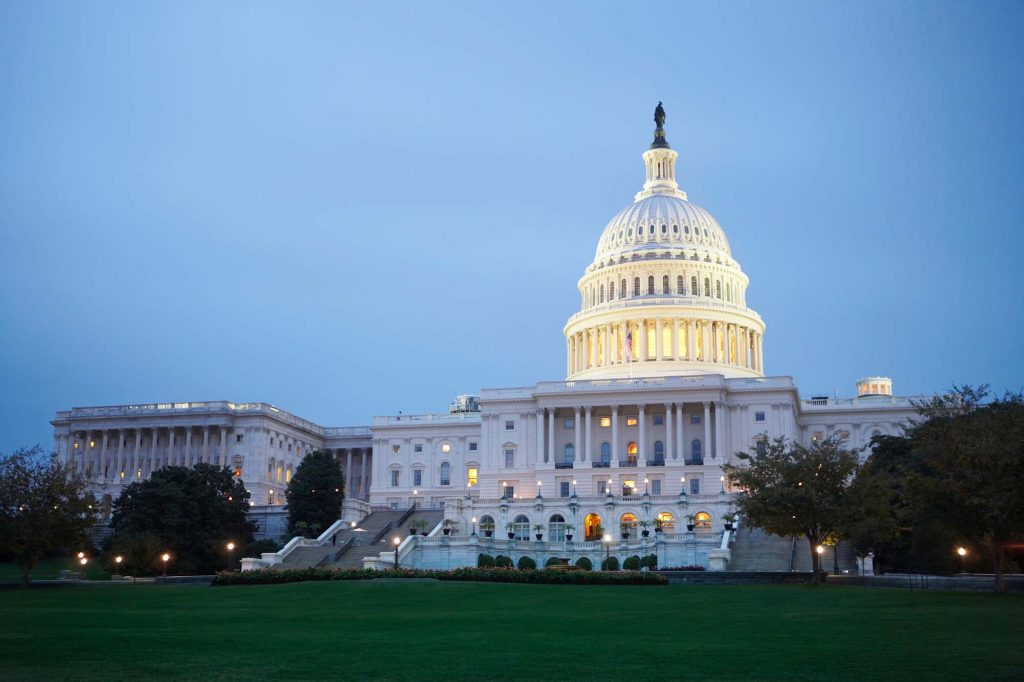
A group of psychological scientists and graduate students visited members of Congress immediately prior to the 2025 APS Annual Convention in Washington, DC, to take a stand for U.S. government investments in psychological science research.
The visits to congressional offices were part of an APS program called APS Congressional Visits Day, which gave psychological scientists the opportunity to urge lawmakers to support federal investments in psychological science research.
The inaugural Congressional Visits Day participants were a subset of APS members who responded to a call for researchers interested in participating in APS advocacy efforts. Participants completed advocacy training to prepare for APS-arranged meetings with their Representative and Senators.

Hannah Daugherty, a graduate student at the University of Tennessee Chattanooga and a Congressional Visits Day participant, lauded APS’s efforts to galvanize the scientific community.
“It’s easy to feel overwhelmed by the news cycle—like nothing we do will make a difference,” Daugherty said. “When APS offered this opportunity, it was the push I needed to take action. I believe now more than ever, we need to show up. Advocacy isn’t optional; it’s essential. And being part of ‘boots-on-the-ground’ efforts felt like a tangible way to channel that urgency into impact.”
U.S. Readers: Are you looking for tips on how to best share your concerns with your representatives and senators? Take a look at our Act Now page for an easy-to-use guide.
Nancy Cooke, an Arizona State University cognitive psychologist who studies human systems engineering, said she felt an obligation to participate in the program. “Given these tumultuous times in our country, I felt that I could not pass up an opportunity to do something to make my voice heard,” Cooke said. “I felt like it was my civic duty.”

Cognitive psychologist and APS Charter Member Nancy Cooke (right) of Arizona State University with Sen. Mark Kelly (D-AZ).
Social personality psychologist Catherine Sanderson of Amherst College said she learned the importance of delivering specific and relatable stories. “All three meetings included a plea for specific stories that lawmakers could use in speeches and for the record of real people who are harmed,” Sanderson said. “That finding of course is exactly in line with research in psychology—we are more motivated to donate to help ‘Rokia, a 7-year-old girl living in Malawi who is hungry’ than to donate to help the ‘2 million children in Malawi who are hungry.’” This can be used in the future to tailor approaches to future advocacy, she said.
Chandra Mason, a social personality psychologist at Mary Baldwin University, shared that the experience was empowering. “I regained a sense of agency,” she said. “It also gave me an opportunity to put a human face on psychological sciences.”
Like Mason, other participants came away with a renewed sense that they can make a difference and a desire to encourage other APS members to make their voices heard.
Feedback on this article? Email [email protected] or login to comment.



APS regularly opens certain online articles for discussion on our website. Effective February 2021, you must be a logged-in APS member to post comments. By posting a comment, you agree to our Community Guidelines and the display of your profile information, including your name and affiliation. Any opinions, findings, conclusions, or recommendations present in article comments are those of the writers and do not necessarily reflect the views of APS or the article’s author. For more information, please see our Community Guidelines.
Please login with your APS account to comment.