
-
Psychological Assessment in Legal Contexts: Are Courts Keeping “Junk Science” Out of the Courtroom?
Psychological Science in the Public Interest (Volume 20, Number 3) Read the Full Text (PDF, HTML) Psychological tests, tools, and instruments are widely used in legal contexts to help determine the outcome of legal cases. These tools can aid in assessing parental fit for child custody purposes, can affect the outcomes of disability proceedings, and can even help judges determine whether an offender should go to prison, remain incarcerated, or be exempt from death penalty. In this issue of Psychological Science in the Public Interest (Volume 20, Issue 3), Tess M. S. Neal, Christopher Slobogin, Michael J. Saks, David Faigman, and Kurt F.
-
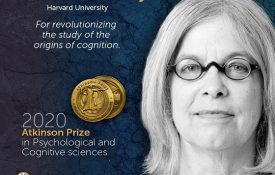
Carey, Aslin Receive NAS Atkinson Prize
The National Academy of Sciences has awarded the 2020 Atkinson Prize in Psychological and Cognitive Sciences to APS William James Award Fellow Susan Elizabeth Carey and APS Fellow Richard N. Aslin.
-

Self-Objectified Women Express the Same Support for Social Activism
Women who report high levels of self-objectification are no more or less willing to engage in social activism than those who do not.
-

New Research Finds Text Messages Can Help Predict Suicide Attempts
New research at UVA suggests that language used in text messages may one day help clinicians predict an increased risk of a suicide attempt in real time.
-

Linguistic Similarities Build Friendships and Echo Chambers
Friends influence one another’s linguistic styles over time, contributing to the relational “echo chambers” common on social media and in society as a whole.
-
Call for Abstracts: Behavior, Energy, and Climate Change 2020 Conference
The Behavior, Energy, and Climate Change (BECC) 2020 Conference is accepting abstracts for posters, individual presentations, and panels through April 1, 2020. BECC, to be held December 6-9 in Washington, DC, presents behavioral research on how to encourage behavior change for energy and carbon savings, how to evaluate these programs, how to understand why individuals and groups change, and how to make these transitions in fair and equitable ways. Student fellowships are available for the conference through the Stanford University. The conference is co-convened by Berkeley Energy and Climate Institute and Stanford Institute for Economic Policy Research.
