

-

Infectious Diseases and Perceptions of Self
The threat of infection seems to increase individuals’ interest in improving their physical appearance.
-

New Research From Psychological Science
A sample of new research exploring action-specific perception, intuitive judgments about the limits of science, and group reputation and prosocial behavior in children.
-

APS: Leading the Way in Replication and Open Science
Read about the breadth of APS activities on advancing replicability and reproducibility in psychological science.
-
To earn an opponent’s respect, speak—don’t type
The degree of polarization in American society has become impossible to ignore. People don’t just disagree with one another about politics, guns, taxes, and freedom of speech; they also disrespect those with whom they disagree. Consider what happens when you enter “gun advocates are” into Google. The first autofill option is “gun advocates are idiots.” The second? “Gun control advocates are idiots.” When we disagree with others, we reliably assume that the opposition is more than just wrong. We assume they are stupid. ...
-
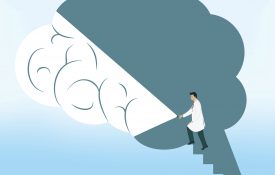
Where Psychological Science and Cancer Research Unite
Acute stress and chronic-stress-induced inflammation contribute to the progression of cancer, research shows.
-
AI algorithms to prevent suicide gain traction
A growing number of researchers and tech companies are beginning to mine social media for warning signs of suicidal thoughts. Their efforts build on emerging evidence that the language patterns of a person's social-media posts, as well as the subconscious ways they interact with their smartphone can hint at psychiatric trouble. Businesses are just starting to test programs to automatically detect such signals. Mindstrong, for instance, an app developer in Palo Alto, California, is developing and testing machine-learning algorithms to correlate the language that people use and their behaviour — such as scrolling speed on smartphones — with symptoms of depression and other mental disorders.
