
-
Can Crows Make Mental Pictures of Tools?
New Caledonian crows are known for their toolmaking, but Alex Taylor and his colleagues wanted to understand just how advanced they could be. Crows from New Caledonia, an island in the South Pacific, can break off pieces of a branch to form a hook, using it to pull a grub out of a log, for instance. Once, in captivity, when a New Caledonian male crow had taken all the available hooks, its mate Betty took a straight piece of wire and bent it to make one. “They are head and shoulders above almost every other avian subjects” at toolmaking, said Irene Pepperberg, an avian cognition expert and research associate in Harvard University’s department of psychology. “These crows are just amazing.”
-
Grad Students & Early Career Scientists: Apply for NAS Mirzayan Fellowship by Sept. 7
If you’re a graduate student or early-career researcher and interested in learning about science and technology policy in Washington, DC, consider applying for the Mirzayan Science & Technology Graduate Fellowship Program at the National Academies by September 7, 2018.
-
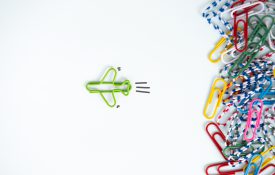
Can Scientific Rigor and Creativity Coexist?
Will heightened standards for rigor and transparency quash the kind of inventive theories and predictions that have driven psychological science in the first place?
-

Holdren Emphasizes Behavioral Science in AAPSS Lecture
In an invited address to the American Academy of Political & Social Science, Former President’s Science Advisor John Holdren spoke on the prominent role behavioral and social science played in the Obama White House, stressing how science advice is critical to the functioning of the US executive branch.
-
Mr. Rogers Had a Simple Set of Rules for Talking to Children
For the millions of adults who grew up watching him on public television, Fred Rogers represents the most important human values: respect, compassion, kindness, integrity, humility. On Mister Rogers’ Neighborhood, the show that he created 50 years ago and starred in, he was the epitome of simple, natural ease. But as I write in my forthcoming book, The Good Neighbor: The Life and Work of Fred Rogers, Rogers’s placidity belied the intense care he took in shaping each episode of his program.
-

How Other People’s Investments Can Elicit the Sunk-Cost Fallacy
A researcher looks at the interpersonal side of our tendency to avoid sunk costs.
A researcher takes a fresh look at why people often persist with an unpleasant or unprofitable endeavor because they don’t want the resources they’ve already invested to go to waste.
