• News & Research
    • Research Topics
    • Podcasts & Videos
  • Conventions & Events
    • 2026 APS Annual Convention
    • Webinars & Virtual Events
    • Past and Future Conventions
  • Journals
    • Psychological Science
    • Current Directions in Psychological Science
    • Psychological Science in the Public Interest
    • Perspectives on Psychological Science
    • Clinical Psychological Science
    • Advances in Methods and Practices in Psychological Science
    • Advances in Psychological Science Open
  • Advocacy & Policy
    • Policy & Position Statements
  • The Observer 
    • Archive
    • About the Observer
    • Advertising
    • Contact the Editor
    • Presidential Columns
  • Members
    • Awards & Honors
    • Member Directory
    • Lifetime Members
    • Student Members
    • Teaching of Psychology
    • Donors
  • Career Resources
    • Employment
  • About
    • Diversity, Equity, & Inclusion
    • Board of Directors 2025-2026
    • Staff Directory
    • Ethics Policy & Code of Conduct
APS Homepage
APS
  • Login
  • Join APS
  • Our Use Of Little Words Can, Uh, Reveal Hidden Interests

    NPR: One Friday night, 30 men and 30 women gathered at a hotel restaurant in Washington, D.C. Their goal was love, or maybe sex, or maybe some combination of the two. They were there for speed dating. The women sat at separate numbered tables while the men moved down the line, and for two solid hours they did a rotation, making small talk with people they did not know, one after another, in three-minute increments. I had gone to record the night, which was put on by a company called Professionals in the City, and what struck me was the noise in the room. The sound of words, of people talking over people talking over people talking. It was a roar. What were these people saying?

  • Facial Piercings Can Still Hurt Your Chances of Getting Hired

    Although piercings and tattoos are more common than ever in America, research suggests that they may still hurt your prospects of getting a job. Despite the mainstream popularity of body art, many people still see facial piercings as unprofessional and unwelcome in the workplace. In a recent study, behavioral scientists James C. McElroy, James K. Summers, and Kelly Moore of Iowa State University found that even among college students, facial piercings still carry stigma that can affect whether or not someone gets hired. In hiring, managers may see people with facial piercings as a poor fit for a job because facial piercings may be associated with negative personality traits.

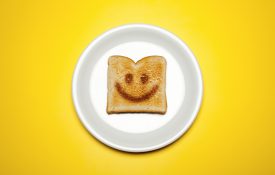
  • A Closer Look at the Face in Your Toast

    Brain research shows why people may be biased to see faces, even when only the slightest hint of facial features exists.

  • STUDY: MILLENNIALS LESS TRUSTING THAN GEN X WAS

    Associated Press: They're often pegged as the civic-minded, do-gooding generation. But while they're still optimistic about their own personal prospects, a new study finds that today's youth are often more skeptical of the country's institutions than the young generations that preceded them. The Millennials also are as mistrusting of other people as the gloomy "slackers" of Generation X were 20 years ago — or even more so.

  • Is It Irrational For Carmelo Anthony To Take So Many Three Pointers?

    Forbes: A jab to the right, then Carmelo steps back behind the three-point line and launches a shot. It clanks off the back of the rim. How likely is he to be the next person on his team to attempt a shot? And what are the odds that his follow-up shot will come from behind the arc? NBA players are paid enormous sums of money to make good decisions on the basketball court. To thrive in the league, they learn to pick their spots. Some players know they should avoid three-pointers at all costs, some only take such shots when they are wide open and can set their feet, and others (Steph Curry being a great example) have a green light to toss up three-pointers just about whenever they desire.

  • The road to failure is paved with good intentions

    The Washington Post: Take a moment to think of a task you wish to accomplish in the next three months. It should be something specific, like clearing out your backyard or completing an online course, so that you can judge, definitively, if and when it has been completed. As you think about it right now, how likely would you say it is that you will finish the task by the end of autumn? Chances are, your prediction is too optimistic. You are less likely to finish the task than you think you are.

« FirstPrevious...102030...1,3031,3041,3051,3061,307...1,3101,3201,330...NextLast »
  • Who We Are
  • Privacy Policy
  • Contact Us
  • Donate
  • Advertising
  • Follow APS
  • Facebook Logo link to APS's Facebook
  • BlueSky Logo link to APS's BlueSky
  • Youtube Logo link to APS's YouTube
  • Instagram Logo link to APS's Instagram
  • LinkedIn Logo link to APS's LinkedIn
  • Twitter Logo link to APS's Twitter

© Association for Psychological Science

Cookies
We use cookies on our website to give you the most relevant experience by remembering your preferences and repeat visits. By clicking “Accept”, you consent to the use of ALL the cookies. To accept or reject certain categories of cookies specifically please click the Cookie Settings link. Please read our Cookie Policy for more information.
Do not sell my personal information.
Cookie settingsAccept Reject
Privacy & Cookies Policy

Privacy Overview

This website uses cookies to improve your experience while you navigate through the website. Out of these cookies, the cookies that are categorized as necessary are stored on your browser as they are essential for the working of basic functionalities of the website. We also use third-party cookies that help us analyze and understand how you use this website. These cookies will be stored in your browser only with your consent. You also have the option to opt-out of these cookies. But opting out of some of these cookies may have an effect on your browsing experience.
Necessary
Always Enabled
Necessary cookies are absolutely essential for the website to function properly. This category only includes cookies that ensures basic functionalities and security features of the website. These cookies do not store any personal information.
Functional
Functional cookies help to perform certain functionalities like sharing the content of the website on social media platforms, collect feedbacks, and other third-party features.
CookieDurationDescription
__cf_bm30 minutesThis cookie, set by Cloudflare, is used to support Cloudflare Bot Management.
Performance
Performance cookies are used to understand and analyze the key performance indexes of the website which helps in delivering a better user experience for the visitors.
CookieDurationDescription
AWSELBCORS5 minutesThis cookie is used by Elastic Load Balancing from Amazon Web Services to effectively balance load on the servers.
Analytics
Analytical cookies are used to understand how visitors interact with the website. These cookies help provide information on metrics the number of visitors, bounce rate, traffic source, etc.
CookieDurationDescription
at-randneverAddThis sets this cookie to track page visits, sources of traffic and share counts.
CONSENT2 yearsYouTube sets this cookie via embedded youtube-videos and registers anonymous statistical data.
uvc1 year 27 daysSet by addthis.com to determine the usage of addthis.com service.
_ga2 yearsThe _ga cookie, installed by Google Analytics, calculates visitor, session and campaign data and also keeps track of site usage for the site's analytics report. The cookie stores information anonymously and assigns a randomly generated number to recognize unique visitors.
_gat_gtag_UA_3507334_11 minuteSet by Google to distinguish users.
_gid1 dayInstalled by Google Analytics, _gid cookie stores information on how visitors use a website, while also creating an analytics report of the website's performance. Some of the data that are collected include the number of visitors, their source, and the pages they visit anonymously.
Advertisement
Advertisement cookies are used to provide visitors with relevant ads and marketing campaigns. These cookies track visitors across websites and collect information to provide customized ads.
CookieDurationDescription
loc1 year 27 daysAddThis sets this geolocation cookie to help understand the location of users who share the information.
VISITOR_INFO1_LIVE5 months 27 daysA cookie set by YouTube to measure bandwidth that determines whether the user gets the new or old player interface.
YSCsessionYSC cookie is set by Youtube and is used to track the views of embedded videos on Youtube pages.
yt-remote-connected-devicesneverYouTube sets this cookie to store the video preferences of the user using embedded YouTube video.
yt-remote-device-idneverYouTube sets this cookie to store the video preferences of the user using embedded YouTube video.
yt.innertube::nextIdneverThis cookie, set by YouTube, registers a unique ID to store data on what videos from YouTube the user has seen.
yt.innertube::requestsneverThis cookie, set by YouTube, registers a unique ID to store data on what videos from YouTube the user has seen.
Others
Other uncategorized cookies are those that are being analyzed and have not been classified into a category as yet.
SAVE & ACCEPT
Powered by CookieYes Logo