• News & Research
    • Research Topics
    • Podcasts & Videos
  • Conventions & Events
    • 2026 APS Annual Convention
    • Webinars & Virtual Events
    • Past and Future Conventions
  • Journals
    • Psychological Science
    • Current Directions in Psychological Science
    • Psychological Science in the Public Interest
    • Perspectives on Psychological Science
    • Clinical Psychological Science
    • Advances in Methods and Practices in Psychological Science
    • Advances in Psychological Science Open
  • Advocacy & Policy
    • Policy & Position Statements
  • The Observer 
    • Archive
    • About the Observer
    • Advertising
    • Contact the Editor
    • Presidential Columns
  • Members
    • Awards & Honors
    • Member Directory
    • Lifetime Members
    • Student Members
    • Teaching of Psychology
    • Donors
  • Career Resources
    • Employment
  • About
    • Diversity, Equity, & Inclusion
    • Board of Directors 2025-2026
    • Staff Directory
    • Ethics Policy & Code of Conduct
APS Homepage
APS
  • Login
  • Join APS
  • At Face Value: Certain Facial Features Inspire Trust

    Chief executives with certain facial features are immediately assessed as more trustworthy, and are less likely to be blamed for a company’s financial problems, a study has found.

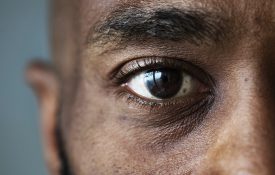
  • Closeup of a man's eye

    Look Into My Pupils: Pupil Mimicry May Lead to Increased Trust

    People often mimic each other’s facial expressions without even knowing it, but research shows that they also mimic the size of each other’s pupils.

  • The Ordeal That Made Me a Student of Humanity

    The Wall Street Journal: In 1984, as a 17-year-old high-school student in Israel, I was a member of a youth movement that focused on study, civic work and preparation for military service. Our graduation ceremonies often featured big fires, intended to dramatize our patriotic fervor. That year, some of our leaders had brought back military supplies to help make the blaze especially intense. One Friday afternoon, as we began putting away these materials, there was an accident. Nobody knows exactly what happened, but a spark must have been struck somewhere. A large magnesium flare—the kind that the Israeli military uses to light up a battlefield—exploded right next to me.

  • The Best Screen Time

    Slate: BOSTON—The library in Boston’s Haynes Early Education Center is a bright, cheery space filled with well-stocked bookcases, tables ringed by small wooden chairs, art supplies, cushions for story time, and dozens of laminated vocabulary words strung below an oversize paper alphabet. But one of the most important learning tools here is a small gray box lit by a blinking green LED, perched well above kid-height on a yellow wall by the door. It’s the Wi-Fi transponder that brings broadband Internet to the fingertips of about 175 small children—preschool through first grade, mostly from low-income black and Hispanic families.

  • Bike Visibility Does Little to Change Drivers’ Dangerous Overtaking

    A recent bill in the state of Wyoming would require all bicyclists to wear no less than 200 square inches “of high-visibility fluorescent orange, green or pink color clothing visible from the front and rear of the bicycle.” Though lawmakers in favor the bill argued that the new wardrobe requirements were for bicyclists’ own safety, research on driver behavior doesn’t necessarily back this up. In fact, new research is showing that “high-vis” clothing is not as effective at increasing bicycle safety as is often assumed. A study by University of Bath psychological scientist Ian Walker finds that high-visibility clothing is unlikely to prevent the most dangerous passing behavior from drivers.

  • New Research in Psychological Science

    Read about the latest research published in Psychological Science: Genes Unite Executive Functions in Childhood Laura E. Engelhardt, Daniel A. Briley, Frank D. Mann, K. Paige Harden, and Elliot M. Tucker-Drob Research has shown that the covariation among abilities in different executive function (EF) domains -- represented by a higher-order factor -- is almost 100% heritable in adults; however, it is not known whether this genetic influence is in place in childhood. Third- through eighth-graders who were part of the Texas Twin Project -- a registry of twins and triplets living in the U.S.

« FirstPrevious...102030...1,0761,0771,0781,0791,080...1,0901,1001,110...NextLast »
  • Who We Are
  • Privacy Policy
  • Contact Us
  • Donate
  • Advertising
  • Follow APS
  • Facebook Logo link to APS's Facebook
  • BlueSky Logo link to APS's BlueSky
  • Youtube Logo link to APS's YouTube
  • Instagram Logo link to APS's Instagram
  • LinkedIn Logo link to APS's LinkedIn
  • Twitter Logo link to APS's Twitter

© Association for Psychological Science

Cookies
We use cookies on our website to give you the most relevant experience by remembering your preferences and repeat visits. By clicking “Accept”, you consent to the use of ALL the cookies. To accept or reject certain categories of cookies specifically please click the Cookie Settings link. Please read our Cookie Policy for more information.
Do not sell my personal information.
Cookie settingsAccept Reject
Privacy & Cookies Policy

Privacy Overview

This website uses cookies to improve your experience while you navigate through the website. Out of these cookies, the cookies that are categorized as necessary are stored on your browser as they are essential for the working of basic functionalities of the website. We also use third-party cookies that help us analyze and understand how you use this website. These cookies will be stored in your browser only with your consent. You also have the option to opt-out of these cookies. But opting out of some of these cookies may have an effect on your browsing experience.
Necessary
Always Enabled
Necessary cookies are absolutely essential for the website to function properly. This category only includes cookies that ensures basic functionalities and security features of the website. These cookies do not store any personal information.
Functional
Functional cookies help to perform certain functionalities like sharing the content of the website on social media platforms, collect feedbacks, and other third-party features.
CookieDurationDescription
__cf_bm30 minutesThis cookie, set by Cloudflare, is used to support Cloudflare Bot Management.
Performance
Performance cookies are used to understand and analyze the key performance indexes of the website which helps in delivering a better user experience for the visitors.
CookieDurationDescription
AWSELBCORS5 minutesThis cookie is used by Elastic Load Balancing from Amazon Web Services to effectively balance load on the servers.
Analytics
Analytical cookies are used to understand how visitors interact with the website. These cookies help provide information on metrics the number of visitors, bounce rate, traffic source, etc.
CookieDurationDescription
at-randneverAddThis sets this cookie to track page visits, sources of traffic and share counts.
CONSENT2 yearsYouTube sets this cookie via embedded youtube-videos and registers anonymous statistical data.
uvc1 year 27 daysSet by addthis.com to determine the usage of addthis.com service.
_ga2 yearsThe _ga cookie, installed by Google Analytics, calculates visitor, session and campaign data and also keeps track of site usage for the site's analytics report. The cookie stores information anonymously and assigns a randomly generated number to recognize unique visitors.
_gat_gtag_UA_3507334_11 minuteSet by Google to distinguish users.
_gid1 dayInstalled by Google Analytics, _gid cookie stores information on how visitors use a website, while also creating an analytics report of the website's performance. Some of the data that are collected include the number of visitors, their source, and the pages they visit anonymously.
Advertisement
Advertisement cookies are used to provide visitors with relevant ads and marketing campaigns. These cookies track visitors across websites and collect information to provide customized ads.
CookieDurationDescription
loc1 year 27 daysAddThis sets this geolocation cookie to help understand the location of users who share the information.
VISITOR_INFO1_LIVE5 months 27 daysA cookie set by YouTube to measure bandwidth that determines whether the user gets the new or old player interface.
YSCsessionYSC cookie is set by Youtube and is used to track the views of embedded videos on Youtube pages.
yt-remote-connected-devicesneverYouTube sets this cookie to store the video preferences of the user using embedded YouTube video.
yt-remote-device-idneverYouTube sets this cookie to store the video preferences of the user using embedded YouTube video.
yt.innertube::nextIdneverThis cookie, set by YouTube, registers a unique ID to store data on what videos from YouTube the user has seen.
yt.innertube::requestsneverThis cookie, set by YouTube, registers a unique ID to store data on what videos from YouTube the user has seen.
Others
Other uncategorized cookies are those that are being analyzed and have not been classified into a category as yet.
SAVE & ACCEPT
Powered by CookieYes Logo