
-
2019 – 2020 American Philosophical Society Grants
The American Philosophical Society is accepting applications for the following grants: Franklin Research Grants Scope This program of small grants to scholars is intended to support the cost of research leading to publication in all areas of knowledge. The Franklin program is particularly designed to help meet the cost of travel to libraries and archives for research purposes; the purchase of microfilm, photocopies or equivalent research materials; the costs associated with fieldwork; or laboratory research expenses. Eligibility Applicants are expected to have a doctorate or to have published work of doctoral character and quality. Ph.D.
-
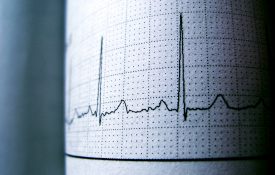
People Who Are Attuned to Physical Signs of Stress Have Higher Well-Being
Being in sync with physical signs of stress is linked with greater psychological and physical well-being.
-
Charles Carver, 1947-2019
APS Fellow Charles S. Carver, whose research focused on the personality dimensions of optimism versus pessimism, died June 22nd. Carver was a Distinguished Professor of Psychology at the University of Miami, where he joined the faculty in 1975 after earning his PhD at the University of Texas at Austin. Carver’s work spanned the areas of personality psychology, social psychology, health psychology, and more recently experimental psychopathology. He developed several instruments designed for measuring self-regulation, including coping reactions, self-criticism, goal-setting, and adult attachment.
-
Wilbert “Bill” McKeachie, 1921-2019
APS James McKeen Cattell Fellow Wilbert “Bill” McKeachie, author of the classic McKeachie’s Teaching Tips handbook for college instructors, passed away June 12. McKeachie spent his career as a scientist and instructor at the University of Michigan after earning his PhD there in 1949. He served 10 years as chair of UM's Department of Psychology, building its reputation as one of the world's largest and most prestigious psychology departments. And he gained international prominence for his novel educational research and teaching philosophy.
-

Many Explanations for Why Patients Overreport Their Symptoms
Some mental health patients report more symptoms than they actually experience and this is often attributed to malingering, when people intentionally inflate their symptoms for some benefit. The assumption that such patients are malingering tends to overshadow alternative explanations, even though research indicates that there are actually multiple pathways that could lead to overreporting. Researcher Harald Merckelbach of Maastricht University and colleagues review the available data and detail some of these alternative explanations in Current Directions in Psychological Science.
-

Controlling Our Thoughts Is Harder Than It Seems
Research shows that even when we think we’ve successfully suppressed a thought, its traces may still linger outside conscious awareness.
