
Nine Early Career Researchers Join APS’s 2025 Cohort of Editorial Fellows
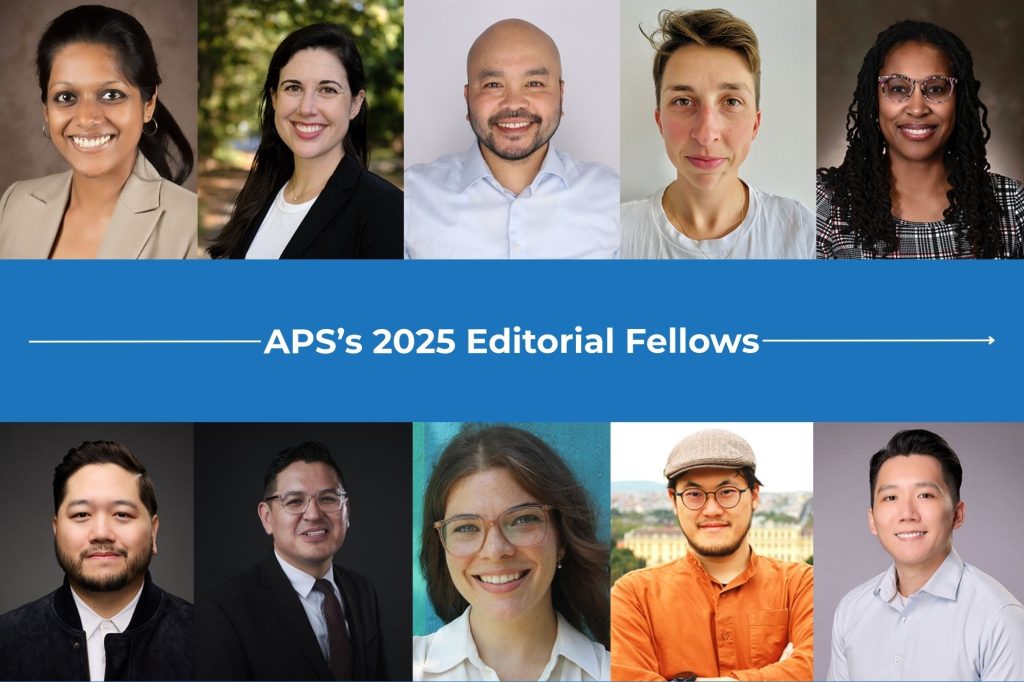
Image above: APS Editorial Fellows, clockwise from top left: Pankhuri Aggarwal, Sarah Brislin, Darwin Guevarra, Karoline Huth, Marilyn Lovett, Wei Xing (Noah) Toh, Lei Zhang, Aislinn Sandre, Oswaldo Moreno, Patrick Manapat.
Karoline Huth • Patrick Manapat • Sarah Brislin • Pankhuri Aggarwal • Aislinn Sandre • Darwin Guevarra • Marilyn Lovett • Oswaldo Moreno • Wei Xing (Noah) Toh
APS welcomes nine researchers from across the globe to the second cohort of APS Editorial Fellows.
APS launched the program in 2024 to help scientists develop their skills as editors, with a goal of creating and sustaining a pipeline of diverse and representative journal editors. Two fellows are typically assigned to each of five APS journals: Psychological Science, Clinical Psychological Science, Current Directions in Psychological Science, Perspectives on Psychological Science, and Advances in Methods and Practices in Psychological Science. Each fellow is paired with an editor mentor at the journal who is available for consultation and discussion regarding any of the editorial tasks for the manuscripts assigned to the fellow.
Fellows will complete all the editorial tasks typically required of an associate editor, including completing initial evaluations of submitted manuscripts, selecting and inviting reviewers to evaluate the manuscripts, synthesizing reviews, and writing decision letters. They each will receive a stipend for their year-long fellowship.
Meet the 2025 cohort of APS Editorial Fellows.
Advances in Methods and Practices in Psychological Science

Karoline Huth
Maastricht University
University of Amsterdam
Huth applies advanced statistical modeling to psychological research, with a focus on making complex methods accessible to applied researchers. Her work centers on Bayesian graphical models and network analysis, and she has developed open-source tools and tutorials to support their use in applied settings. During her PhD in quantitative psychology, Huth worked on both the development and dissemination of statistical methods, aiming to bridge the gap between methodological innovation and practical application. She has a special interest in fostering collaboration and understanding between quantitative psychologists and substantive researchers, ensuring that methodological advances are both informed by and useful to real-world research questions. Huth looks forward to contributing to the AMPPS editorial team by supporting methodological rigor and encouraging diverse voices in psychological science.

Patrick Manapat
University of Oklahoma
Manapat’s research centers on measurement issues in the social sciences, with an emphasis on factor analysis and item response theory. Recently, he has focused on the intersection of psychometrics and replication, examining measurement issues through a meta-scientific lens. As a first-generation Filipino American born and raised in Orange County, California, Manapat draws from his background to bring a unique perspective to psychometrics and quantitative psychology. He aims to cultivate a more inclusive and representative generation of quantitative psychologists. Manapat has served as a reviewer for several leading methodological journals.
Clinical Psychological Science
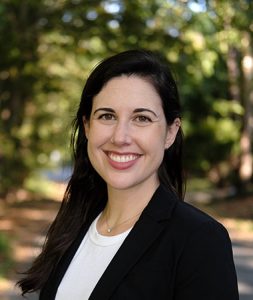
Sarah Brislin
Rutgers University
Brislin’s research focuses on determining biological mechanisms that contribute to the expression and development of externalizing behavior in adolescence. She is particularly interested in understanding the biological, environmental, and developmental influences on the emergence, persistence, and desistance of antisocial behavior and substance use in adolescence and early adulthood. She incorporates a broad range of methods to better understand this phenotypic expression. Brislin is also trained as a clinical psychologist and is interested in translating these mechanistic findings into clinically relevant measures or interventions for at-risk youth.

Pankhuri Aggarwal
University of Cincinnati
Aggarwal’s research explores the cultural relevance and global applicability of psychological theories, assessment tools, and interventions developed in Western contexts. Her work critically examines how these frameworks translate across different settings and populations. She also examines contemporary issues in graduate education and training within health service psychology, aiming to foster identity-centered and contextually grounded discourse. Aggarwal has contributed as an ad-hoc reviewer for several academic journals across clinical psychology, counseling psychology, and family and marriage therapy.
Current Directions in Psychological Science

Aislinn Sandre
University of Western Ontario
Sandre studies developmental pathways to psychopathology by examining how the brain processes affective information. She is particularly interested in how people process affective cues across development and how alterations in this processing arise from early life experiences and may be shared or shaped within families. Sandre primarily uses EEG to examine neural responses to affective stimuli (e.g., emotional faces, rewards, and threats) across the lifespan, including in infants, adolescents, and adults. Her long-term goal is to better identify individuals most at risk for developing psychopathology early in life to inform more targeted and timely prevention and intervention efforts. Sandre has served as an ad-hoc reviewer for journals in developmental, clinical, and psychophysiological science.
Related content: 2024 Cohort Reflects on First Year of APS Editorial Fellowship

Darwin Guevarra
Miami University
Guevarra’s research investigates low-effort strategies for regulating affect—such as stress, pain, and emotion—through non-deceptive placebos, language use, and mindsets. His work integrates social psychology, affective neuroscience, and psychophysiology methods to better understand how different strategies can enhance emotional well-being and health. He has a strong interest in interdisciplinary research that bridges basic science and applied outcomes. Guevarra is a reviewer for over a dozen journals and is currently on the editorial board of Biopsychosocial Science and Medicine. As an editorial fellow, he is eager to support thoughtful, rigorous review processes and to gain deeper insight into how editors shape meaningful contributions to psychological science.
Perspectives in Psychological Science

Marilyn Lovett
Clark Atlanta University
Lovett considers her teaching and mentorship of students at historically Black colleges and universities (HBCUs) in their preferred areas of research a special calling. She is currently a faculty member at Clark Atlanta University. Her areas of expertise are in social psychology (health and wellness) and multicultural psychology (theoretical perspectives). She enjoys sharing her research at community forums and professional conferences and is interested in ensuring that psychological science is accessible for general audiences. Lovett’s recently authored book, Africana Health Psychology: A Cultural Perspective, was published by Rowman and Littlefield. She has reviewed manuscripts for several journals.

Oswaldo Moreno
Virginia Commonwealth University
Moreno’s research focuses on the intersection of clinical health psychology, social determinants of health, and mental health disparities, particularly among Latino/e immigrant and marginalized populations. His work examines how structural factors impact stress, internalizing disorders, and addictive behaviors, with an emphasis on culturally responsive care. He leads La Esperanza Research Program, which includes studies on Spanish-speaking behavioral health, family and cultural influences on adolescent tobacco use, and culturally enhancing group interventions. Moreno aims to develop and evaluate multicultural frameworks to improve mental health outcomes, access to care, and reduce mental health disparities in underserved communities.
Psychological Science

Wei Xing (Noah) Toh
Nanyang Technological University
Toh’s research broadly involves the self-regulatory abilities and strategies that individuals use in pursuit of their long-term goals. In particular, his work seeks to understand the interaction between executive functions and emotion regulation, the determinants and outcomes of these regulatory processes, and the way they develop across the lifespan. He has served as an ad-hoc reviewer and as an editorial board member for several journals in the areas of cognitive and affective sciences.
Feedback on this article? Email [email protected] or login to comment.



APS regularly opens certain online articles for discussion on our website. Effective February 2021, you must be a logged-in APS member to post comments. By posting a comment, you agree to our Community Guidelines and the display of your profile information, including your name and affiliation. Any opinions, findings, conclusions, or recommendations present in article comments are those of the writers and do not necessarily reflect the views of APS or the article’s author. For more information, please see our Community Guidelines.
Please login with your APS account to comment.