
-
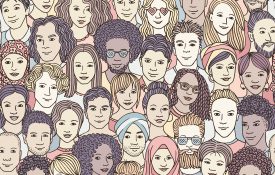
People Trust Typical-Looking Faces Most
Being “average” is often considered a bad thing, but research suggests that averageness wins when people assess the trustworthiness of a face.
-
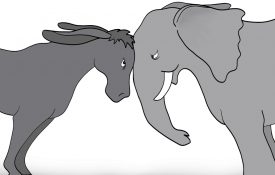
Political Extremists Are Less Susceptible to Common Cognitive Bias
People who occupy the extreme ends of the political spectrum may be less influenced by outside information on a simple estimation task than political moderates.
-
Thanksgiving and Gratitude: The Science of Happier Holidays
The Wall Street Journal: As the holiday shopping season moves into high gear, it’s easy to get caught up in the rush of spending. But consider this conclusion from recent scientific research: Materialistic people are less happy than their peers. They experience fewer positive emotions, are less satisfied with life and suffer higher levels of anxiety, depression, and substance abuse. Why is this the case—and how can we avoid falling into the unhappiness trap of materialism this holiday season? One answer has been emerging from social science: Cultivate a mind-set of gratitude.
-
Being a Good Leader Makes You More Attractive
Harvard Business Review: Pretty people do better. Whether interviewing for a new job, applying for a promotion, or, in the world of politics, seeking voters’ support, people with good looks tend to reap more rewards. It pays to be physically attractive. Previous studies bear this out. But, from my own research, which is forthcoming in The Leadership Quarterly, I’ve discovered that things aren’t so cut and dried, beauty isn’t a fixed trait as many of us tend to believe, and that our perceptions of one’s attractiveness can be enhanced in positive ways depending on the situation.
-
Facts? We Don’t Need No Stinking Facts!
Pacific Standard: Are your opinions solidly based in fact? Most everyone likes to think so. Yet plenty of research suggests our beliefs are driven more by psychological needs than objective assessments. To cite just one example, if our desire for security requires us to perceive our society as fair and just, we’re likely to dismiss complaints about economic inequality or police brutality. Entertaining such ideas would mean challenging a comforting premise that fulfills a deep-seated need. Ah, but what happens when the facts clearly contradict our assumptions? Do we rethink our opinions at that point?
-
Revisiting the Land of Opportunity
The Huffington Post: "Our success should depend not on accident of birth, but on the strength of our work ethic and the scope of our dreams." So President Obama proclaimed in his 2014 State of the Union Address, adding: "Opportunity is who we are." Yet in the same speech, just a few paragraphs before, the president acknowledged that the American Dream is elusive for many: "Average wages have barely budged," he noted. "Inequality has deepened. Upward mobility has stalled." President Obama is not alone, neither in his yearning nor his gloom. Many Americans echo his view that economic realities are falling far short of the American Dream that defines our national ethos.
