
How Effective Is Police De-Escalation Training?
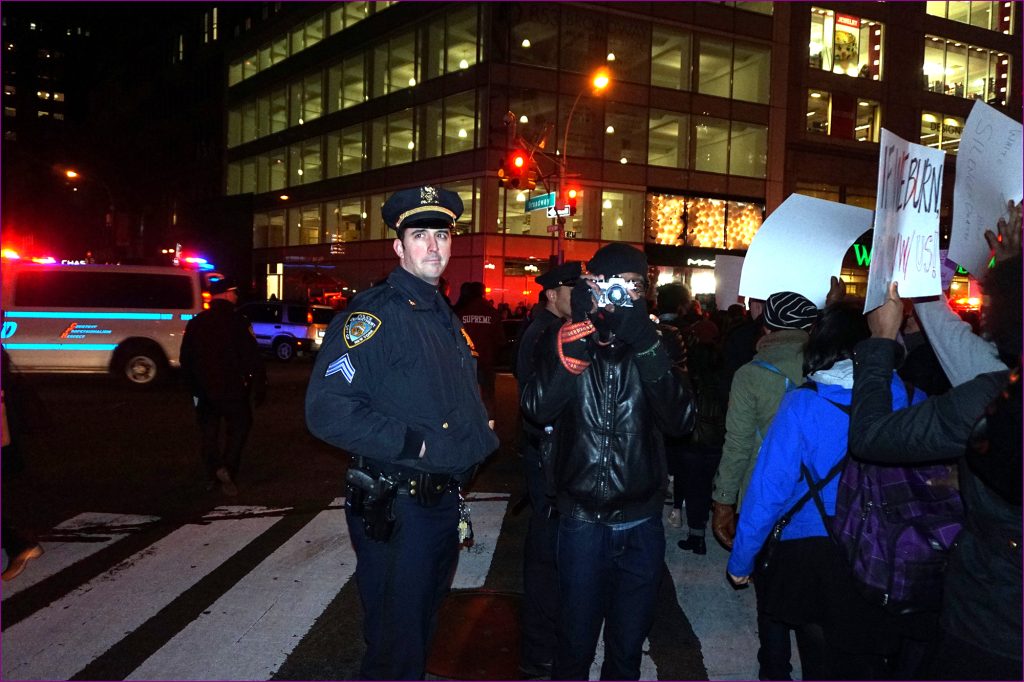
Protest for Eric Garner on December 4, 2014, in Manhattan, NYC. Photo credit: The All-Nite Images from NY, NY, USA, CC BY-SA 2.0
No clear-cut definition • Research challenges • Beyond training
Quick Take
- Over 90% of American law enforcement academies have de-escalation training, but they come in varied forms. This lack of a common definition has made it difficult to form concrete conclusions on these trainings.
- The ability to conduct more rigorous research on de-escalation training, however, faces challenges. Strong collaborations with police departments and holistic data needed to capture the processes behind police behavior are currently few and far between.
- De-escalation training is just a small part of a larger problem. Thinking critically on how these trainings fit into the broader context of police violence could lead to more informed research.
Over the past decade, de-escalation training has been incorporated into almost every law enforcement academy in the United States. The premise of the training is simple: By equipping police officers with certain communication skills, they can then use their words to defuse tense situations instead defaulting to their physical weapons—what some may call “verbal judo.”
In theory, the basis of de-escalation training is psychologically sound. Communication, empathy, and validation are all known to calm another person. However, despite the underlying theory and the popularity of the training, whether de-escalation actually mitigates the problem it’s supposed to solve—police violence—remains unclear. Some research shows that de-escalation training is useful, lowering use of force by police officers. Other studies show little effect.
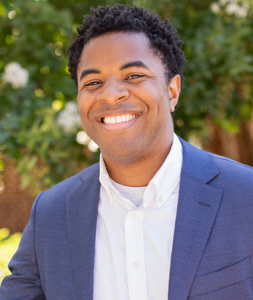
“A lot of psychology knows the right theory for what should work,” said Kyle Dobson, an assistant professor of public policy and psychology at the University of Virginia. “But turns out, applying theories in the field is really hard to do.”
Due to these challenges, the scientific literature around de-escalation training is a quagmire, providing conflicting insights into how trainings work in different social contexts, how they influence human behavior, and, ultimately, whether they de-escalate police violence at all. As a result, many experts are pointing out the holes in this body of research and pushing for alternate and novel approaches to study these trainings to mitigate one of the most critical issues related to American public safety.
“For me, de-escalation training is one of the most important trainings you can have as a police officer” because it deals with everyday interactions between the police and the public, Dobson said. “More than anything, we need a ton more data … so that we can get a better understanding of whether any of these policies and practices really work the way that we’d expect.”
No clear-cut definition
Researchers began to evaluate de-escalation training in the mid-2010s, right around when President Obama established the Task Force on 21st Century Policing. The task force recommended that police officers should be encouraged to de-escalate situations as part of their training on the use of force.
By 2022, over 90% of American law enforcement academies had de-escalation as a part of their curriculum (Buehler, 2025), meaning that researchers, technically, had many case studies they could dive into to assess the usefulness of the task force’s recommendation.
But by the early 2020s, more than 5 years after de-escalation training took off in the United States, the existing literature revealed little. Only a few training programs have been evaluated. And the studies that exist often measure different outcomes with varying conclusions.
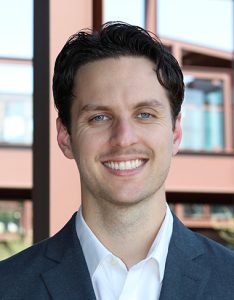
This mixed evidence was recently reviewed by Seth Watts and his colleagues in a preprint published in CrimRxiv. They found that de-escalation training had a fundamental gap: It lacked a clear and common definition. “A clear-cut definition of de-escalation is hard to find,” said Watts, a criminal justice professor at Texas State University. In other words, the ways de-escalation trainings were implemented seemed to vary widely between different police departments across the country.
For instance, the most common version of de-escalation training in the United States is Integrating Communications, Assessment, and Tactics, or ICAT, a training guide developed by the Police Executive Research Forum in April 2016. “It has been replicated in a few different cities, particularly Louisville and Indianapolis, and showed reductions in the use of force,” Watts said. This training focuses on strengthening decision-making, crisis management, and de-escalating communication skills for officers so they can better manage individuals who are facing a crisis or behaving erratically.
By contrast, the Tempe Police Department in Arizona, which Watts researched in his previous role at Arizona State University, developed their own training that sought to fit the needs of their community. This training focused more on the officers managing their own capacity to de-escalate situations, such as assessing their own feelings and limits and knowing when to walk away from an encounter. The results therefore differed from those for ICAT: Studies on Tempe’s training found that it didn’t necessarily change the use of force, but that it did augment the skills competency of the officers to communicate and build rapport with community members. Community members also reported greater professionalism, fairness, and honesty from officers who had undergone this form of de-escalation training.
Related: Traffic Stops and Race: Police Conduct May Bend to Local Biases
These differing approaches are at the crux of de-escalation training’s mixed conclusions. “If you don’t have a good definition of the thing you’re studying, it’s really difficult to have a robust, rigorous research literature,” said Phillip Atiba Solomon, a professor of psychology and Black studies at Yale University and the CEO of the Center for Policing Equity.
Research challenges
A major challenge in researching de-escalation training is one that plagues much of academia: Scientific institutions are not often set up to do real-world, policy-informing research, especially related to policing. As a result, “we’re not getting anywhere closer to understanding whether or not de-escalation works in the places [we’re] really asking questions about,” said Dobson of the University of Virginia.
Dobson works with law enforcement agencies across the country, and he said that collaborations between academics and police departments are relatively uncommon. Much of this stems from how science is incentivized. Psychologists, especially early career researchers or those who are searching for job opportunities, are usually pushed to do behavioral studies within the lab instead of in real-world situations, because it’s much easier to control variables and motivations. He added that these sorts of “low-risk” studies are more likely to produce significant results, which can help a researcher get published and, in turn, gain more opportunities.
By contrast, real-world studies have a multitude of variables that could interfere with outcomes, making it difficult to understand how behavioral change is caused and motivated. For instance, many current studies on de-escalation trainings often measure use of force before and after training is implemented.
Related: Read more about research on policing and racism from APS Past-President Jennifer Eberhardt
But “to call that causal is irresponsible,” Solomon said. “At the same time [training is implemented], you’ve got a consent decree, you have multiple lawsuits, you have people getting fired, you have people worried about losing their jobs. Which one of those is responsible for the slight decline in use of force?”
So, as Dobson noted, “if publications are rewarded based on lab studies in cold environments, why would anyone reasonably take the risk … to do something that’s so much harder to produce?”
“I think what comes out in our paper is that while these programs have different philosophies, I think they all center around communication.”
– Seth Watts, criminal justice professor at Texas State University
Data, too, are difficult to gather on de-escalation training, especially data that can inform a problem as complex as policing. Administrative data from police departments often lack the intimate details needed to understand human behavior and social context. Body camera footage can be difficult to obtain or comprise a biased sample. And much of what happens to a police officer outside of the workplace, factors that influence their behavior, is unmeasured by the institutions they work for. Beyond that, other social or behavioral support programs in a particular city could also influence the outcomes of de-escalation programs.
“Because we don’t have integrative data, we’re not able to do good science about how these structures interact in the world, which means we can’t inform policy in the ways that we ought to,” Solomon explained. “So when we’re frustrated that our policies don’t look as humane as they could be, it’s because our data don’t look as holistic as they could.”
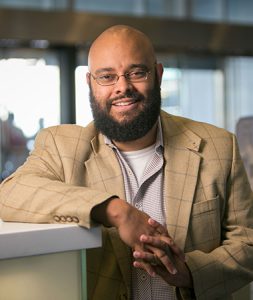
Some researchers are working on solutions for the latter. Watts is one of the experts looking to evaluate how AI can be used to scan the swaths of body-camera footage to gain a larger dataset of de-escalation examples in police encounters. He’s interested in how this technological approach can generate transcriptions of the footage and analyze the language to capture nuances. This way, AI may help inform de-escalation research not only by scanning through petabytes of footage but also by measuring outcomes beyond use of force, such as respectfulness or professionalism, Watts explained.
Solomon also voiced how pushing for better data is the first step to better research. “It would be wonderful if social psychologists, in pursuit of that broader understanding of human behavior, became advocates for better quality of data for the kinds of administrative behaviors that most influence people,” he said.
But to get more researchers to do this kind of work, Dobson said that how science works needs to change fundamentally. “The biggest call to action for psychologists, for the people who are decision makers, is to truly incentivize and support a pace and structure for that kind of work, work that allows people to test these big questions within challenging industries and spaces,” he said. If those systems were in place, more researchers would be able to take greater risks and generate more meaningful research.
And when bridging the gap between policing and academia, “use humility,” Dobson said. “The earlier you understand that, the better your science is going to be, the more you’re going to learn from people who know more about de-escalation than you.”
Beyond training
De-escalation training lies within a complex backdrop of policing and violence in the United States. The conversations around these trainings originally stemmed from the high-profile deaths of community members like Michael Brown and Eric Garner in 2014, after protests erupted across the country, demanding justice for these killings and police reform. Within that context, how much could de-escalation training influence police interactions with the public?
Researchers have wrestled with the question of whether de-escalation training is truly reducing the use of force as it originally set out to do. Watts, for instance, posited in his recent preprint that the benefit of de-escalation training might not be reduced use of force. Instead, it can equip officers to be better communicators.
“I think what comes out in our paper is that while these programs have different philosophies, I think they all center around communication,” he said. So, if de-escalation training enhances communication skills, Watts argued it may make more sense to measure and understand how these trainings help police officers have more frequent amicable interactions with community members, in addition to their effect on the use of force.
De-escalation training also doesn’t work to change the cultural norms of policing, Solomon said, because many officers believe that it’s their job to use force to create order. In fact, de-escalation as a value is oftentimes in direct conflict with the culture of some police departments, so a training is unlikely to make slowing down to communicate the status quo. Instead, the systems and values around policing likely have a greater effect, he said.
Solomon also added that when looking at the broader literature on police equity, the research shows that the biggest predictor of police violence is whether an officer is at the scene. “That means, if you really want to de-escalate a situation, don’t send the cops,” he said. “If the goal is to reduce use of force, we should be reducing the context where law enforcement is the first or only option.”
These systemic factors all influence our understanding of de-escalation training and American policing—and how researchers should proceed. “In this moment, it is useful for all of us who have psychology anywhere near our credentials to understand that individual processes happen within broader systems,” Solomon said. “And our science needs to reflect that understanding.”
Feedback on this article? Email [email protected] or login to comment.
References
Watts, S., Orosco, C., & White, M. D. (2026). A comparative review of de-escalation training: What works and why. CrimRxiv.
Buehler, E. D. (2025). State and local law enforcement training academies’ training topics and instructors, 2022—Statistical tables. U.S. Department of Justice, Bureau of Justice Statistics.



APS regularly opens certain online articles for discussion on our website. Effective February 2021, you must be a logged-in APS member to post comments. By posting a comment, you agree to our Community Guidelines and the display of your profile information, including your name and affiliation. Any opinions, findings, conclusions, or recommendations present in article comments are those of the writers and do not necessarily reflect the views of APS or the article’s author. For more information, please see our Community Guidelines.
Please login with your APS account to comment.