
New AMPPS Editor Strives to Build on Legacy of Transparency and Accountability
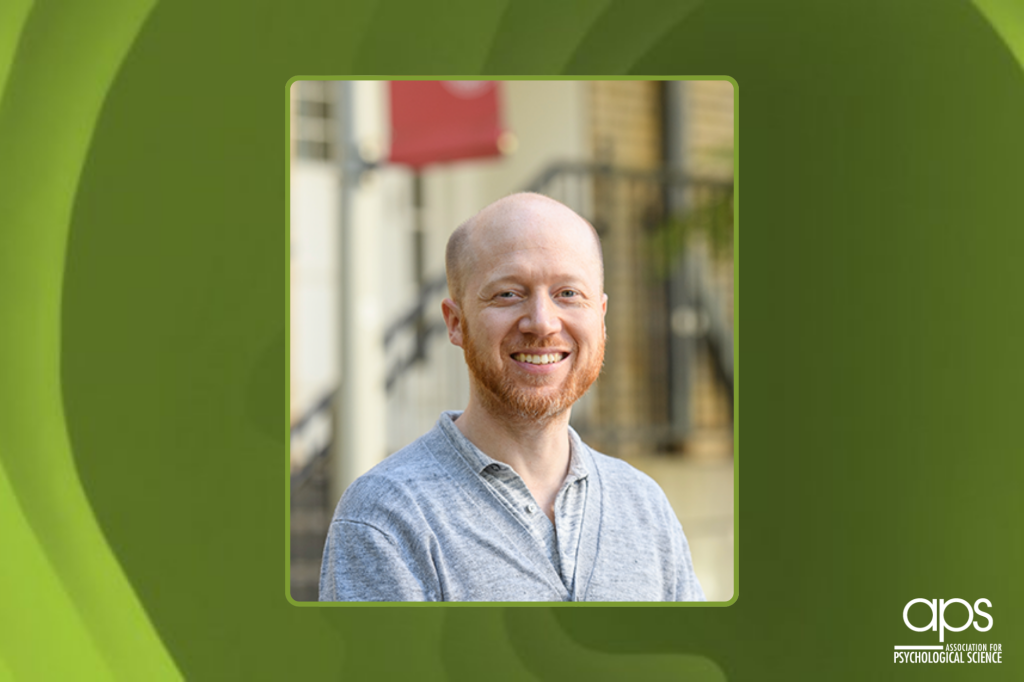
At the start of the new year, Felix Thoemmes will take over APS’s journal Advances in Methods and Practices in Psychological Science (AMPPS) as the next editor-in-chief.
Thoemmes is an associate professor and chair in the Department of Psychology at Cornell University. His research interests are causal inference, missing data, and open science. Before joining Cornell, he was an assistant professor at Texas A&M University and the University of Tübingen, Germany.
The Observer asked Thoemmes a few questions about what he hopes to focus on in this new role.
Can you tell our readers a bit about your background? How will your previous experiences help guide your approach as the new editor of AMPPS?
I am a quantitative psychologist. My research has focused on causal inference, missing data, and statistical methodology, and I have been fortunate to contribute to these areas through both theoretical and applied work. I trained at Indiana State University and Arizona State University and then went on a small academic journey with positions at Texas A&M University, the University of Jena, the University of Tübingen, and then finally Cornell University.
Over the past five years, I have served as an associate editor for Multivariate Behavioral Research, where I handled a large volume of submissions. In my role as department chair at Cornell, I gained leadership experience, overseeing a departmental merger. I believe that these experiences have taught me how to build cohesive teams, make decisive yet fair editorial judgments, and create the conditions for others to do their best work—all qualities I aim to bring to AMPPS.
AMPPS features innovative developments in research methods, practices, and conduct across the full range of areas and topics within psychological science. What topics are you most interested in seeing represented?
I consider AMPPS a premier outlet for high-quality methodological work that is rigorous yet broadly accessible. Though the journal should continue to welcome contributions across the full spectrum of methods, I am especially excited about strengthening a few key areas of current interest. Causal inference remains a vibrant and rapidly evolving domain, particularly approaches using graphical models and target trial frameworks. I also see AMPPS as a home for meta-science, especially work that critically evaluates and improves open science practices themselves. Beyond that, AMPPS will remain an outlet that publishes registered replication reports (RRRs), especially when done across many labs. Ultimately, my goal is to maintain the journal’s unique strength: translating cutting-edge methodological developments into usable practices that empower psychological researchers in their day-to-day work.
Related content: Methodology Expert Ulf-Dietrich Reips Assumes Helm at PSPI
AMPPS has established itself as a leader in open, transparent scientific practices and reproducibility. What do you see as the journal’s role in these efforts moving forward?
AMPPS has rightly earned a reputation as a leader in open science, in large parts due to the work of previous editors, and I see sustaining and expanding that role as central to its mission. I envision adopting the updated TOP Guidelines and hope that AMPPS can aim to be a Level 3 certified journal across all domains, including data, code, protocols, and materials.
I am also interested in exploring new approaches to transparency, such as encouraging synthetic data sharing when participant privacy limits open data and promoting reproducible workflows through interactive tutorials and code notebooks. Over time, I would like AMPPS to become known not only as a venue for methodological innovation but as a model for how openness and reproducibility can be fully integrated into every aspect of a journal.
“I want scholars everywhere to see AMPPS as a place where their work can shape the future of psychological science.”
What are your plans to ensure diverse representation—among authors and the editorial board—across demographic and geographic categories and content domains, as well as among underrepresented or marginalized groups? Why is this diverse representation important for the journal?
To state that science is a team sport is a cliché, but it’s nevertheless true. And this team sport is played on a global scale. Good ideas emerge in every corner of the world, and AMPPS should be an outlet for great methodological ideas no matter their origin. I will aim to prioritize diversity in methodological perspectives, geographic regions, institutional contexts, and career stages. This means actively recruiting a diverse set of associate editors and editorial board members through open calls (more information here) and professional networks and fully leveraging the existing APS Editorial Fellows program to mentor early career scholars. I want scholars everywhere to see AMPPS as a place where their work can shape the future of psychological science.
Is there anything else you would like to share with readers and potential authors about your plans as editor?
I step into this role with profound gratitude and humility. AMPPS has been shaped by two remarkable editors-in-chief: Dan Simons, who launched the journal with clarity of vision, and David Sbarra, who nurtured its growth into one of the most trusted outlets in our field.
My aspiration is to build on their legacy, not reinvent it. I will work to preserve what makes AMPPS special: the clarity of purpose, high standards for transparency and accessibility, and a commitment to serving the full breadth of methods in psychological science. If I can maintain that foundation while fostering a supportive, vibrant editorial community, I will consider my tenure a success.
Feedback on this article? Email [email protected] or login to comment.



APS regularly opens certain online articles for discussion on our website. Effective February 2021, you must be a logged-in APS member to post comments. By posting a comment, you agree to our Community Guidelines and the display of your profile information, including your name and affiliation. Any opinions, findings, conclusions, or recommendations present in article comments are those of the writers and do not necessarily reflect the views of APS or the article’s author. For more information, please see our Community Guidelines.
Please login with your APS account to comment.