
-
Companies That Provide Job Training May Earn Greater Employee Loyalty
There’s one thing that the United States Congress can agree on: the potential of job training. This summer, in a rare act of bipartisanship, Congress approved new legislation focused on increased funding for job training for US workers. The hope is that providing workers with more job training opportunities will help kickstart the US economy by getting more unemployed Americans back in the workforce. Congress isn’t alone in seeing job training as a beneficial tool. A new study from a team of European researchers found that job training may also be a good strategy for companies looking to hire and retain top talent.
-
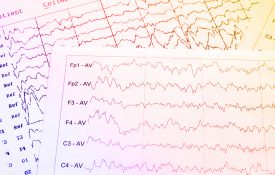
Brain Wave May Be Used to Detect What People Have Seen, Recognize
Brain activity can be used to tell whether someone recognizes details they encountered in normal, daily life, which may have implications for criminal investigations and use in courtrooms.
-
Stanford’s Jennifer Eberhardt wins MacArthur ‘genius’ grant
Los Angeles Times: Jennifer Eberhardt is fascinated with objects. It may seem an incongruous fixation for a social psychologist, but it helped the Stanford University associate professor land a spot among the creative and academic elite Wednesday, when the MacArthur Foundation awarded her its "genius" fellowship. Eberhardt, 49, was cited for her efforts to examine how subtle, ingrained racial biases influence not just how we view people, but the objects of our daily world — and how those perceptions skew institutions such as the criminal justice system.
-
Smartphone App Takes Morality Science out of the Lab and into the Real World
Scientific American: Just when it seems there’s a mobile app for just about everything, psychologists have shown there’s room for one more: they are using smartphones to help them better understand the dynamics of moral and immoral behavior out in the community. A team of U.S., German and Dutch researchers has used Apple iOS, Google Android and other mobile devices to assess real-life situations. Their goal is to better understand how our moral sense develops and moral judgments are made as well as the differences in moral experiences among various individuals, groups and cultures. The researchers selected more than 1,200 smartphone users—ages 18 to 68—in the U.S.
-
Do Animals Have Morals?
NPR: Dr. Frans de Waal is a biologist and primatologist known for his work on the behavior and social intelligence of primates. His first book, Chimpanzee Politics, compared the schmoozing and scheming of chimps to that of human politicians. He is a professor of psychology at Emory University and director of the Living Links Center at the Yerkes National Primate Center. Read the whole story: NPR
-
A Feeling of Control: How America Can Finally Learn to Deal With Its Impulses
Pacific Standard: The children’s television show Sesame Street has always had a way of reflecting the zeitgeist in shades of Muppet fur. Consider, for instance, the evolution of Cookie Monster. For his first few decades on air, he was a simple character: blue, ravenous, cookie-fixated; a lovably unleashed id. A 1990 White House report dubbed him “the quintessential consumer.” But in the mid-2000s, as concern mounted over childhood obesity, Cookie Monster’s tastes became a problem. So he went from devouring cookies to guzzling bowls of fruit. Then, last year, he changed yet again, as the show’s curriculum designers saw in his voracious appetite a different kind of teaching opportunity.
