
-
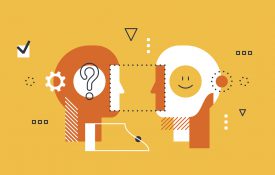
Experimenters’ Expectations May Shape Priming Results
How do your expectations about an interaction affect the outcome? In any social situation, the beliefs you’ve developed over time can influence the way you behave towards and react to a conversation partner. Although you
-

Living in Harmony: The Dynamics of Social Coordination
Social scientists outline the affective, social, and environmental cues that promote social coordination among individuals, teams, and entire societies.
-

New Research From Psychological Science
A sample of new research exploring physical position as an impression-management strategy, the origins of ordered line representations, links between agency and intentional binding, and p-curve analyses of findings related to the ‘power pose.’
-
The Science of Humor Is No Laughing Matter
Laugh it up! Humor is universal across human cultures — and fuels psychological research on everything from social perception to emotion regulation.
-
How Kids Catch Our Social Biases
Scientific American: While on the campaign trail Donald Trump was criticized for an incident in which he performed an exaggerated and unflattering impression of journalist Serge Kovaleski, a Pulitzer-prize winning journalist with a physical disability.
-
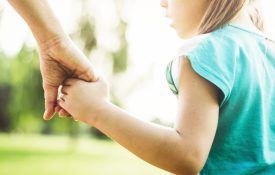
Children Can ‘Catch’ Social Bias Through Nonverbal Signals Expressed by Adults
Preschool-aged children can learn bias even through nonverbal signals displayed by adults, such as a condescending tone of voice or a disapproving look.
