
-
How Did Humans Learn to Count? Baboons May Offer Clues
Learning to count comes early in life for humans. Most kids know how to count before they enter formal schooling and the ability to understand basic quantities is fundamental to everyday life. Researchers at the
-
In A Digital Chapter, Paper Notebooks Are As Relevant As Ever
NPR: I confess. I’m a notebook nut. I own dozens and dozens of them. Everything from cheap reporter’s notebooks to hand-crafted Italian leather beauties. I wondered: Am I an analog dinosaur, or are there others
-
Storing Information In Other People’s Heads
NPR: To function effectively in the world, you need to acquire a whole lot of information. You need to know exactly which medicine is appropriate for each ailment. You need to know how to fix
-
New Research From Psychological Science
Read about the latest research published in Psychological Science: Folk Explanations of Behavior: A Specialized Use of a Domain-General Mechanism Robert P. Spunt and Ralph Adolphs Do people use similar or different cognitive processes when making
-
Study finds there’s a surprising upside to certain kinds of failure
Business Insider: While no one likes to lose, new research suggests an upside to certain kinds of failure: When you get knocked down in one battle, you’ll show up stronger in the next. According to the research from INSEAD, published
-
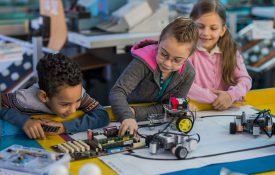
Getting Hands-On Deepens Science Learning
Students who use hands-on approaches to test or demonstrate scientific concepts understand the concepts more deeply and score better on science tests.
