
-
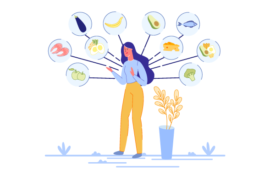
Healthier Eating Is Possible Even During a Pandemic, If You Simply Talk to Yourself
A technique known as “distanced self-talk” is an effective strategy for making healthier food choices.
-

Online but Fully Engaged: APS Microgrants Fund Innovative Teaching Projects
One project will compare the effectiveness of two options for asynchronous online courses: students can participate via written responses or short video responses. Another uses livestreaming from head-mounted cameras to facilitate blended lab collaboration.
-
Education and Cognitive Functioning Across the Life Span
Psychological Science in the Public Interest (Volume 21, Number 1)Read the Full Text (PDF, HTML) Education appears to affect cognitive ability, but it might not directly attenuate declines in cognition associated with aging. However, education can influence cognitive functioning in the elderly by contributing to enhanced cognitive skills that emerge in early adulthood and persist into older age. Therefore, fostering educational attainment appears to have great potential for improving cognitive ability in early adulthood and reducing public-health burdens related to cognitive aging and dementia.
-

Federal Agents of Change: Behavioral Insights Power Evidence-Based Efforts to Improve Government
Low-cost, potentially high-impact collaborations based on large-scale data sets and tested under real-world conditions are the hallmarks of the Office of Evaluation Sciences (OES).
-

Living in Deprived Neighborhoods May Hinder Reward Anticipation, Moderating Mental Health
Reduced access to rewards may influence brain development, contributing to the increased prevalence of mental health disorders in children living in economically impoverished environments.
-
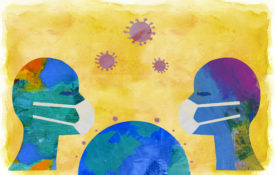
Mapping the Moods of COVID-19: Global Study Uses Data Visualization to Track Psychological Responses, Identify Targets for Intervention
More than 60,000 participants have participated in a global study to investigate the psychological implications of the COVID-19 pandemic. [July 17, 2020]
