
-
Implicit-Bias Remedies: Treating Discriminatory Bias as a Public-Health Problem
Psychological Science in the Public Interest (Volume 23, Number 1)Read the Full Text (PDF, HTML) Implicit bias refers to thoughts, attitudes, or stereotypes that can be measured indirectly and can operate without awareness. Such measurements have been associated with discriminatory judgments and behaviors, prompting efforts by many researchers to understand how to overcome implicit biases. Some researchers have suggested interventions at the individual level to weaken or eradicate implicit biases. Others have recommended training programs administered to groups to overcome biases more broadly, including implicit ones. Both approaches appear to be inefficient.
-
Collected Research by Asian American and Pacific Islander Psychological Scientists
Research by psychological scientists Serena Chen, Stephen Chen, Angela Duckworth, and Jackson Lu.
-
Eyewitness Error: Malleable Memories, Flawed Legal Processes, and an Opportunity to Train
First PSPI Live explores a 2021 case for testing a witness’s memory of a suspect only once.
-
National Academy of Sciences Elects Four APS Fellows
New NAS members in 2022 include APS Fellows Robert A. Bjork, Alice H. Eagly, Megan R. Gunnar, and Roberta L. Klatzky.
-
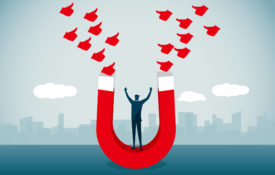
“Everyone Will Need to Become an Entrepreneur”
Entrepreneurship poster award winners Lining Sun of the National University of Singapore and Heather Han of Northern Kentucky University will each receive $1,500 and free registration to the 2022 APS Annual Convention in Chicago.
-

Ruthless Competition, Top-Dog Cultures, and Too Few Women
An organizational emphasis on intellectual superiority can contribute to a “masculinity-contest culture” that may discourage women from jumping in.
