
-
Preserving the History of Psychological Science
Cathy Faye, Assistant Director of the Center for the History of Psychology at the University of Akron in Ohio, has a message for psychological scientists who have made significant contributions to the field: Don’t throw away your notes, correspondence, or lab equipment! Faye spoke on Friday, May 23, at the 25th APS Annual Convention to educate attendees about the Center’s collection of papers, photographs, recordings, moving images, and artifacts documenting the history of psychology — the largest such collection in the world. The collection includes iconic items, such as the shock generator that Stanley Milgram used in his historic studies on obedience to authority.
-
Birthday Flash Mob Surprises Convention Attendees
The 25th APS Annual Convention is off to a lively start — some might even call it a flashy start. Last night, APS members who had gathered to watch science superstar Michael Gazzaniga’s Keynote Address on “Unity in a Modular World” were surprised when more than 30 of their fellow attendees broke into a choreographed dance while The Beatles’ “Birthday” blared from the loudspeaker. If you missed the flash mob commemorating APS’s 25th birthday, don’t fret! There will be more opportunities to celebrate during this weekend’s convention, including an ‘80s-themed 25@25 Celebration and Special Concert on Saturday from 7:00 PM to 9:00 PM in Salon 1.
-
The Benefits of Traditional vs. Wikipedia Assignments
Watch Megan John from Concordia College present her poster "The Benefits of Traditional vs. Wikipedia Research Assignments for Introductory Psychology Students" at the APS 25th Annual Convention in Washington DC. This presentation describes how a Wikipedia assignment was integrated into a psychology course to replace the traditional major paper typically assigned in such courses. Thirty-three students worked on significantly expanding and improving eight different Wikipedia articles over a period of 15 weeks. A 30-item survey was administered at the end of the academic semester in order to capture and quantify students’ perceptions of the experience.
-
Does Our Innate Ability to Estimate Numbers Benefit From Education?
Children are born with an innate number sense -- the ability to discriminate quickly between different amounts or numbers of objects, even without counting. And research has shown that children who have a more acute number sense -- or Approximate Number System (ANS) -- are also better at mathematics. In a new article published in Psychological Science, researcher Manuela Piazza of the Cognitive Neuroimaging Unit at INSERM in France and colleagues sought to understand whether improvements in ANS ability come naturally with age or whether they are the result of formal education. The researchers tested 38 subjects from an indigenous Mundurucú population in Brazil.
-
Science Galore in the APS Exhibit Hall
This month, thousands of psychological scientists from more than 40 countries will gather at the 25th APS Annual Convention in Washington, DC, USA, to share their research, learn from leaders in the field, and celebrate 25 years of innovative science. Nineteen poster sessions in the APS Exhibit Hall will showcase attendees’ work.
-
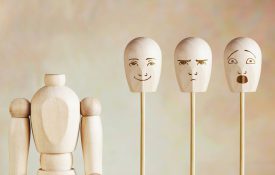
Fear, Happiness, and Sadness Share Common Neural Building Blocks
Diverse emotions are based on common building blocks of pleasure, displeasure, and arousal, according to new research
