
-
Society for Affective Science Inaugural Conference
A new society has been formed -- The Society for Affective Science. Its mission is to foster basic and applied research in the variety of fields that study affect, broadly defined. The SAS inaugural conference will be April 24-26, 2014 in Washington DC. This will be a theoretically/methodologically diverse, student-friendly conference that will provide a forum for cross-cutting work in emotion, stress, and many of the other topics that fall under the broad umbrella of affective science. For more information, and to get early-bird registration rates, see the society website: society-for-affective-science.org. For questions, contact [email protected].
-
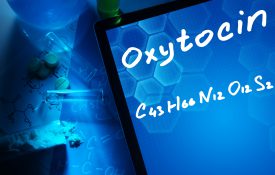
Oxytocin May Reduce Anxiety Related to Social Threats, But Only for Some
Oxytocin — a hormone thought to promote trust and empathy — has been considered as a possible tool for the treatment of social anxiety. But research suggests that the effects of oxytocin promote prosocial behaviors only in people with low social anxiety.
-

Distracted at Dinner? That’s Why Your Cooking Tastes Bland
Research suggests that in addition to making us eat more, distractions during meals may also make our food taste different.
-
Cooperation, Trust, and Antagonism: How Public Goods Are Promoted
Read the Full Text (PDF, HTML) Every society has public goods and common-pool resources that can be used by all of its citizens. These include public services, such as national radio or charitable organizations, and natural resources, such as water or fossil fuels. These goods and resources require that citizens contribute to their creation, acquisition, maintenance, or distribution. However, because all citizens benefit regardless of the level of their contribution, it can be difficult to convince people to participate in the provision and maintenance of collective goods. In this report, Craig D.
-
Hearing What We Read
Psychological scientists have discovered new evidence of what goes on in the brain when people read printed words. The scientists, led by Maria Dimitropoulou of the Basque Center on Cognition, Brain, and Language, in Donostia, Spain, used Greek and Spanish, two languages with common phonemes and partially overlapping graphemes, to investigate how knowledge about the relationship between written language and sound influences our ability to recognize words. The study was published in the Journal of Cognitive Psychology. In two experiments, the scientists used the masked priming paradigm, a method used to study visual word recognition.
-
Grit Versus Aptitude: Relative Influence of Effort and Intelligence in Academic Success
In educational research, an age-old question has remained unanswered: Does IQ or hard work matter more in predicting success in school? Intellectual gifts have been studied extensively, but other non-cognitive factors contributing to success have been less carefully examined. One factor is “grit”, defined by Duckworth et al (2007), as “perseverance and passion for long-term goals.” This research studies the impact of grit, or perseverance for long-term goals and intelligence on middle school students’ GPAs. We hypothesized that change in grit over a span of two years would be a better predictor of GPA than aptitude (New York State Education Department Exams).
