
-
Awe Is Essential
... “When I play, I feel the vibration in my heart,” the cellist Yumi Kendall told Dacher Keltner, a psychologist who studies awe. “It is beyond language. Beyond thought. Beyond religion. It is like a cashmere blanket of sound.” The science of awe is, relative to other fields, still in its infancy, so there’s much we have to learn. But the research we do have indicates that a sense of awe can have positive effects on individuals, including calming down our nervous system, reducing feelings of anxiety and stress, and lowering inflammation markers in the body.
-
How Teacher Evaluations Broke the University
At the close of the fall semester, professors across the country will grade their students. Based on recent trends, those grades will be higher than ever. Around the same time, students will hand grades right back to their professors in the form of teacher evaluations. Those grades, too, will likely be higher than ever. ... Despite their well-documented shortcomings, evaluations matter quite a bit to academics’ careers. “Having been on many promotion and tenure committees, this is one of the main ways, if not the main way, that your teaching is evaluated when you’re being evaluated for a promotion,” Daniel Willingham, a psychology professor at the University of Virginia, told me.
-
How Your Brain Constructs—And Sometimes Distorts—Your Experience of the World
You probably think you’re listening to my voice right now. But what if I told you that you’re actually experiencing a sophisticated hallucination? Perception isn’t the passive process that most of us imagine it to be, with our senses simply recording reality and sending it up to our brains for processing. Instead, our brains are constantly constructing theories about what’s going on around us—and sometimes our brains get reality wrong. Here to explain this mind-bending way of looking at, well, the mind, is Daniel Yon, an associate professor of cognitive neuroscience and director of the Uncertainty Lab at Birkbeck, University of London.
-
Mondays Really Are More Stressful on the Brain and Body
For decades the term “Monday blues” has been shorthand for the collective groan that greets the start of each workweek. It’s also well documented in medical statistics. Mondays come with higher rates of anxiety, stress and even suicide compared with other days. Studies on the phenomenon across whole countries have found a 19 percent increase in the odds of sudden cardiac death from confirmed heart attacks and other cardiovascular events on Mondays, affecting men and women across age groups. It now turns out that the effect of Mondays can extend well beyond fleeting fluctuations in mood.
-
8 Phrases to Help Your Relationship Thrive
Laurie Santos, a psychology professor at Yale and host of “The Happiness Lab” podcast, pointed to research from John and Julie Gottman, the renowned marriage researchers, that suggests happy couples are good at “repair attempts” — any statement or action that prevents negativity from escalating. “My favorite is, ‘Let me try that again,’” Dr. Santos said. “I use it whenever I say something not right, or when something came out harsher than I wanted.”
-
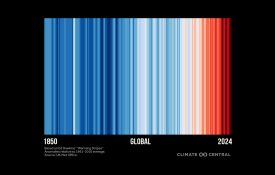
Pro-Climate Sentiments Are More Common Than You Think
A new study highlights how people around the world often overestimate climate skepticism and presents ways to push back on this misperception.
