
-

New Research From Clinical Psychological Science
A sample of recent articles in Clinical Psychological Science. Covering depression, emotional regulation, self control, and more.
-
Anyone Can Be an Altruist
What’s really going on inside the brain of an altruist? Why do altruists care so much more for a stranger who needs help? Why are they so willing to give away a kidney? In this episode, host Cristina Quinn explores what it means to be an altruist with Abigail Marsh, a professor of psychology and neuroscience at Georgetown University. Together, they break down how altruists view their own actions and how others can become more altruistic too. Marsh offers insight into what scientists know about altruists and shares surprising findings from her own research. She also tells us how you can build the muscle of giving more in simple steps that fit your lifestyle.
-
The Top 4 Riskiest Life Choices People Are Making In 2025, According to New Study
Psychology has portrayed “risk-takers” in a familiar way over the past few decades: as skydivers, gamblers, motorcyclists, partygoers and thrillseekers. But in 2025, this archetype seems to be outdated. Risky life choices, as it seems, aren’t limited jumping out of a plane. Our world has changed much faster than our theories have. Today, risk is no longer just an extension of adrenaline seeking or recklessness. Instead, we see it on LinkedIn, in cryptocurrency markets and even the most mundane tasks that structure our everyday life.
-
Quirky Rituals May Feel Arbitrary, But They Can Strongly Affect Well-being
... Historically, rituals have acted as a social glue. “We’re especially interested in being like our family, and members of our community, of our region or country,” said Cristine Legare, a professor of psychology who researches rituals at the University of Texas at Austin. “I think of ritual as the behavioral grammar of humans. This is how we coordinate our minds, bodies, beliefs and behaviors with others.” ...
-
Study Finds Mental Health Benefit to One-Week Social Media Break
Dialing down the use of social media for a week reduced symptoms of anxiety, depression and insomnia in young adults, according to a study published on Monday in the journal JAMA Network Open. ... One group of psychologists, including the social psychologist Jonathan Haidt, have identified the smartphone as the cause of deteriorating mental health among young people, and many communities have already taken steps to limit social media use or screen time, especially during school hours. ... Candice L.
-
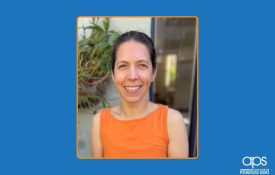
Simine Vazire Awarded 2025 Einstein Foundation Individual Award
The editor-in-chief of Psychological Science is recognized for promoting quality in research.
