• News & Research
    • Research Topics
    • Podcasts & Videos
  • Conventions & Events
    • 2026 APS Annual Convention
    • Webinars & Virtual Events
    • Past and Future Conventions
  • Journals
    • Psychological Science
    • Current Directions in Psychological Science
    • Psychological Science in the Public Interest
    • Perspectives on Psychological Science
    • Clinical Psychological Science
    • Advances in Methods and Practices in Psychological Science
    • Advances in Psychological Science Open
  • Advocacy & Policy
    • Policy & Position Statements
  • The Observer 
    • Archive
    • About the Observer
    • Advertising
    • Contact the Editor
    • Presidential Columns
  • Members
    • Awards & Honors
    • Member Directory
    • Lifetime Members
    • Student Members
    • Teaching of Psychology
    • Donors
  • Career Resources
    • Employment
  • About
    • Diversity, Equity, & Inclusion
    • Board of Directors 2025-2026
    • Staff Directory
    • Ethics Policy & Code of Conduct
APS Homepage
APS
  • Login
  • Join APS
  • This is a photo of a woman using a tablet at night.

    Who Am I, Facebook?

    Researchers in Germany examined how people’s connectedness to social media platforms such as Facebook influence users’ self-concept.

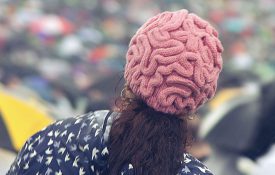
  • APS a Partner for March for Science

    Thousands of people, many wearing knitted “brain” caps, braved persistent rain April 22 to participate in the flagship March for Science, held on the National Mall in Washington, DC. APS was among the partners for the event.

  • How to Find Your Missing Keys and Stop Losing Other Things

    The New York Times: You were sure you left the keys right there on the counter, and now they are nowhere to be found. Where could they be? Misplacing objects is an everyday occurrence, but finding them can be like going on a treasure hunt without a map. Here are some recommendations from experts to help you recover what is lost. (Consider printing this out and putting it someplace you can easily find it.) Read the whole story: The New York Times

  • Living a Lie: We Deceive Ourselves to Better Deceive Others

    Scientific American: People mislead themselves all day long. We tell ourselves we’re smarter and better looking than our friends, that our political party can do no wrong, that we’re too busy to help a colleague. In 1976, in the foreword to Richard Dawkins’s The Selfish Gene, the biologist Robert Trivers floated a novel explanation for such self-serving biases: We dupe ourselves in order to deceive others, creating social advantage. Now after four decades Trivers and his colleagues have published the first research supporting his idea. Read the whole story: Scientific American

  • You’re Too Busy. You Need a ‘Shultz Hour.’

    The New York Times: The science of the mind is clear about this point. Our brains can be in either “task-positive” or “task-negative” mode, but not both at once. Our brain benefits from spending time in each state. Task-positive mode allows us to accomplish something in the moment. Task-negative mode is more colloquially known as daydreaming, and, as of McGill University has written, it “is responsible for our moments of greatest creativity and insight, when we’re able to solve problems that previously seemed unsolvable.” Read the whole story: The New York Times 

  • Love Culture: What It Takes to Create a Happy Workplace

    Knowledge@Wharton: Knowledge@Wharton: Your study focused on an interesting environment, which was firehouses and firemen. Why did you pick firemen? What you were looking at, and what you were trying to find? Nancy Rothbard: Mandy and I really wanted to go in and understand how the emotional culture of an organization could affect how people both interact in the workplace, but also what the effects on them physiologically might be.

« FirstPrevious...102030...800801802803804...810820830...NextLast »
  • Who We Are
  • Privacy Policy
  • Contact Us
  • Donate
  • Advertising
  • Follow APS
  • Facebook Logo link to APS's Facebook
  • BlueSky Logo link to APS's BlueSky
  • Youtube Logo link to APS's YouTube
  • Instagram Logo link to APS's Instagram
  • LinkedIn Logo link to APS's LinkedIn
  • Twitter Logo link to APS's Twitter

© Association for Psychological Science

Cookies
We use cookies on our website to give you the most relevant experience by remembering your preferences and repeat visits. By clicking “Accept”, you consent to the use of ALL the cookies. To accept or reject certain categories of cookies specifically please click the Cookie Settings link. Please read our Cookie Policy for more information.
Do not sell my personal information.
Cookie settingsAccept Reject
Privacy & Cookies Policy

Privacy Overview

This website uses cookies to improve your experience while you navigate through the website. Out of these cookies, the cookies that are categorized as necessary are stored on your browser as they are essential for the working of basic functionalities of the website. We also use third-party cookies that help us analyze and understand how you use this website. These cookies will be stored in your browser only with your consent. You also have the option to opt-out of these cookies. But opting out of some of these cookies may have an effect on your browsing experience.
Necessary
Always Enabled
Necessary cookies are absolutely essential for the website to function properly. This category only includes cookies that ensures basic functionalities and security features of the website. These cookies do not store any personal information.
Functional
Functional cookies help to perform certain functionalities like sharing the content of the website on social media platforms, collect feedbacks, and other third-party features.
CookieDurationDescription
__cf_bm30 minutesThis cookie, set by Cloudflare, is used to support Cloudflare Bot Management.
Performance
Performance cookies are used to understand and analyze the key performance indexes of the website which helps in delivering a better user experience for the visitors.
CookieDurationDescription
AWSELBCORS5 minutesThis cookie is used by Elastic Load Balancing from Amazon Web Services to effectively balance load on the servers.
Analytics
Analytical cookies are used to understand how visitors interact with the website. These cookies help provide information on metrics the number of visitors, bounce rate, traffic source, etc.
CookieDurationDescription
at-randneverAddThis sets this cookie to track page visits, sources of traffic and share counts.
CONSENT2 yearsYouTube sets this cookie via embedded youtube-videos and registers anonymous statistical data.
uvc1 year 27 daysSet by addthis.com to determine the usage of addthis.com service.
_ga2 yearsThe _ga cookie, installed by Google Analytics, calculates visitor, session and campaign data and also keeps track of site usage for the site's analytics report. The cookie stores information anonymously and assigns a randomly generated number to recognize unique visitors.
_gat_gtag_UA_3507334_11 minuteSet by Google to distinguish users.
_gid1 dayInstalled by Google Analytics, _gid cookie stores information on how visitors use a website, while also creating an analytics report of the website's performance. Some of the data that are collected include the number of visitors, their source, and the pages they visit anonymously.
Advertisement
Advertisement cookies are used to provide visitors with relevant ads and marketing campaigns. These cookies track visitors across websites and collect information to provide customized ads.
CookieDurationDescription
loc1 year 27 daysAddThis sets this geolocation cookie to help understand the location of users who share the information.
VISITOR_INFO1_LIVE5 months 27 daysA cookie set by YouTube to measure bandwidth that determines whether the user gets the new or old player interface.
YSCsessionYSC cookie is set by Youtube and is used to track the views of embedded videos on Youtube pages.
yt-remote-connected-devicesneverYouTube sets this cookie to store the video preferences of the user using embedded YouTube video.
yt-remote-device-idneverYouTube sets this cookie to store the video preferences of the user using embedded YouTube video.
yt.innertube::nextIdneverThis cookie, set by YouTube, registers a unique ID to store data on what videos from YouTube the user has seen.
yt.innertube::requestsneverThis cookie, set by YouTube, registers a unique ID to store data on what videos from YouTube the user has seen.
Others
Other uncategorized cookies are those that are being analyzed and have not been classified into a category as yet.
SAVE & ACCEPT
Powered by CookieYes Logo