• News & Research
    • Research Topics
    • Podcasts & Videos
  • Conventions & Events
    • 2026 APS Annual Convention
    • Webinars & Virtual Events
    • Past and Future Conventions
  • Journals
    • Psychological Science
    • Current Directions in Psychological Science
    • Psychological Science in the Public Interest
    • Perspectives on Psychological Science
    • Clinical Psychological Science
    • Advances in Methods and Practices in Psychological Science
    • Advances in Psychological Science Open
  • Advocacy & Policy
    • Policy & Position Statements
  • The Observer 
    • Archive
    • About the Observer
    • Advertising
    • Contact the Editor
    • Presidential Columns
  • Members
    • Awards & Honors
    • Member Directory
    • Lifetime Members
    • Student Members
    • Teaching of Psychology
    • Donors
  • Career Resources
    • Employment
  • About
    • Diversity, Equity, & Inclusion
    • Board of Directors 2025-2026
    • Staff Directory
    • Ethics Policy & Code of Conduct
APS Homepage
APS
  • Login
  • Join APS
  • The life-extending power of being neurotic

    Quartz: Neuroticism won’t make life more enjoyable, but it can help it last longer, according to a four-year study published this month in Psychological Science. Researchers from the University of Edinburgh, University of Southampton, and University College London found that higher neuroticism was associated with a “reduced risk of death from all causes”—but only for one type of neurotic. All 321,456 participants in the study filled in a questionnaire emphasizing two types of neuroticism.

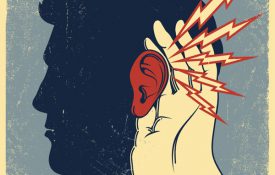
  • How Our Ears Inform Our Eyes

    Eyewitness identification is an important part of criminal investigations, especially in circumstances where physical evidence is lacking.

  • This is an illustration of a red umbrella blocking rainfall against a dark background

    Neuroticism May Postpone Death for Some

    High levels of the trait neuroticism are linked with lower risk of death for people who say they’re in fair or poor health, data from 500,000 UK residents show.

  • The Problem with Being a Top Performer

    Scientific American: The top performers in their fields—from LeBron James to Oprah Winfrey to Bill Gates—seem to have it all. Through a combination of talent, drive, and hard work, they lead their organizations to the next level. In fact, according to a recent estimate, top performers produce 20 to 30 times more than the average employee in their fields. Many of us aspire to reap the accolades, respect, and influence that come with being one of the very best. But new research demonstrates that performing at high levels can also come with some heavy costs: It can make our peers resent us and try to undermine our good work.

  • When Is Speech Violence?

    The New York Times: Imagine that a bully threatens to punch you in the face. A week later, he walks up to you and breaks your nose with his fist. Which is more harmful: the punch or the threat? The answer might seem obvious: Physical violence is physically damaging; verbal statements aren’t. “Sticks and stones can break my bones, but words will never hurt me.” But scientifically speaking, it’s not that simple. Words can have a powerful effect on your nervous system. Certain types of adversity, even those involving no physical contact, can make you sick, alter your brain — even kill neurons — and shorten your life. Read the whole story: The New York Times

  • Some scientists hate NIH’s new definition of a clinical trial. Here’s why

    Science: Nancy Kanwisher, a cognitive neuroscientist, has spent her career pinning down how the human brain responds to visual inputs such as faces. As part of that work, Kanwisher asks volunteers—usually college students at the Massachusetts Institute of Technology (MIT) in Cambridge, where she works—to lie in an MRI machine that records their brain activity while they do a task, such as viewing a photo. Although such studies reveal information that can be relevant to diseases such as autism, they do not test treatments. But a few weeks ago, Kanwisher and colleagues in related behavioral research fields—from cognitive psychology to vision science—were dismayed to learn that the U.S.

« FirstPrevious...102030...764765766767768...780790800...NextLast »
  • Who We Are
  • Privacy Policy
  • Contact Us
  • Donate
  • Advertising
  • Follow APS
  • Facebook Logo link to APS's Facebook
  • BlueSky Logo link to APS's BlueSky
  • Youtube Logo link to APS's YouTube
  • Instagram Logo link to APS's Instagram
  • LinkedIn Logo link to APS's LinkedIn
  • Twitter Logo link to APS's Twitter

© Association for Psychological Science

Cookies
We use cookies on our website to give you the most relevant experience by remembering your preferences and repeat visits. By clicking “Accept”, you consent to the use of ALL the cookies. To accept or reject certain categories of cookies specifically please click the Cookie Settings link. Please read our Cookie Policy for more information.
Do not sell my personal information.
Cookie settingsAccept Reject
Privacy & Cookies Policy

Privacy Overview

This website uses cookies to improve your experience while you navigate through the website. Out of these cookies, the cookies that are categorized as necessary are stored on your browser as they are essential for the working of basic functionalities of the website. We also use third-party cookies that help us analyze and understand how you use this website. These cookies will be stored in your browser only with your consent. You also have the option to opt-out of these cookies. But opting out of some of these cookies may have an effect on your browsing experience.
Necessary
Always Enabled
Necessary cookies are absolutely essential for the website to function properly. This category only includes cookies that ensures basic functionalities and security features of the website. These cookies do not store any personal information.
Functional
Functional cookies help to perform certain functionalities like sharing the content of the website on social media platforms, collect feedbacks, and other third-party features.
CookieDurationDescription
__cf_bm30 minutesThis cookie, set by Cloudflare, is used to support Cloudflare Bot Management.
Performance
Performance cookies are used to understand and analyze the key performance indexes of the website which helps in delivering a better user experience for the visitors.
CookieDurationDescription
AWSELBCORS5 minutesThis cookie is used by Elastic Load Balancing from Amazon Web Services to effectively balance load on the servers.
Analytics
Analytical cookies are used to understand how visitors interact with the website. These cookies help provide information on metrics the number of visitors, bounce rate, traffic source, etc.
CookieDurationDescription
at-randneverAddThis sets this cookie to track page visits, sources of traffic and share counts.
CONSENT2 yearsYouTube sets this cookie via embedded youtube-videos and registers anonymous statistical data.
uvc1 year 27 daysSet by addthis.com to determine the usage of addthis.com service.
_ga2 yearsThe _ga cookie, installed by Google Analytics, calculates visitor, session and campaign data and also keeps track of site usage for the site's analytics report. The cookie stores information anonymously and assigns a randomly generated number to recognize unique visitors.
_gat_gtag_UA_3507334_11 minuteSet by Google to distinguish users.
_gid1 dayInstalled by Google Analytics, _gid cookie stores information on how visitors use a website, while also creating an analytics report of the website's performance. Some of the data that are collected include the number of visitors, their source, and the pages they visit anonymously.
Advertisement
Advertisement cookies are used to provide visitors with relevant ads and marketing campaigns. These cookies track visitors across websites and collect information to provide customized ads.
CookieDurationDescription
loc1 year 27 daysAddThis sets this geolocation cookie to help understand the location of users who share the information.
VISITOR_INFO1_LIVE5 months 27 daysA cookie set by YouTube to measure bandwidth that determines whether the user gets the new or old player interface.
YSCsessionYSC cookie is set by Youtube and is used to track the views of embedded videos on Youtube pages.
yt-remote-connected-devicesneverYouTube sets this cookie to store the video preferences of the user using embedded YouTube video.
yt-remote-device-idneverYouTube sets this cookie to store the video preferences of the user using embedded YouTube video.
yt.innertube::nextIdneverThis cookie, set by YouTube, registers a unique ID to store data on what videos from YouTube the user has seen.
yt.innertube::requestsneverThis cookie, set by YouTube, registers a unique ID to store data on what videos from YouTube the user has seen.
Others
Other uncategorized cookies are those that are being analyzed and have not been classified into a category as yet.
SAVE & ACCEPT
Powered by CookieYes Logo