
-
What We Finally Got Around to Learning at the Procrastination Research Conference
The New York Times: The shuttle driver got lost on the way to the 10th Procrastination Research Conference, threatening to derail the schedule. Still by 9:20 a.m. last Thursday, the 60 or so attendees had already completed check-in at DePaul University, welcome remarks and the first of dozens of presentations. As they filed toward the coffee, their badges flashed their countries of origin — Germany, Turkey, Peru, India, Israel and Australia, among others. “I remember when I couldn’t get anyone to talk about procrastination. Look at us now,” said Joseph R. Ferrari, a professor of psychology at DePaul and this year’s conference chairman, who has published four books on procrastination.
-
“Form-a-Palooza” Applies Behavioral Science to Improve Washington, DC Government Forms
It’s not every day that city residents get excited to complete paperwork. But that’s exactly what happened when a group of behavioral scientists, design experts, government agency representatives, and DC citizens gathered in Washington, DC.
-
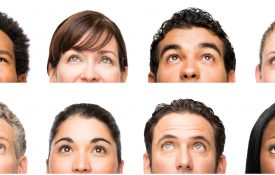
‘Light’ Words Play with Pupils
Upon reading or hearing words associated with light and dark, peoples’ eyes behave like they are experiencing light and dark, according to a new article published in Psychological Science.
-

Psychological Scientist Elected to Royal Irish Academy
APS Fellow J.A. Scott Kelso has been elected to the Royal Irish Academy, Ireland’s leading body of experts in sciences and humanities.
-
The neuroscience of inequality: does poverty show up in children’s brains?
The Guardian: With its bright colours, anthropomorphic animal motif and nautical-themed puzzle play mat, Dr Kimberly Noble’s laboratory at Columbia University in New York looks like your typical day-care centre – save for the team of cognitive neuroscientists observing kids from behind a large two-way mirror. The Neurocognition, Early Experience and Development Lab is home to cutting-edge research on how poverty affects young brains, and I’ve come here to learn how Noble and her colleagues could soon definitively prove that growing up poor can keep a child’s brain from developing. Read the whole story: The Guardian
-
There are 3 types of smile – reward, affiliation, dominance
Wired: There are three distinct types of smile, a new study has revealed. People switch between 'reward', 'affiliation' and 'dominance' smiles, using different facial muscle combinations to make them, according to researchers from the University of Wisconsin-Madison. ... "When distinguishing among smiles, both scientists and laypeople have tended to focus on true and false smiles," said Paula Niedenthal, a psychology professor at the University of Wisconsin-Madison. Read the whole story: Wired
