• News & Research
    • Research Topics
    • Podcasts & Videos
  • Conventions & Events
    • 2026 APS Annual Convention
    • Webinars & Virtual Events
    • Past and Future Conventions
  • Journals
    • Psychological Science
    • Current Directions in Psychological Science
    • Psychological Science in the Public Interest
    • Perspectives on Psychological Science
    • Clinical Psychological Science
    • Advances in Methods and Practices in Psychological Science
    • Advances in Psychological Science Open
  • Advocacy & Policy
    • Policy & Position Statements
  • The Observer 
    • Archive
    • About the Observer
    • Advertising
    • Contact the Editor
    • Presidential Columns
  • Members
    • Awards & Honors
    • Member Directory
    • Lifetime Members
    • Student Members
    • Teaching of Psychology
    • Donors
  • Career Resources
    • Employment
  • About
    • Diversity, Equity, & Inclusion
    • Board of Directors 2025-2026
    • Staff Directory
    • Ethics Policy & Code of Conduct
APS Homepage
APS
  • Login
  • Join APS
  • Why are people still racist? What science says about America’s race problem.

    The Washington Post: Torch-bearing white supremacists shouting racist and anti-Semitic slogans. Protesters and counter protesters colliding with violence and chaos. A car driven by a known Nazi sympathizer mowing down a crowd of activists. Many Americans responded to this weekend's violence in Charlottesville with disbelieving horror. How could this happen in America, in 2017? “This is not who we are,” said Virginia Sen. Tim Kaine (D). And yet, this is who we are. Amid our modern clashes, researchers in psychology, sociology and neurology have been studying the roots of racism. We draw on that research and asked two scientists to explain why people feel and act this way toward each other.

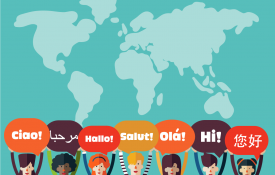
  • Psychological Scientists Discuss Language Learning

    APS convened a group of psychological scientists, linguists, and others in May in Boston, MA to discuss an American Academy of Arts & Sciences report on language learning.

  • A multi-ethnic group of high school age students are sitting in class at are doing research on a laptop computer.

    Cognitive Abilities Seem to Reinforce Each Other in Adolescence  

    Scientists from Cambridge, London, and Berlin directly compared different proposed explanations for the phenomenon of ‘general intelligence’ and how it develops over time.

  • Governments are trying to nudge us into better behavior. Is it working?

    The Washington Post: All over the world, public and private organizations are showing keen interest in “nudges” — interventions and policies that rely on behavioral science to steer people in a particular direction but preserve their freedom of choice. A warning is a nudge; so is a reminder (for example, that a bill is coming due). Automatic enrollment in retirement plans, or in green energy, also count as nudges, so long as people are allowed opt out.

  • One of the most popular job interview questions is biased and unfair, says Adam Grant

    Quartz: You’re 10 minutes into a job interview. You’ve had a bit of small talk and run over the basics of your resume. Then the interviewer leans back and asks a question that begins the dreaded phrase: “Tell me about a time when…” Who knows what will follow? “When you overcame a professional challenge.” “When you managed workplace conflict.” “When you slew a wild unicorn.” Behavioral questions like these are among hiring managers’ favorite interview tactics. They’re meant to offer unique insight into a potential employee’s personality and how a person might fit into company culture.

  • THE SUBTLE BIAS THAT UNDERLIES OUR IDEOLOGICAL LEANINGS

    Pacific Standard: There are many theories as to why someone grows up to be a liberal or a conservative. These range from psychological (liberals tend to be more open to ambiguity) to developmental (authoritarian parents tend to have conservative children) to physical (taller people tend to lean right). New research points to something even more basic—a way of making sense of the world that underpins one's political orientation. It's best described as the answer to a question: When you are asked to judge a situation, do you instinctively reach for an inherent explanation, or an extrinsic one? Read the whole story: Pacific Standard

« FirstPrevious...102030...758759760761762...770780790...NextLast »
  • Who We Are
  • Privacy Policy
  • Contact Us
  • Donate
  • Advertising
  • Follow APS
  • Facebook Logo link to APS's Facebook
  • BlueSky Logo link to APS's BlueSky
  • Youtube Logo link to APS's YouTube
  • Instagram Logo link to APS's Instagram
  • LinkedIn Logo link to APS's LinkedIn
  • Twitter Logo link to APS's Twitter

© Association for Psychological Science

Cookies
We use cookies on our website to give you the most relevant experience by remembering your preferences and repeat visits. By clicking “Accept”, you consent to the use of ALL the cookies. To accept or reject certain categories of cookies specifically please click the Cookie Settings link. Please read our Cookie Policy for more information.
Do not sell my personal information.
Cookie settingsAccept Reject
Privacy & Cookies Policy

Privacy Overview

This website uses cookies to improve your experience while you navigate through the website. Out of these cookies, the cookies that are categorized as necessary are stored on your browser as they are essential for the working of basic functionalities of the website. We also use third-party cookies that help us analyze and understand how you use this website. These cookies will be stored in your browser only with your consent. You also have the option to opt-out of these cookies. But opting out of some of these cookies may have an effect on your browsing experience.
Necessary
Always Enabled
Necessary cookies are absolutely essential for the website to function properly. This category only includes cookies that ensures basic functionalities and security features of the website. These cookies do not store any personal information.
Functional
Functional cookies help to perform certain functionalities like sharing the content of the website on social media platforms, collect feedbacks, and other third-party features.
CookieDurationDescription
__cf_bm30 minutesThis cookie, set by Cloudflare, is used to support Cloudflare Bot Management.
Performance
Performance cookies are used to understand and analyze the key performance indexes of the website which helps in delivering a better user experience for the visitors.
CookieDurationDescription
AWSELBCORS5 minutesThis cookie is used by Elastic Load Balancing from Amazon Web Services to effectively balance load on the servers.
Analytics
Analytical cookies are used to understand how visitors interact with the website. These cookies help provide information on metrics the number of visitors, bounce rate, traffic source, etc.
CookieDurationDescription
at-randneverAddThis sets this cookie to track page visits, sources of traffic and share counts.
CONSENT2 yearsYouTube sets this cookie via embedded youtube-videos and registers anonymous statistical data.
uvc1 year 27 daysSet by addthis.com to determine the usage of addthis.com service.
_ga2 yearsThe _ga cookie, installed by Google Analytics, calculates visitor, session and campaign data and also keeps track of site usage for the site's analytics report. The cookie stores information anonymously and assigns a randomly generated number to recognize unique visitors.
_gat_gtag_UA_3507334_11 minuteSet by Google to distinguish users.
_gid1 dayInstalled by Google Analytics, _gid cookie stores information on how visitors use a website, while also creating an analytics report of the website's performance. Some of the data that are collected include the number of visitors, their source, and the pages they visit anonymously.
Advertisement
Advertisement cookies are used to provide visitors with relevant ads and marketing campaigns. These cookies track visitors across websites and collect information to provide customized ads.
CookieDurationDescription
loc1 year 27 daysAddThis sets this geolocation cookie to help understand the location of users who share the information.
VISITOR_INFO1_LIVE5 months 27 daysA cookie set by YouTube to measure bandwidth that determines whether the user gets the new or old player interface.
YSCsessionYSC cookie is set by Youtube and is used to track the views of embedded videos on Youtube pages.
yt-remote-connected-devicesneverYouTube sets this cookie to store the video preferences of the user using embedded YouTube video.
yt-remote-device-idneverYouTube sets this cookie to store the video preferences of the user using embedded YouTube video.
yt.innertube::nextIdneverThis cookie, set by YouTube, registers a unique ID to store data on what videos from YouTube the user has seen.
yt.innertube::requestsneverThis cookie, set by YouTube, registers a unique ID to store data on what videos from YouTube the user has seen.
Others
Other uncategorized cookies are those that are being analyzed and have not been classified into a category as yet.
SAVE & ACCEPT
Powered by CookieYes Logo