

-

Science Reveals a Silver Lining to Dark Behaviors
For psychological scientists, exploring the less pleasant aspects of individual and social nature is an occasional necessity.
-

New Research From Psychological Science
A sample of new research exploring cost-benefit arbitration and reinforcement learning, race and weight-based stereotypes, and testosterone and cognitive reflection.
-
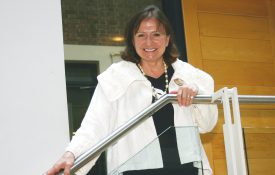
Remembering Annette Karmiloff-Smith
Mark Johnson University of Cambridge and Birkbeck, University of London Susan Goldin-Meadow University of Chicago APS Past Board Member Annette Karmiloff-Smith passed away on 19 December 2016, and psychological science lost a brilliant developmental
-
How To Use Games To Improve Performance At Work
Forbes: Earlier this year I wrote about the motivational power games can play in the workplace. A new study, published in Psychological Science, underlines the power of having targets to aim for, even if the targets themselves are largely meaningless. The only caveat is that your scores have to be improving. “We all know that people like high scores, but what is less known is how to give scores,” the authors say.
-
The Myths That Persist About How We Learn
Science Friday: Do you consider yourself a visual learner? When you see something, do you commit it to memory? Or do you perhaps learn faster by hearing new information? The idea of “learning styles” has been around since the 1950s, and the theory is still widely believed by educators and the public, according to a recent study in Frontiers in Psychology. But there’s not much evidence that indicates the theory is true. “If it were true, this should be really easy to find in the laboratory,” says Daniel Willingham, a professor of psychology at the University of Virginia. “And we don’t see it.” Read the whole story: Science Friday
-
How to Recognize Burnout Before You’re Burned Out
The New York Times: Emma Seppala was working as an intern at The International Herald Tribune (the past iteration of The International New York Times) one summer in college in Paris, shuttling between the newsroom writers and editors on the second floor and the workers at printing presses in the basement. Ms. Seppala, the science director at the Stanford Center for Compassion and Altruism Research and Education, mulls the difference between the two starkly different atmospheres in her 2016 book “The Happiness Track”: One floor was raucous and full of laughter, the other floor was solemn and quiet. Can you guess which one she enjoyed being in more?
