
-
Investigating the Irresistible: A Conversation with Adam Alter
It happened almost every night around 10 p.m. I’d plan to spend 30 seconds setting my iPhone alarm and then get into bed to read (a paper book). But after I set the alarm, some other part of my consciousness would guide my fingers towards other apps as if I was navigating a Ouija board. I’d check Instagram. And Twitter. One last sweep of my email accounts and any other app that could possibly be checked (is looking at Venmo really necessary?), and then I’d navigate to Facebook and Twitter on my Safari browser (I took the apps off my phone so I’d spend less time on them—#fail). An hour later, I’d emerge from my possessed state a bleary-eyed zombie. What had I been doing for the last hour?
-
2018 APS Spence Recipients Announced
Six outstanding researchers have been selected as the recipients of the 2018 APS Janet Taylor Spence Award. The recipients are Elliot Berkman, University of Oregon; Marc Berman, The University of Chicago; Catherine Hartley, New York University; Kristin Laurin, University of British Columbia; Robb Rutledge, Max Planck UCL Centre for Computational Psychiatry and Ageing Research; and Amrisha Vaish, University of Virginia.
-

New Research From Psychological Science
A sample of new research exploring various aspects of visual perception, including processing of symmetrical objects, origins of automatic imitation, and perceiving the gist of a scene.
-
iPhones and Children Are a Toxic Pair, Say Two Big Apple Investors
The iPhone has made Apple Inc. AAPL -0.30% and Wall Street hundreds of billions of dollars. Now some big shareholders are asking at what cost, in an unusual campaign to make the company more socially responsible. A leading activist investor and a pension fund are saying the smartphone maker needs to respond to what some see as a growing public-health crisis of youth phone addiction. -- The investors believe both the content and the amount of time spent on phones need to be tailored to youths, and they are raising concern about the public-health effects of failing to act. They point to research from Ms.
-
What makes some men sexual harassers? Science tries to explain the creeps of the world.
The list of alleged sexual harassers keeps getting longer and the details of sexual assault and harassment ever more disturbing. The torrent of cases pouring out in news reports and Twitter — tales of men grabbing women, emerging naked from showers uninvited, threatening women's careers, or worse — raises a horrified question: What makes these men behave this way? Sure, some of the behavior can be chalked up to boorish personalities or outright misogyny. But how much of the behavior is driven by the man himself and how much by the culture around him? What exactly makes one man more likely to harass than another? And what is going on inside their heads when they make unwanted advances?
-
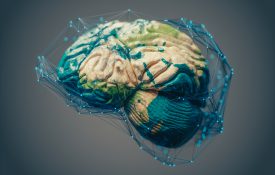
Brain Researchers Announce Plan to Create International Brain Initiative
To meet the challenges posed—and promises offered—by brain science, representatives from Australia, Japan, Korea, and the US have declared an intent to create an International Brain Initiative.
